
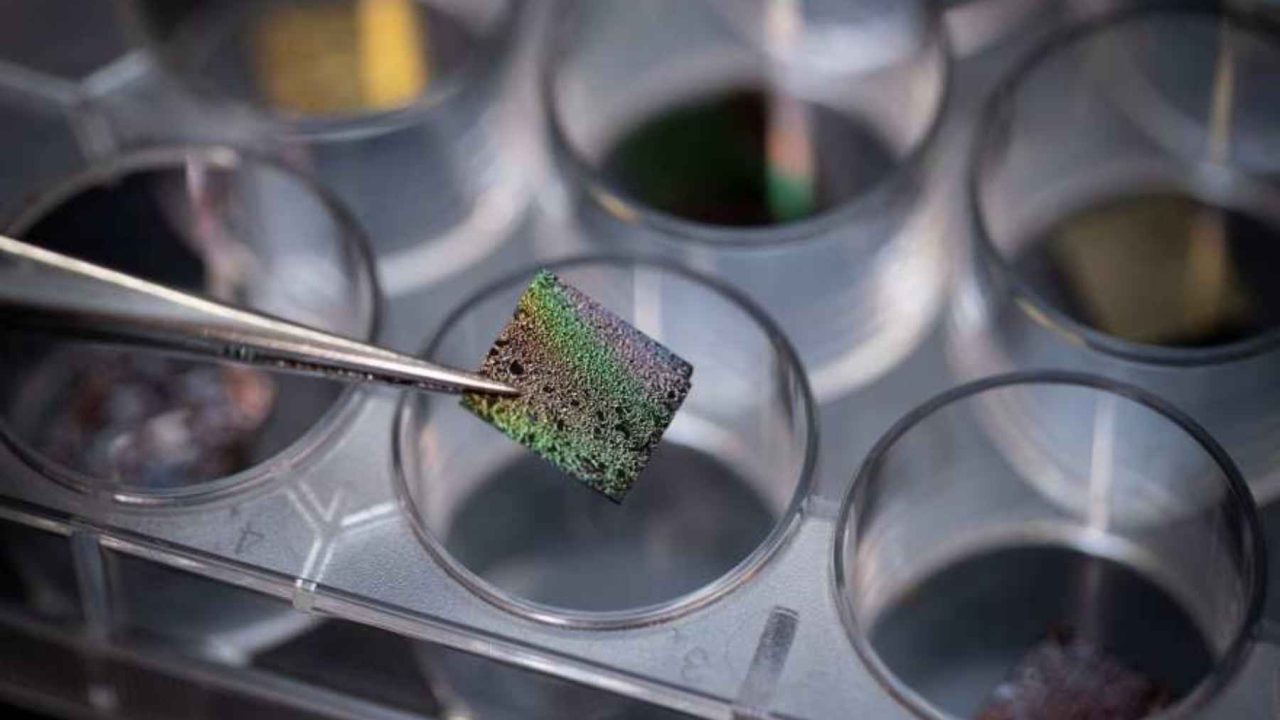
What if the dust drifting between dying stars billions of years ago was actually carrying the raw ingredients for life — and a PhD student just proved it could be recreated in a lab? That’s the striking possibility raised by new research out of the University of Sydney, where a graduate student has successfully manufactured carbon-rich cosmic dust using nothing more than a simple gas mixture and a powerful electrical spark.
The experiment is modest in its setup but enormous in its implications. For the first time, researchers have a lab-made analog of the microscopic grains that form around aging giant stars and exploding supernovas — the same type of material found inside comets, asteroids, and meteorites that have crashed into Earth throughout its history.
If those grains really did carry the chemical seeds of life across the cosmos, this experiment offers a new way to trace that journey and understand how our planet became habitable in the first place.
What Cosmic Dust Actually Is — And Why It’s Nothing Like Household Dust
The word “dust” is a little misleading here. This isn’t the gray film that settles on your bookshelves. Cosmic dust refers to microscopic solid particles that form in some of the most extreme environments in the universe — the outer layers of massive dying stars and the violent aftermath of supernova explosions.
Once formed, these grains drift through interstellar space for millions of years. Over time, they get swept up into comets, asteroids, and meteorites, which then travel across the solar system. Some of those objects eventually collide with planets — including, billions of years ago, Earth.
The research describes this dust as an amorphous network of atoms composed primarily of carbon, hydrogen, oxygen, and nitrogen — a combination scientists abbreviate as CHON. Those four elements are not random. They are, collectively, the foundational building blocks of organic chemistry and life as we know it.
The idea that cosmic dust could carry CHON compounds across space and deposit them on early Earth isn’t new. But actually recreating that dust in a controlled lab setting — and studying how it behaves — is a significant step forward.
How PhD Student Linda R. Losurdo Built Cosmic Dust in a Lab
The experiment was conducted by PhD student Linda R. Losurdo at the University of Sydney. The method was surprisingly direct: a simple gas mixture was subjected to a powerful burst of electricity, triggering the kind of high-energy chemistry that occurs naturally in the environments around dying stars.
The result was a carbon-rich material that looks and behaves like real interstellar dust — the kind that has been detected drifting through space and identified inside cometary and meteoritic samples retrieved here on Earth.
Having a lab-produced version of this material is a practical breakthrough. Real cosmic dust samples are extraordinarily rare, tiny, and difficult to study without destroying them. A reliable lab-made substitute means researchers can run repeated experiments, vary conditions, and observe how the dust interacts with other chemicals — all without waiting for a meteorite to land conveniently nearby.
The CHON Connection: Why These Four Elements Matter So Much
The significance of the CHON composition can’t be overstated. Carbon forms the backbone of every organic molecule. Hydrogen is the most abundant element in the universe. Oxygen and nitrogen are essential to amino acids, nucleotides, and virtually every biochemical process that keeps living things alive.
When cosmic dust carries these elements locked inside its structure, it acts as something researchers describe as a chemical time capsule — preserving molecular information from the ancient universe and potentially delivering it to planets where conditions are right for life to take hold.
The theory that life’s ingredients arrived on Earth via comets and meteorites — a concept known as panspermia or, more specifically, the delivery hypothesis — has long been debated. This research adds a new layer to that conversation by demonstrating that the dust itself, not just larger rocky bodies, could have been a meaningful carrier of organic chemistry.
Key Facts at a Glance
| Detail | What the Research Shows |
|---|---|
| Researcher | Linda R. Losurdo, PhD student, University of Sydney |
| Method | Simple gas mixture exposed to a powerful electrical burst |
| Material produced | Carbon-rich cosmic dust analog |
| Key chemical composition | Carbon, hydrogen, oxygen, and nitrogen (CHON) |
| Natural origin of real cosmic dust | Giant aging stars and supernova explosions |
| Where real cosmic dust ends up | Comets, asteroids, and meteorites |
| Structural description | Amorphous network of atoms |
- The lab-made dust closely resembles material found drifting between stars and inside comets
- Cosmic dust grains form in extreme stellar environments and travel through space for millions of years
- The CHON elements in the dust are the same foundational building blocks required for organic chemistry
- The experiment gives researchers a reproducible way to study how these grains behave chemically
What This Could Mean for Our Understanding of Life’s Origins
One of the biggest unresolved questions in science is how Earth — a rocky planet orbiting an ordinary star — ended up with the precise chemical conditions needed to generate living organisms. The early Earth was a harsh, volatile place. The organic molecules required for biology had to come from somewhere.
The cosmic dust hypothesis suggests that space itself was doing some of the heavy lifting, seeding the solar system with CHON-rich grains long before any life existed. When asteroids and comets carrying this material struck the young Earth, they may have delivered a chemical starter kit that eventually led to the first self-replicating molecules.
Losurdo’s lab experiment doesn’t prove that chain of events happened — but it does provide a testable, reproducible model for studying how those grains form, what they’re made of, and how they might interact with other molecules under different conditions. That’s the kind of controlled foundation that makes bigger scientific conclusions possible.
What Comes Next for This Research
Having a reliable lab-made analog of cosmic dust opens several doors for future investigation. Researchers can now examine how CHON-rich grains respond to ultraviolet radiation, extreme cold, and the chemical environments found on early planetary surfaces — conditions that would have been present when these materials first arrived on Earth.
The work also has implications for the broader search for life elsewhere in the universe. If cosmic dust routinely carries the ingredients for biology, and if that dust is distributed across interstellar space, then the raw materials for life may be far more widespread than previously assumed. That doesn’t guarantee life exists elsewhere — but it does suggest the universe is more generously stocked with the right chemistry than it might appear.
For now, the significance of what Losurdo created in a Sydney lab is that it makes a very old, very large question a little more answerable.
Frequently Asked Questions
Who conducted this cosmic dust experiment?
The experiment was carried out by Linda R. Losurdo, a PhD student at the University of Sydney.
How was the lab-made cosmic dust created?
A simple gas mixture was exposed to a powerful burst of electricity, producing a carbon-rich material that resembles real interstellar dust.
What does CHON stand for and why does it matter?
CHON stands for carbon, hydrogen, oxygen, and nitrogen — the four key elements that make up the cosmic dust and are also the foundational building blocks of organic chemistry and life.
Where does real cosmic dust come from?
Real cosmic dust forms in extreme environments around giant aging stars and supernova explosions, then drifts through space before ending up in comets, asteroids, and meteorites.
Does this experiment prove that life on Earth came from space?
No — the research does not prove that claim, but it provides a reproducible lab model for studying how CHON-rich cosmic dust could have delivered life’s ingredients to early Earth.
What makes this research different from previous studies?
Having a lab-made analog of cosmic dust allows researchers to run controlled, repeatable experiments on material that has previously been extremely rare and difficult to study directly.


Leave a Reply