
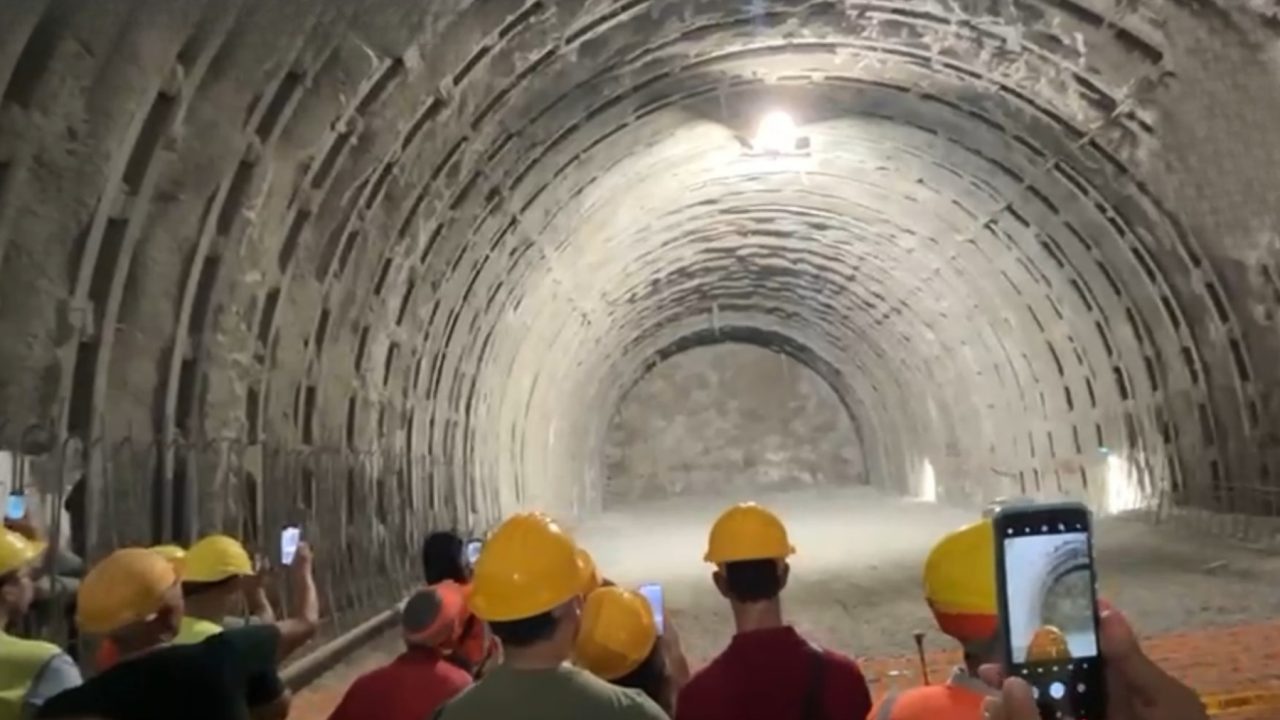
More than 1,400 tunnels. Over 2,000 kilometers of carved rock. A hidden network so vast it rivals entire urban transit systems — and most people riding through it are just checking their phones.
Switzerland has spent nearly three decades quietly building what some engineers and observers have called a second country beneath the Alps. The project isn’t secret, exactly. But it moves so smoothly, so efficiently, that millions of passengers pass through it every year without fully registering what surrounds them.
What’s happening beneath those mountains is one of the most ambitious infrastructure and climate projects in modern European history — and it’s still not finished.
The Underground Network That Rewired a Nation
The scale alone is hard to picture. Switzerland’s underground infrastructure includes more than 1,400 tunnels, with total tunnel and gallery length already exceeding 2,000 kilometers — roughly 1,243 miles of bored, blasted, and engineered rock. That figure covers rail tunnels cutting beneath the Alps, road tunnels on national highways, and hidden galleries built to carry water and electrical power.
In terms of sheer length, the network is comparable to major urban metro systems — except this one runs beneath an entire country, not just a single city.
The centerpiece of all this underground construction is the New Rail Link through the Alps, known by its German acronym NRLA. This mega-project combines multiple base tunnels into a single coordinated system designed to shift how freight and passengers move across one of Europe’s most formidable geographic barriers.
The goal isn’t just convenience. The environmental logic runs deep. By pulling long-haul trucks off mountain roads and routing them through rail tunnels, Switzerland is directly reducing the volume of diesel exhaust released into Alpine valleys — communities where air quality is trapped by geography and elevation.
Why Switzerland Built This — and What It Has to Do With Climate
The Alps aren’t just a scenic backdrop. They’re a physical wall through the center of Europe, and for decades, the primary way to move goods across them was by road. Thousands of heavy trucks grinding through mountain passes every day, burning fuel, releasing emissions into enclosed valleys where pollution lingers.
Switzerland’s underground rail strategy attacks that problem at the source. When freight moves by electric rail through a base tunnel instead of by diesel truck over a mountain pass, the emissions difference is significant. Rail is dramatically more energy-efficient per ton of cargo, and when that rail runs on hydroelectric or renewable electricity — as much of Switzerland’s grid does — the climate benefit compounds further.
The tunnels also reduce journey times, which makes rail more competitive against road freight on a pure cost and logistics basis. That commercial logic reinforces the environmental one: the more attractive rail becomes, the more trucks stay off the roads.
There’s a secondary effect too. Fewer heavy vehicles on mountain roads means less road wear, fewer accidents at altitude, and reduced noise pollution in communities that sit directly on major transit corridors.
What the Numbers Actually Look Like
The raw figures behind Switzerland’s underground infrastructure put its ambition into perspective.
| Category | Figure |
|---|---|
| Total number of tunnels | More than 1,400 |
| Total tunnel and gallery length | Over 2,000 kilometers (approx. 1,243 miles) |
| Duration of major construction effort | Nearly three decades |
| Primary project | New Rail Link through the Alps (NRLA) |
| Types of infrastructure included | Rail tunnels, road tunnels, water galleries, power galleries |
The variety of infrastructure types is worth noting. This isn’t purely a transport project. Water management galleries and power conduits are woven into the same underground logic — moving essential resources through the mountain rather than over or around it.
The Experience Most Travelers Never Think About
There’s something almost disorienting about how ordinary the experience feels from inside a Swiss train. The light fades. Pressure shifts slightly in your ears. Your reflection appears in the darkened window. Then, minutes later, you emerge on the other side of a mountain range.
That seamlessness is deliberate. Swiss rail infrastructure is engineered to make the extraordinary feel routine. But the gap between how the journey feels and what it represents — in engineering terms, in environmental terms, in sheer human effort — is enormous.
The workers who carved these tunnels faced some of the hardest conditions in civil engineering. Rock under pressure. Water infiltration. Heat deep underground. The NRLA project in particular pushed construction techniques to their limits, requiring years of geological surveying before a single bore began.
For passengers, it’s a quiet moment in transit. For the mountain communities nearby, it’s a measurable reduction in truck traffic and air pollution. For Europe’s freight network, it’s a fundamental shift in how goods cross the continent’s spine.
What Comes Next for Switzerland’s Underground
The network is not static. Switzerland continues to expand and refine its underground infrastructure as part of its longer-term climate and transport commitments. The NRLA project, which has been under development for nearly three decades, represents the core of that effort — but additional galleries, maintenance tunnels, and capacity upgrades remain ongoing work.
The broader ambition points toward a model other Alpine nations are watching closely. Austria and Italy both share the Alpine corridor and face similar pressures around freight traffic and mountain air quality. Switzerland’s approach — carving the solution into the rock itself — offers a template, even if the costs and timelines involved make it a difficult one to replicate quickly.
For now, the tunnels keep moving people and goods in near-silence, doing environmental work that most passengers never see and rarely think about. That invisibility, in a way, is the whole point.
Frequently Asked Questions
How many tunnels does Switzerland have?
Switzerland has more than 1,400 tunnels, with a combined tunnel and gallery length exceeding 2,000 kilometers, or approximately 1,243 miles.
What is the NRLA?
The NRLA stands for the New Rail Link through the Alps, Switzerland’s flagship underground rail project that combines multiple base tunnels to move freight and passengers beneath the Alpine mountain range.
How does building tunnels help the climate?
By shifting heavy freight from diesel trucks on mountain roads to electric rail through base tunnels, Switzerland significantly reduces emissions released into Alpine valleys where pollution is trapped by geography.
How long has Switzerland been building this underground network?
The major construction effort has been underway for nearly three decades, though Switzerland’s tunneling history stretches back much further.
Does the underground network include more than just train tunnels?
Yes — the network includes rail tunnels, road tunnels on national highways, and hidden galleries built to carry water and electrical power beneath the mountains.
Can other countries replicate Switzerland’s underground approach?
Neighboring Alpine nations such as Austria and Italy are watching Switzerland’s model closely, but the scale of investment and construction time involved makes replication a significant challenge.

Leave a Reply