
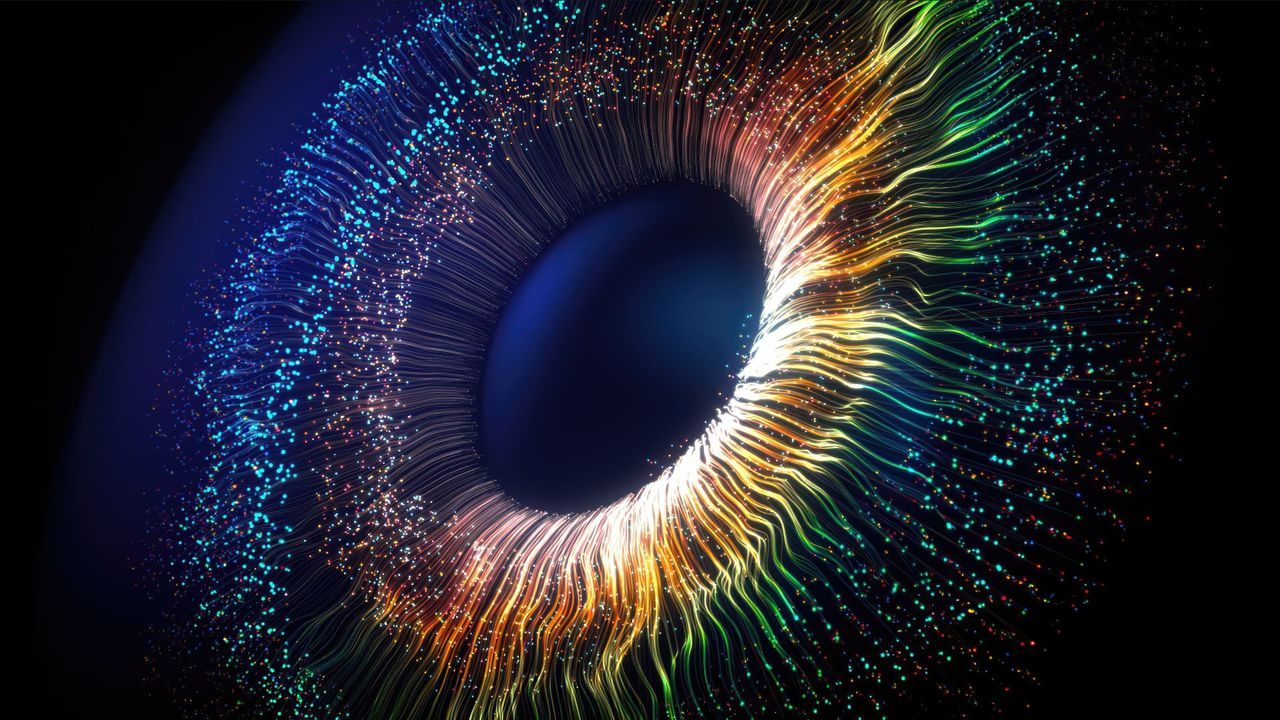
What if the colors you see in your mind are real enough to make your eyes physically react? For people with synesthesia, a new study suggests that’s exactly what’s happening — and the evidence is written in their pupils.
Researchers have found that people with synesthesia don’t just mentally associate numbers or letters with specific colors. Their bodies respond to those internally generated colors the same way eyes respond to colors in the physical world. It’s a finding that blurs the line between imagination and perception in a way scientists are still working to understand.
The condition has long been described as a neurological curiosity — a blending of the senses where one type of input triggers an automatic, involuntary response in another. But this latest research moves the conversation forward in a meaningful way, suggesting the experience isn’t purely psychological. It has a measurable physical dimension.
What Synesthesia Actually Is — and Why Most People Misunderstand It
Synesthesia is a neurological condition in which the senses blend together. Someone with a common form of it might consistently see the number 5 as red, or always perceive the letter A as a deep blue. These associations aren’t chosen — they’re automatic and consistent over time.
For years, skeptics questioned whether people with synesthesia were simply imagining these color associations or drawing on strong memories. The experience, after all, happens entirely in the mind. There’s no external red light flashing when someone reads the number 5. So how could scientists measure something so internal?
The answer, it turns out, may be in the eyes themselves.
The new study focused on pupil reactions. Human pupils naturally constrict in response to bright or light colors and dilate in response to dark colors — it’s an involuntary reflex tied to how much light the eye is processing. Researchers used this well-established physiological response as a measuring tool.
What the Study Found About Synesthesia and Pupil Response
The core finding is striking: people with synesthesia showed different pupil reactions depending on the colors they perceived — even when those colors weren’t physically present in the room.
When a synesthete encountered a number or symbol they associated with a light color, their pupils responded accordingly. When the association was with a darker color, the pupil response shifted in the other direction. Their eyes were reacting as if the colors were genuinely there, not just imagined.
This kind of involuntary physical response is difficult to fake or consciously control. The pupil reflex happens below the level of deliberate thought, which makes it a compelling form of evidence that the color experience in synesthesia is real in a physiological sense — not just a mental habit or a vivid metaphor.
| Feature | Typical Vision | Synesthesia |
|---|---|---|
| Color source | External light and objects | Internally generated by numbers, letters, or other triggers |
| Pupil response to light colors | Constriction | Constriction — even without physical color present |
| Pupil response to dark colors | Dilation | Dilation — even without physical color present |
| Conscious control | Not applicable | Involuntary — cannot be deliberately suppressed |
Why This Discovery Matters Beyond the Lab
For people who have synesthesia, this research offers something genuinely meaningful: validation. The condition is often met with skepticism, even from people close to those who experience it. Being told that your number 7 is always yellow, or that Tuesday feels orange, can sound like imagination run wild.
But pupil dilation is not something you can manufacture on demand. It’s not a performance. If someone’s pupils are physically reacting to a color they’re not externally seeing, that’s the body confirming what the person has been saying all along — the experience is real.
Beyond the personal, the research has broader implications for how scientists understand the relationship between perception and the brain. The prevailing assumption has been that internal mental imagery is fundamentally different from actual perception — that imagining something and seeing it are processed through separate channels. This study challenges that assumption in a concrete, measurable way.
It raises a genuinely fascinating question: if the body can’t tell the difference between an imagined color and a real one, what does that say about the nature of perception itself?
The Larger Picture of Synesthesia Research
Synesthesia is more common than many people realize. Various estimates suggest it affects a notable portion of the population, though exact figures vary depending on how the condition is defined and measured. It runs in families, suggesting a genetic component, and it appears more frequently among artists, musicians, and writers — though researchers continue to study whether that association reflects genuine prevalence or simply greater self-reporting in creative communities.
The condition takes many forms. Some people hear sounds and see colors. Others associate personalities or emotions with numbers. Some experience tastes when they hear certain words. The version studied here — where numbers or letters consistently evoke specific colors — is among the most documented and researched.
What this new pupil-response study adds is a reliable, objective method for studying synesthetic experience. Rather than relying entirely on self-reporting, researchers now have a physiological marker they can track and measure. That opens doors for more precise investigation into how the condition works at a neurological level.
What Comes Next for Synesthesia Science
The pupil response finding gives researchers a new tool to work with, and the natural next step is to apply it more broadly. Scientists may use this method to study other forms of synesthesia, to examine how the condition develops across a lifetime, or to explore whether the strength of the pupil response correlates with how vividly a person experiences their synesthetic colors.
There’s also the deeper neurological question of which brain systems are responsible. Understanding why the body reacts as though synesthetic colors are real — rather than simply noting that it does — could shed light on how the brain constructs all perception, not just the unusual kind.
For now, the study stands as one of the clearest pieces of evidence yet that synesthesia isn’t just in someone’s head. The body is in on it too.
Frequently Asked Questions
What is synesthesia?
Synesthesia is a neurological condition in which the senses blend together, causing one type of sensory input — like seeing a number — to automatically trigger another sensory experience, such as perceiving a specific color.
What did the new synesthesia study find?
The study found that people with synesthesia show measurable pupil reactions in response to internally perceived colors — the same kind of physical response that occurs when the eyes see real colors in the external world.
Why are pupil reactions significant as evidence?
Pupil dilation and constriction are involuntary reflexes that cannot be consciously faked, making them a reliable physiological marker for whether a color experience is genuinely affecting the body.
Does this mean synesthetic colors are the same as real colors to the brain?
The study suggests the body responds as if they are real, though the full neurological explanation for why this happens has not yet been confirmed by this research alone.
Is synesthesia a rare condition?
Synesthesia is more common than many people assume, though exact prevalence figures vary depending on how the condition is defined and studied.</p




Leave a Reply