
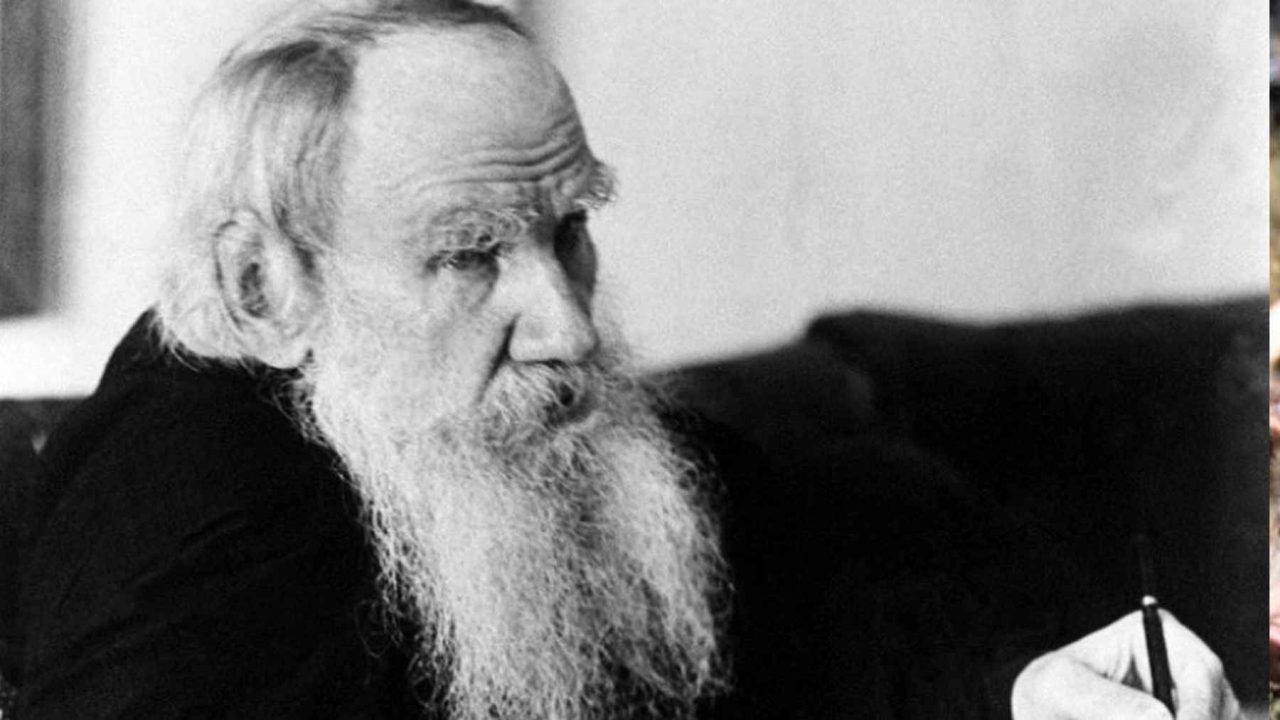
What if the key to lasting happiness isn’t about chasing what you want — but learning to want what you already have in front of you? That question sits at the heart of a line widely attributed to Russian writer Leo Tolstoy: “The secret of happiness is not to always do what one wants, but to always want what one does.”
It sounds almost too simple. And in fairness, it is — at least on the surface. But modern research suggests the idea isn’t just poetic wisdom. It may actually point toward something measurable about how human beings experience meaning and well-being.
The quote has circulated for generations, and its staying power is worth examining. Why does this particular idea keep resonating? The answer probably has less to do with philosophy and more to do with how we’re wired.
What Tolstoy Was Actually Getting At
Tolstoy is best known as a novelist — the author of War and Peace and Anna Karenina — but he spent much of his later life grappling seriously with questions of meaning, ethics, and how a person ought to live. The attribution of this quote to him fits that pattern, even if the precise origin is difficult to pin down with certainty.
The idea itself challenges a very common assumption: that happiness flows from getting what you want. We tend to believe that if we could just land the right job, reach the right income, or build the right life, satisfaction would follow. Tolstoy’s framing flips that. It suggests the relationship between action and desire needs to run in the other direction.
That isn’t a call to passivity or to accepting genuinely harmful situations. It’s pointing toward something more grounded: the idea that lasting satisfaction tends to grow when daily actions align with personal values.
What the Research Actually Shows About Happiness and Purpose
This is where the philosophy meets something more concrete. The World Health Organization defines mental health as a state of well-being that helps people cope with life’s challenges, work productively, and contribute meaningfully to their communities. That definition is notably broad — it’s not just the absence of distress. It includes the capacity to function and connect.
A 2024 meta-analysis adds weight to this framing. The study pooled 16 separate samples covering a combined 108,391 people and found that a stronger sense of purpose was directly linked to lower subjective stress. That’s a large dataset, and the finding is consistent with what researchers in positive psychology have observed for decades: meaning buffers against suffering in ways that pleasure alone doesn’t.
The distinction matters. Pleasure and meaning are not the same thing, and pursuing one doesn’t automatically deliver the other.
The Gap Between Wanting and Doing — And Why It Costs You
Most people experience a persistent gap between what they’re doing on any given day and what they feel they should be doing, or what they’d rather be doing. That gap creates friction. Over time, friction accumulates into something that looks a lot like chronic dissatisfaction — even when the external circumstances of a person’s life are objectively fine.
Tolstoy’s formulation addresses that friction directly. It suggests the solution isn’t always to close the gap by changing your circumstances. Sometimes — maybe often — the more practical path is to change your relationship to the circumstances you’re already in.
This shows up across all kinds of ordinary life situations:
- Caring for a family member and finding genuine meaning in that care, rather than resenting the obligation
- Approaching a routine job with a sense of craft or purpose, rather than counting the hours
- Tending a garden, teaching a class, or doing honest physical work with full attention and investment
None of these require dramatic life changes. They require a shift in orientation — which is harder than it sounds, but more achievable than overhauling your entire life.
Where This Idea Has Real Limits
It’s worth being honest about what this philosophy doesn’t cover. Telling someone in genuinely difficult or harmful circumstances to simply “want what they do” would be a misreading of the idea — and potentially a damaging one. The quote works best as a tool for people who have reasonable agency over their lives but are nonetheless struggling to find satisfaction in them.
That caveat is important. There’s a meaningful difference between reframing a meaningful but demanding role and convincing yourself to stay in something that is actually depleting you.
The research on purpose backs this up. Purpose isn’t the same as compliance. A strong sense of purpose tends to involve genuine alignment between what a person values and how they spend their time — not just a mental trick to tolerate something miserable.
A Summary of the Core Ideas
| Concept | What It Means | Source |
|---|---|---|
| Tolstoy’s happiness principle | Lasting satisfaction comes from wanting what you do, not only doing what you want | Quote attributed to Leo Tolstoy |
| WHO definition of mental health | A state of well-being enabling people to cope, work, and contribute to community | World Health Organization |
| Purpose and stress (2024 meta-analysis) | Stronger sense of purpose linked to lower subjective stress across 108,391 people | 2024 meta-analysis, 16 samples |
| What the quote is not | Not a call to accept burnout, harmful situations, or joyless routines | Source commentary |
What This Means for How You Actually Live
The practical takeaway from both the philosophy and the research is fairly consistent: the way you relate to your daily actions matters enormously. Not just what you do, but how consciously and willingly you do it.
When people act in ways that align with their values — whether that’s raising children, building something with their hands, teaching, growing food, or simply doing honest work well — something tends to shift in how they experience those activities. They become less of a burden and more of an expression of who the person actually is.
That alignment, according to the research, is associated with lower stress and greater well-being. Tolstoy, writing well before any of that data existed, seems to have intuited the same thing.
The quote doesn’t promise an easy life. It suggests a more honest relationship with the one you already have.
Frequently Asked Questions
Is this quote definitely from Leo Tolstoy?
The quote is widely attributed to Tolstoy, but
What does modern research say about purpose and happiness?
A 2024 meta-analysis drawing on 16 samples and 108,391 participants found that a stronger sense of purpose was associated with lower subjective stress.
Does this philosophy mean you should accept a bad situation?
No.
How does the WHO define mental health in this context?
The World Health Organization defines mental health as a state of well-being that helps people cope with life, work productively, and contribute to their communities.
What kinds of activities does this principle apply to?
Is wanting what you do the same as being happy all the time?
No. The principle is about lasting satisfaction and meaning, not constant pleasure — the source distinguishes clearly between happiness and acting on impulse.




Leave a Reply