
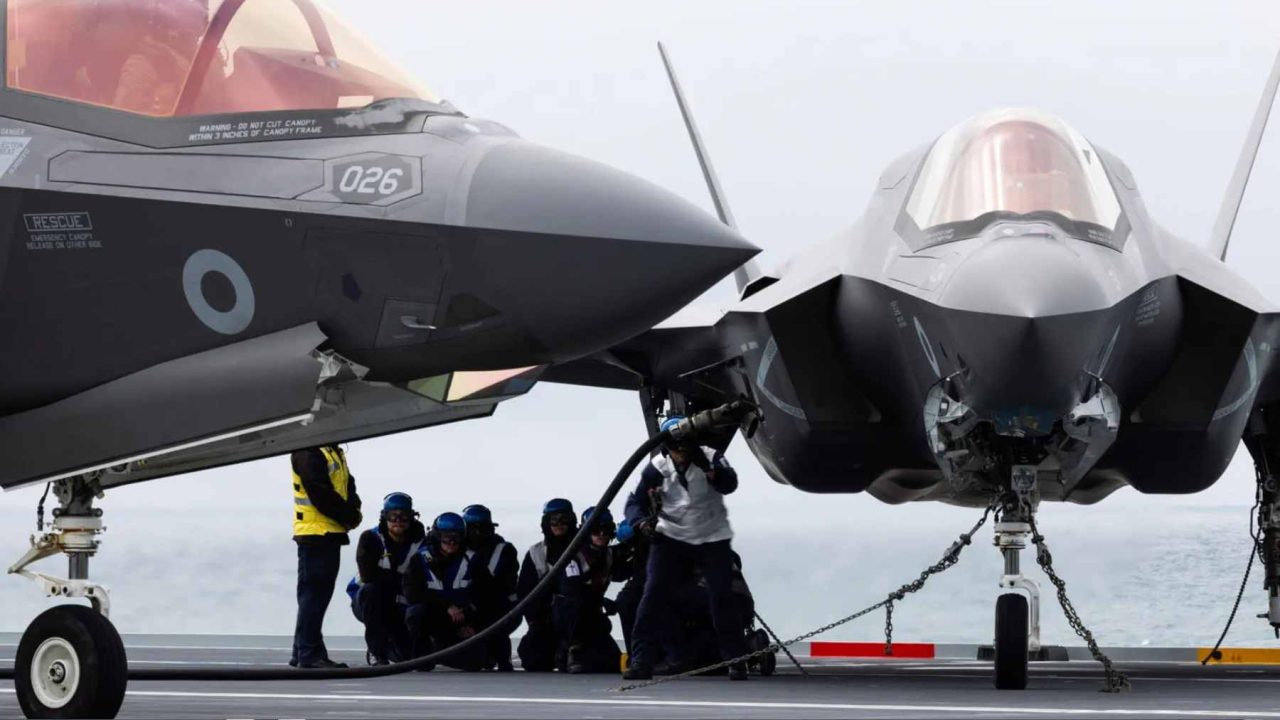
Britain’s largest warship is heading toward one of the most strategically sensitive — and environmentally fragile — stretches of ocean on the planet. In 2026, the United Kingdom confirmed it would deploy a carrier strike group led by HMS Prince of Wales to the North Atlantic and the High North, sailing alongside the United States, Canada, and other allies in a mission described as a demonstration of Euro-Atlantic security.
The announcement came directly from Prime Minister Keir Starmer at the Munich Security Conference, where he used the moment to make a broader argument about the future of Western defense. The deployment is being framed, at least in part, as a security guarantee for Greenland — a territory that has suddenly become one of the most talked-about pieces of land in global politics.
What makes this moment unusual is the backdrop. These ships aren’t sailing into Cold War-era frozen seas. They’re heading into an Arctic that is visibly, measurably changing — and that transformation is precisely why everyone wants to be there.
Why Greenland Is at the Center of Everything Right Now
Greenland has long held strategic importance, but it has rarely occupied the center of global headlines the way it does now. That shift is largely driven by President Donald Trump and his renewed, very public interest in Greenland’s position — both geographically and geopolitically. Trump’s pressure on European nations to increase defense spending has added another layer of urgency to the conversation.
For the UK, the deployment of HMS Prince of Wales is partly a response to that pressure and partly a statement of intent. Starmer made clear at Munich that Britain sees its security as inseparable from Europe’s, arguing plainly that there is
“no British security without Europe, and no European security without Britain.”
He also described Europe itself as a
“sleeping giant”
— a continent with significant defense potential that remains underused because its defense industry is fragmented rather than coordinated. The carrier deployment, in this reading, is Britain’s way of showing it intends to be part of the solution.
What the HMS Prince of Wales Deployment Actually Involves
The mission is structured as a multinational carrier strike group operation. HMS Prince of Wales will lead the formation, with the United States, Canada, and other allied nations participating alongside British forces. The route takes the group through the North Atlantic and into the High North — the maritime zone that includes the waters around Greenland, Iceland, and Norway.
This region has historically been a critical corridor for NATO naval strategy, and it is gaining renewed attention as Arctic ice melts and new shipping lanes, resource deposits, and military access points open up.
| Element | Detail |
|---|---|
| Lead vessel | HMS Prince of Wales (aircraft carrier) |
| Deployment region | North Atlantic and the High North |
| Participating nations | United Kingdom, United States, Canada, and other allies |
| Announced by | Prime Minister Keir Starmer, Munich Security Conference |
| Stated purpose | Euro-Atlantic security and security guarantee for Greenland |
| Year of deployment | 2026 |
Reports from both Spanish and British outlets have characterized the mission specifically as a security guarantee for Greenland — a framing that places this deployment squarely within the geopolitical contest over the island’s future.
Old Cold War Logic, New Arctic Reality
There’s a familiar shape to all of this. Great powers maneuvering for position in the Arctic, aircraft carriers sailing through strategic corridors, alliances signaling resolve — it reads like a chapter from the 1970s or 1980s. The underlying logic hasn’t changed much: control of the High North matters because it controls access between the Atlantic and the Arctic Ocean.
But the physical environment has changed dramatically. The Arctic is warming faster than almost anywhere else on Earth, and that melting ice is not just an environmental story — it’s a strategic one. New shipping routes are opening. Seabed resources that were previously inaccessible are becoming reachable. And the military geography of the region is shifting in real time.
That’s what makes the 2026 deployment feel different from its Cold War predecessors. These ships are sailing into a region mid-transformation, where the rules of access, sovereignty, and strategic advantage are still being written. Britain, by sending its largest warship, is making clear it wants a voice in how those rules take shape.
What This Means for Europe’s Defense Posture
Starmer’s Munich speech wasn’t just about Greenland. It was a broader argument about European defense architecture — and Britain’s place in it, post-Brexit complications notwithstanding.
His characterization of Europe as a “sleeping giant” with an underused, fragmented defense industry points to a real structural problem that NATO allies have been grappling with for years. The argument, essentially, is that European nations have the capacity to contribute far more to collective defense than they currently do — and that the moment to act is now.
- Trump’s pressure on European allies to increase defense spending has accelerated the debate
- Britain is positioning itself as a leading military partner despite its departure from the EU
- The carrier deployment sends a signal to both allies and potential adversaries about UK commitment to the region
- Greenland’s strategic position makes it a focal point for any nation with Arctic or North Atlantic interests
The deployment also reflects a broader recognition that the Arctic is no longer a peripheral concern. As the region becomes more accessible and more contested, having a visible military presence there carries real diplomatic and strategic weight.
What Comes Next for Britain in the Arctic
The HMS Prince of Wales deployment is scheduled for 2026, making it an imminent rather than distant development. Beyond the immediate mission, the broader question is what kind of sustained presence — if any — the UK intends to maintain in the region.
Starmer’s Munich remarks suggest this is not a one-off gesture. The framing of Euro-Atlantic security as indivisible, combined with the explicit reference to Greenland, points toward a longer-term strategic interest in the High North. Whether that translates into permanent basing arrangements, recurring deployments, or deeper bilateral agreements with Arctic nations has not yet been confirmed.
What is clear is that the UK has chosen a high-profile, visible way to signal its intentions — and that the Arctic, long treated as a distant frontier, is now firmly part of the mainstream security conversation.
Frequently Asked Questions
Which British warship is being deployed to the Arctic region in 2026?
HMS Prince of Wales, the UK’s aircraft carrier and its largest warship, will lead the carrier strike group deployment to the North Atlantic and the High North.
What was the stated reason for the deployment?
The mission has been described as a demonstration of Euro-Atlantic security and, according to Spanish and British reports, a security guarantee for Greenland.
Where did Prime Minister Starmer announce the deployment?
Starmer confirmed the deployment at the Munich Security Conference, where he also argued that European and British security are inseparable.
Which countries are participating alongside the UK?
The United States, Canada, and other allied nations are confirmed to be sailing with the British carrier strike group.
What did Starmer mean by calling Europe a “sleeping giant”?
He used the phrase to argue that Europe has significant but underused defense capacity, largely because its defense industry remains fragmented rather than coordinated.
Is the Arctic deployment connected to Trump’s interest in Greenland?


Leave a Reply