
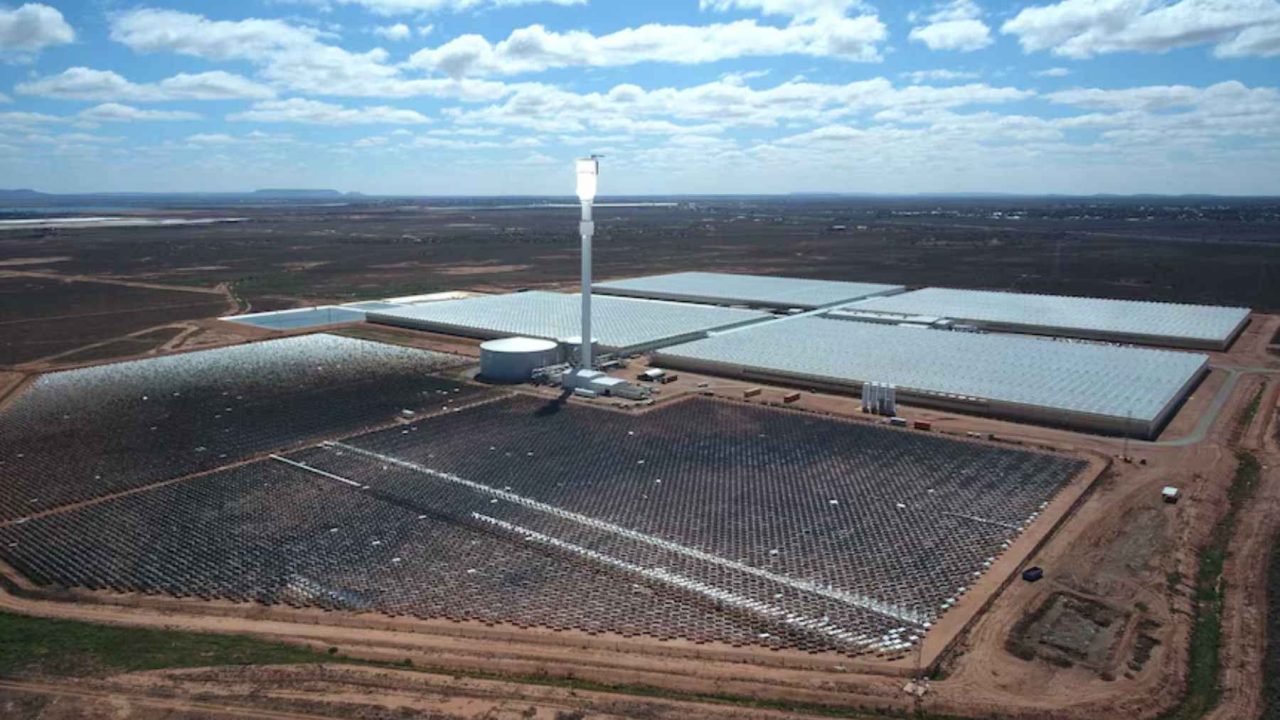
Creditors of Vast Renewables are facing the prospect of recovering as little as 3.2 cents for every dollar they are owed — a figure that lays bare just how dramatically Australia’s once-celebrated solar thermal company has fallen. With total debts sitting at around $79 million, administrators are now recommending an orderly wind-up rather than any attempt to keep the business alive.
For a company that received millions in public funding and was held up as a serious contender in Australia’s clean energy future, the collapse is a sobering moment. It raises hard questions about how public money is allocated to emerging energy technologies — and what happens when the commercial reality fails to match the promise.
Vast Renewables, a solar thermal company, is now in the hands of administrators from KPMG, who have outlined a path forward that involves selling off assets, pooling creditor claims, and transferring the company’s intellectual property to a government agency. The window for any other outcome appears to have closed.
What Vast Renewables Was — and What Went Wrong
Vast Renewables operated in the concentrated solar thermal space, a technology that uses mirrors or lenses to focus sunlight and generate heat, which is then converted into electricity. Unlike standard solar panels, solar thermal systems can store energy as heat, which made the technology attractive to investors and policymakers looking for clean power that could run beyond daylight hours.
The company attracted significant attention — and significant public support — on the strength of that potential. But the gap between potential and profitable commercial operation proved too wide to bridge. Administrators have indicated the business is likely headed toward a wind-up, which means the company will cease operations, its assets will be sold, and creditors will receive whatever can be recovered from the proceeds.
The story of Vast Renewables is not unique. Across the clean energy sector, companies backed by early-stage enthusiasm and public grants have struggled to survive the long, expensive road from demonstration project to full commercial scale. The technology works — but making it work at a profit is a different challenge entirely.
The KPMG Recommendation and What It Means for Creditors
KPMG’s supplementary report recommends that creditors support a deed of company arrangement (DOCA) rather than pushing the group directly into liquidation. The distinction matters, because a DOCA is designed to allow a more structured and potentially more beneficial process than an immediate fire sale of assets.
Under the proposed DOCA, the assets and creditor claims across Vast’s Australian group companies would be pooled together. A deed fund would be created, and the company’s property and undertakings would be sold from within that structure. The goal is to maximise what creditors can recover — though the numbers still paint a grim picture.
One of the most significant elements of the proposal is the planned transfer of Vast’s intellectual property to the Australian Renewable Energy Agency (ARENA), or a nominee of ARENA’s choosing. According to KPMG’s report, this transfer is intended to “maximise the chances of its commercialisation in Australia.” In other words, even if the company itself cannot survive, the technology it developed may still have a future — just under different ownership and stewardship.
The Numbers: What Creditors Are Actually Facing
The financial picture for those owed money by Vast Renewables is stark. KPMG’s estimates put the likely recovery rate for unsecured creditors in a narrow and deeply unfavorable range.
| Scenario | Estimated Creditor Recovery (per dollar owed) |
|---|---|
| Low estimate | 3.2 cents |
| High estimate | 4.2 cents |
| Total company debt | ~$79 million |
To put that in plain terms: a creditor owed $1 million could expect to walk away with somewhere between $32,000 and $42,000. For suppliers, contractors, or investors who committed serious capital to the company, those numbers represent a near-total loss.
- The DOCA structure pools assets across Vast’s Australian group companies
- A dedicated deed fund would be created to manage distributions to creditors
- Company assets and undertakings would be sold as part of the wind-up process
- Intellectual property would be transferred to ARENA or a nominated party
- The transfer of IP is aimed at preserving the technology’s commercial potential in Australia
Why the ARENA Transfer Actually Matters
The proposed handover of Vast’s intellectual property to ARENA is arguably the most consequential part of this entire process — and the part most likely to be overlooked in the headline numbers.
ARENA is the Australian government body specifically tasked with supporting the development and commercialisation of renewable energy technologies. If the IP transfer goes ahead, it means the research, designs, and technical knowledge developed by Vast Renewables would remain in Australian hands, potentially available to future developers or research institutions rather than being acquired by foreign buyers or simply abandoned.
Whether ARENA can successfully commercialise that technology is an open question. But the intent — to prevent years of publicly supported innovation from disappearing into a liquidation process — reflects a broader concern about what happens to the public investment when a clean energy company fails.
What Happens Next for Vast Renewables
The immediate next step is a creditor vote on whether to accept the DOCA proposal. KPMG has recommended the DOCA over direct liquidation, arguing it offers a better outcome for creditors and preserves the possibility of the technology living on through ARENA.
If creditors approve the DOCA, the process of pooling assets, creating the deed fund, and selling the company’s property and undertakings will begin. The intellectual property transfer to ARENA would also proceed as part of that arrangement.
If creditors reject the DOCA, the company would likely move directly into liquidation — a process that could result in even lower recoveries and no structured mechanism for preserving the IP.
For the broader clean energy sector, the outcome of this case will be watched closely. Vast Renewables was not a fringe operation — it received public support and carried genuine expectations. Its collapse is a reminder that even well-funded, technically credible companies can run out of road before the market catches up to the technology.
Frequently Asked Questions
What is Vast Renewables?
Vast Renewables is an Australian solar thermal energy company that is now in administration, with administrators from KPMG overseeing its wind-up process.
How much does Vast Renewables owe its creditors?
The company has debts of around $79 million, and unsecured creditors are estimated to recover only between 3.2 and 4.2 cents for every dollar owed.
What is a deed of company arrangement (DOCA)?
A DOCA is a structured insolvency arrangement that allows a company’s assets to be managed and distributed to creditors in an orderly way, rather than going straight into liquidation.
What will happen to Vast Renewables’ intellectual property?
Under the proposed DOCA, the company’s intellectual property would be transferred to the Australian Renewable Energy Agency (ARENA), or a nominee, to maximise its chances of future commercialisation in Australia.
Why did KPMG recommend the DOCA over liquidation?
KPMG’s supplementary report recommends the DOCA because it is expected to offer a better recovery outcome for creditors and provides a structured mechanism for transferring the company’s IP to ARENA.
Did Vast Renewables receive public funding?
According to the source reporting, Vast Renewables received millions in public aid, though the exact amounts and terms of that funding have not been fully detailed in the administrator’s public disclosures covered here.



Leave a Reply