
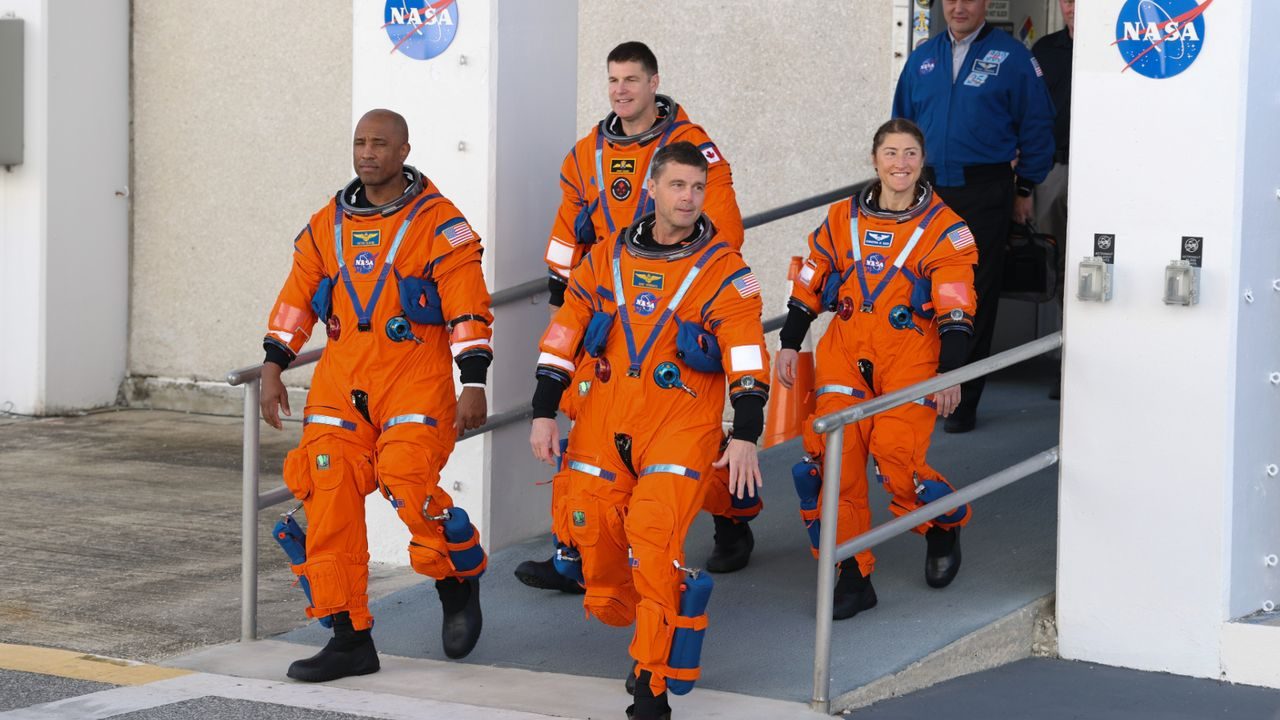
For the first time in more than half a century, human beings are preparing to travel to the moon — and the four astronauts chosen for NASA’s Artemis II mission are set to make history in ways that go far beyond simply getting there.
After repeated delays, NASA is moving forward with a mission that will send commander Reid Wiseman, pilot Victor Glover, and mission specialists Christina Koch and Jeremy Hansen on a sweeping arc around the moon and back. The mission won’t land on the lunar surface, but what it will do is rewrite the record books — individually and as a crew.

These aren’t small milestones. They represent genuine firsts for human spaceflight, pushing the boundaries of how far and how fast people have ever traveled, and who gets to do the traveling.
Why Artemis II Is Unlike Any Mission Since Apollo
The last time astronauts traveled to the moon was during the Apollo program, which ended in 1972. That’s more than 50 years of humans remaining within relatively close range of Earth — orbiting aboard the International Space Station, conducting spacewalks, running experiments — but never venturing into deep space.
Artemis II changes that. The mission is designed as a crewed flyby, using the moon’s gravity to slingshot the Orion spacecraft around the far side and back toward Earth. It’s a proving ground for the hardware, the systems, and the people who will eventually attempt a lunar landing on a future Artemis mission.
But even as a test flight, its significance is enormous. The crew will travel farther from Earth than any humans ever have, and they’ll do it aboard a spacecraft that has never carried people on a trajectory like this before.
The Artemis II Crew and the Records They’re Set to Break
Each member of the four-person crew brings something distinct to this mission — and each stands to claim a piece of history. Here’s what makes this team so significant:
- Reid Wiseman — Commander of the mission, responsible for leading the crew through what will be one of the most complex crewed spaceflight operations in NASA’s modern era.
- Victor Glover — Pilot of the Orion spacecraft, and positioned to set records tied to both the distance and diversity milestones of the mission.
- Christina Koch — Mission specialist who already holds the record for the longest single spaceflight by a woman. Artemis II will add another landmark achievement to that list.
- Jeremy Hansen — A Canadian Space Agency astronaut and mission specialist, representing international partnership at the heart of the Artemis program.
Collectively, this crew is the most diverse group of humans ever assigned to a lunar mission. That alone is a record — but it’s far from the only one.
The Records That Will Fall During This Mission
The Artemis II mission is structured as a lunar flyby, which means the spacecraft will travel to a distance no human crew has reached since the Apollo era — and in some respects, farther than any crew has gone before. The records expected to be broken span distance, speed, and representation in spaceflight history.
| Record Category | Details |
|---|---|
| Farthest distance traveled by humans | The Artemis II crew is expected to travel farther from Earth than any humans in history |
| Fastest crewed reentry speed | The Orion capsule is expected to reenter Earth’s atmosphere faster than any crewed vehicle has before |
| First woman to travel to the moon | Christina Koch will become the first woman ever to travel to lunar distance |
| First person of color to travel to the moon | Victor Glover will become the first Black astronaut to travel to the moon |
| First Canadian to travel to the moon | Jeremy Hansen will be the first Canadian — and first non-American — to travel to lunar distance |
| Most diverse lunar crew | The four-person team represents the most diverse crew ever sent toward the moon |
What This Means for the Future of Space Exploration
Records in spaceflight aren’t just numbers. They signal what’s possible — and who gets to be part of it. For decades, the image of a moonbound astronaut looked a very specific way. Artemis II deliberately expands that picture.
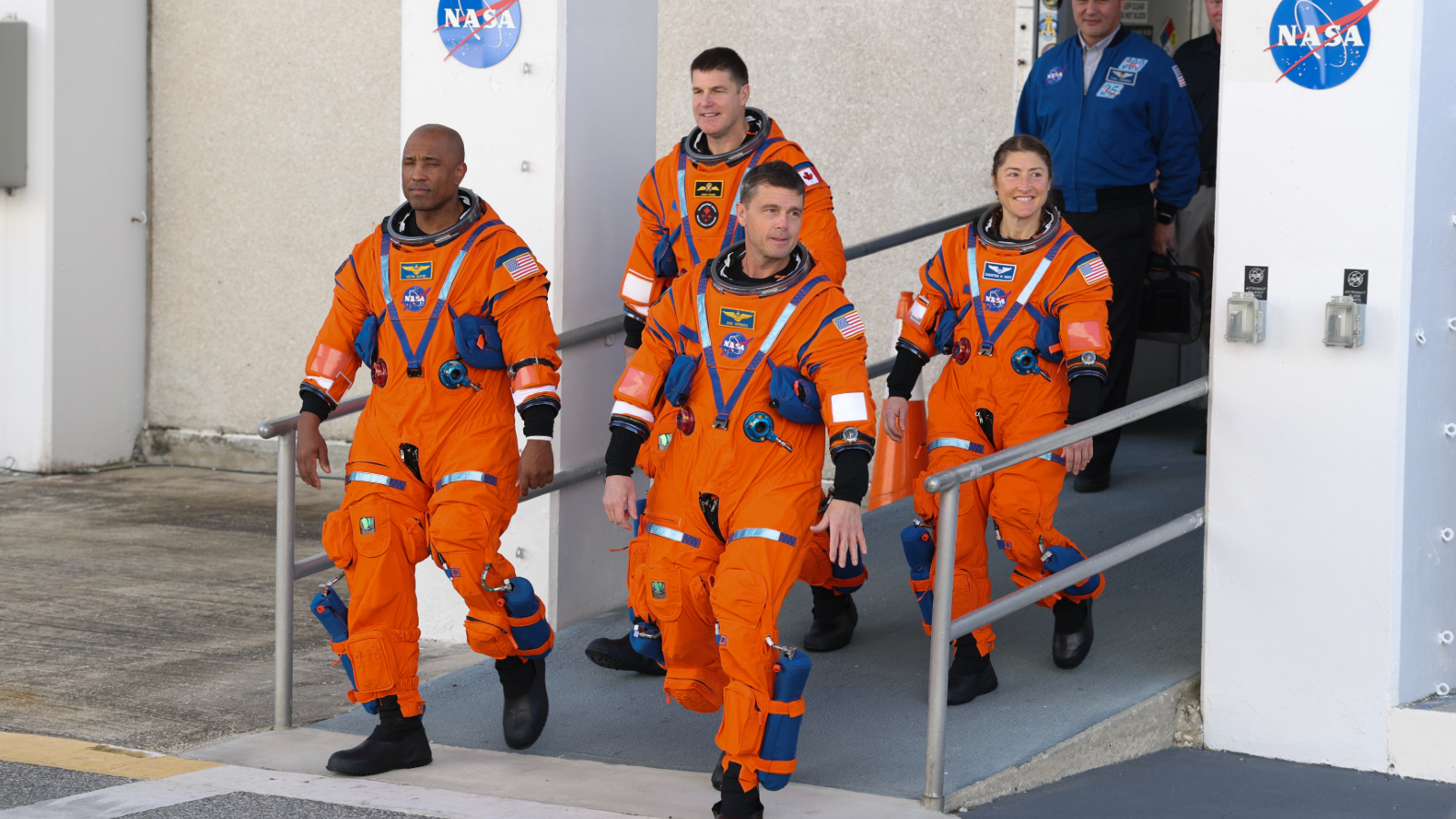
The inclusion of the first woman, the first Black astronaut, and the first Canadian in a lunar mission reflects a broader shift in how NASA and its international partners are approaching deep space exploration. Artemis isn’t just a technical program — it’s a statement about who humanity sends to represent itself beyond Earth.
From a purely engineering standpoint, the mission will also stress-test the Orion spacecraft and Space Launch System under real crewed conditions at lunar distances. The data gathered will directly inform the design and planning of Artemis III, which is intended to actually land astronauts on the lunar surface — including, for the first time, a woman.
What Comes Next After Artemis II
Artemis II is not the finish line — it’s the foundation. A successful mission clears the path for Artemis III, which aims to return humans to the lunar surface for the first time since 1972. After that, NASA’s long-term vision includes a sustained human presence near and on the moon, eventually serving as a stepping stone toward crewed missions to Mars.
For now, though, the focus is on four astronauts strapping into a capsule and doing something no human crew has attempted in more than 50 years: leaving the safety of low Earth orbit and pointing toward the moon.
Whatever happens next in the broader Artemis program, the records this crew is about to set will stand as a permanent marker of where humanity was willing to go — and who it chose to send.
Frequently Asked Questions
Who are the four astronauts on the Artemis II mission?
The crew consists of commander Reid Wiseman, pilot Victor Glover, and mission specialists Christina Koch and Jeremy Hansen.
Will the Artemis II crew land on the moon?
No. Artemis II is a crewed flyby mission that will slingshot around the moon and return to Earth without landing on the surface.
Why is Artemis II considered historic for diversity in spaceflight?
Christina Koch will become the first woman to travel to lunar distance, Victor Glover will be the first Black astronaut to do so, and Jeremy Hansen will be the first Canadian — making this the most diverse crew ever sent toward the moon.
How long has it been since humans traveled to the moon?
The last crewed lunar mission was during NASA’s Apollo program, which ended in 1972 — more than 50 years ago.
What comes after Artemis II?
Artemis III is intended to land astronauts on the lunar surface, building on the data and experience gathered during the Artemis II flyby mission.
Has the Artemis II launch date been confirmed?
The mission has faced repeated delays, though NASA has indicated it is moving forward with preparations for launch.


Leave a Reply