
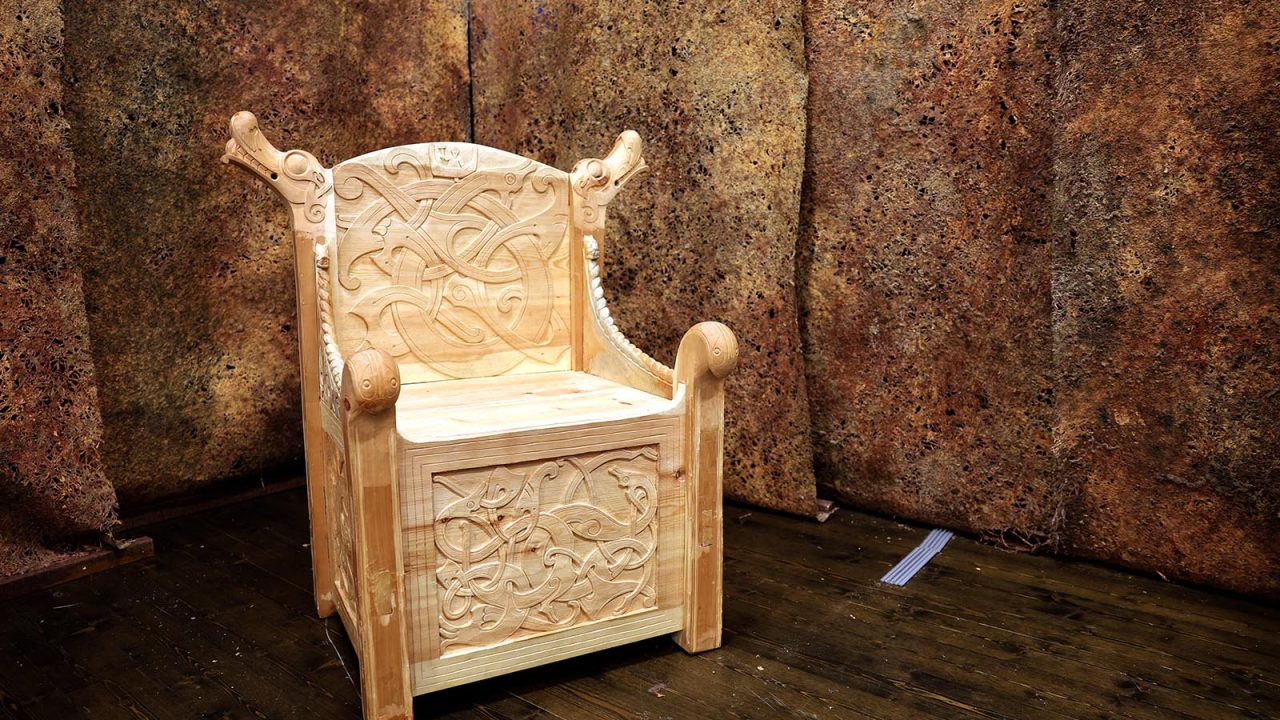
For the first time since the Viking Age, a high seat — the most powerful chair in any Norse hall — has been crafted in Central Norway. The reconstruction now stands at the centre of a major exhibition in Trondheim, offering visitors something that hasn’t existed in this region for over a thousand years.
It’s a striking object. Ornate, deliberate, and heavy with meaning. In Viking Age society, who sat in this chair — and who didn’t — said everything about where power lived on a farm or estate.
https://www.instagram.com/p/DMFf9t0x5sz/
https://www.instagram.com/reel/DPrTCJuCF-m/
The piece is now the centrepiece of the ‘Viking’ exhibition at the NTNU University Museum, and it’s already drawing attention for what it reveals about a side of Norse culture that popular storytelling rarely bothers to show.
The Viking High Seat and What It Actually Meant
Most people picture Viking society through the lens of longships, raiding parties, and distant shores. That image isn’t wrong — but it’s incomplete. The vast majority of people living in Viking Age Scandinavia were farmers. Their world revolved around the land, the harvest, and the social order of the hall.
At the heart of that social order was the high seat.
Positioned prominently within longhouses, the high seat was reserved for the most powerful individual on a farm or estate — typically its head. It wasn’t just a comfortable chair. It was a statement. A declaration of rank that everyone in the room understood without a word being spoken.
“It was the most prestigious seat in the hall, and not just anyone could sit there,” said Ellen Grav, who coordinates public outreach work on archaeology at the NTNU University Museum.
The symbolism ran deep. To occupy the high seat without the right to do so would have been a serious social transgression. To be invited to sit there was an honour. The chair itself was a tool of governance, hierarchy, and identity — all at once.
Who Made It, and How It Came to Trondheim
The reconstruction was crafted by traditional woodworker Kai Johansen at the Stiklestad National Cultural Centre. According to the museum, it is believed to be the first high seat created in Central Norway since the Viking Age — a claim that underscores just how rare this kind of dedicated historical craftsmanship has become.
The chair was commissioned as part of the second phase of the ‘Viking’ exhibition at the NTNU University Museum in Trondheim. That second phase deliberately shifts the exhibition’s focus away from seafaring and toward something quieter but arguably more fundamental: the agricultural world that sustained Norse civilisation.
As Ellen Grav put it plainly:
“The farm is the cornerstone of Viking society as a whole.”
It’s a reframing that historians have long argued for. Ships and swords make for dramatic museum displays, but the rhythms of Viking life — planting, harvesting, managing land, negotiating social standing — happened on farms, not on the open sea.
Key Facts About the Exhibition and the Reconstruction
| Detail | Information |
|---|---|
| Exhibition name | ‘Viking’ exhibition |
| Museum location | NTNU University Museum, Trondheim, Norway |
| Craftsperson | Kai Johansen |
| Crafted at | Stiklestad National Cultural Centre |
| Significance | Believed to be the first high seat made in Central Norway since the Viking Age |
| Exhibition phase focus | Agricultural foundations of Viking society |
| Museum contact (outreach) | Ellen Grav, public outreach coordinator for archaeology |
- High seats were positioned prominently inside Viking Age longhouses
- They were reserved for the most powerful individual on the farm or estate
- The chair carries deep symbolic weight in Norse social and political culture
- The new reconstruction forms the centrepiece of the exhibition’s second phase
- The second phase moves focus from seafaring to farming and social structure
Why This Matters Beyond the Museum Walls
There’s a tendency in popular culture to flatten the Viking Age into a single dramatic narrative: warriors, raids, mythology. Exhibitions like this one push back against that simplification — and for good reason.
When we only tell the story of Viking ships and battles, we miss the political and social architecture that made those societies function. The high seat isn’t just a chair. It’s evidence of a sophisticated system of authority, hospitality, and social obligation that governed daily life for ordinary people across medieval Norway.
Ellen Grav herself noted that while the high seat is visually commanding, comfort isn’t exactly its strong suit — though she acknowledged it gives a “very special feeling” to sit in it. That contrast is telling. This was never about comfort. It was about power, presence, and the unmistakable signal sent to everyone else in the room.
For museum visitors, the reconstruction offers something rare: a physical, tangible connection to a social world that usually only survives in fragments of saga literature and archaeological traces. Standing next to it — or imagining sitting in it — makes that world feel suddenly less distant.
What the Exhibition Explores Next
The high seat is the anchor piece of the exhibition’s second phase, which the NTNU University Museum has structured to broaden how visitors understand Viking Age life. Rather than building on the seafaring and exploration themes that typically dominate Viking exhibitions, this phase turns attention to the farm as the basic unit of Norse society.
The Stiklestad National Cultural Centre, where Kai Johansen crafted the chair, is itself a significant site in Norwegian cultural heritage — adding another layer of historical resonance to the project.
Whether further phases of the exhibition are planned has not been confirmed in available reporting, but the decision to commission an entirely new high seat — the first in Central Norway in more than a millennium — signals a serious commitment to hands-on, material engagement with the past.
Frequently Asked Questions
What is a Viking high seat?
A high seat was an ornate, prominently placed chair in a Viking Age longhouse, reserved for the most powerful individual on a farm or estate. It carried deep symbolic and social significance.
Where can I see the reconstructed high seat?
The high seat is currently on display as the centrepiece of the ‘Viking’ exhibition at the NTNU University Museum in Trondheim, Norway.
Who made the reconstructed high seat?
It was crafted by traditional woodworker Kai Johansen at the Stiklestad National Cultural Centre in Norway.
Why is this reconstruction considered historically significant?
It is believed to be the first high seat created in Central Norway since the Viking Age, making it an exceptionally rare example of this type of traditional craftsmanship.
What is the second phase of the Viking exhibition about?
The second phase shifts focus from seafaring and raids to the agricultural foundations of Viking society, exploring the farm as the cornerstone of Norse life.
Is the high seat comfortable to sit in?
According to Ellen Grav, the museum’s public outreach coordinator for archaeology, the seating comfort is questionable — but she noted it gives a very special feeling to sit in it.


Leave a Reply