
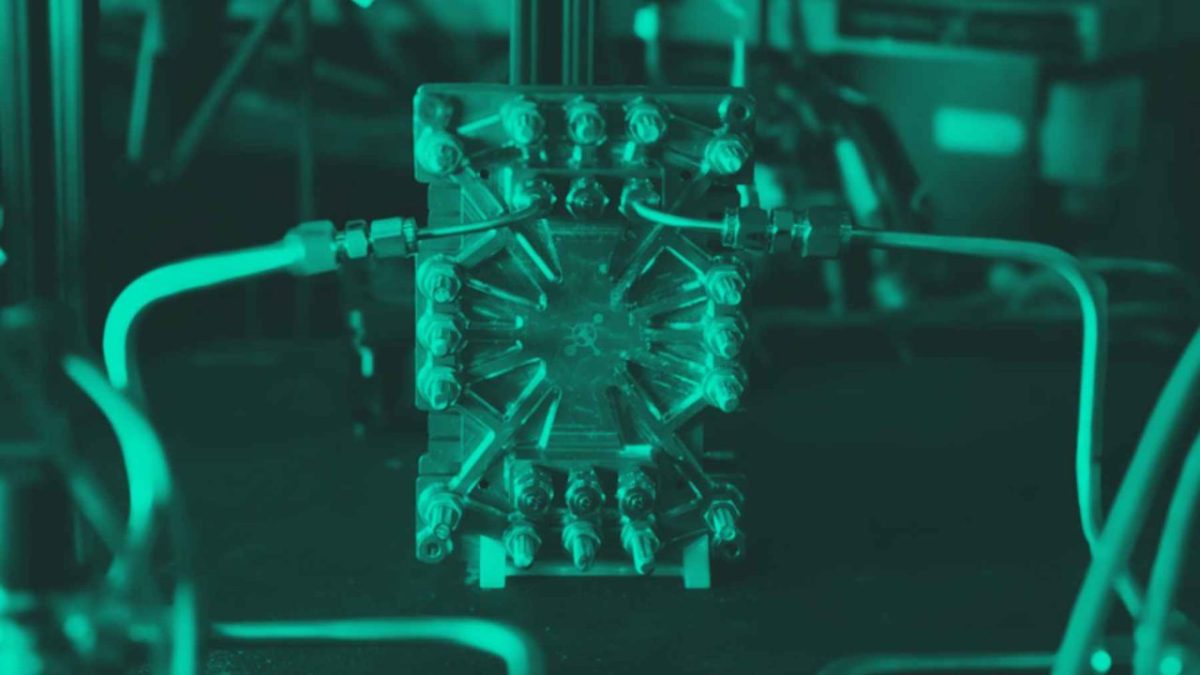
What if the most dangerous thing about a rocket wasn’t the speed, the heat, or the vacuum of space — but the fuel sitting in the tank? A U.S. startup called General Galactic is betting that water can replace the hazardous propellants that have defined spaceflight for decades, and it’s about to test that idea in orbit.
The company plans to launch a satellite named Trinity — weighing roughly 500 kilograms — aboard a SpaceX Falcon 9 mission scheduled for October 2026. Once in orbit, Trinity will operate using water as its only onboard propellant. That’s it. Plain water. The same thing you pour into a glass every morning.
If the mission works as planned, it could quietly reshape how satellites are built, launched, and managed — with ripple effects that reach all the way to ambitious deep-space programs like SpaceX’s proposed journey to Mars.
Why Space Fuel Is a Bigger Problem Than Most People Realize
Traditional spacecraft propellants are extraordinarily hazardous. Many are toxic, highly pressurized, and require strict handling protocols that drive up costs at every stage — manufacturing, transport, launch preparation, and ground operations. The danger doesn’t disappear once the satellite is in orbit, either. A tank of volatile propellant represents an ongoing risk for the spacecraft and for the increasingly crowded region of space around Earth.
That crowding is a real and growing problem. Earth orbit has become something of a traffic jam, with thousands of active satellites, spent rocket stages, and debris fragments all sharing the same limited lanes. Satellites that can maneuver safely and efficiently — without carrying explosive or toxic chemicals — are better equipped to dodge that debris and extend their operational lives.
General Galactic’s approach addresses both problems at once: replace the dangerous stuff with something inert, and use it in a way that’s still genuinely useful for propulsion.
How You Actually Get Thrust From Water
This is where the science gets interesting. Trinity is designed to test two distinct propulsion methods, both powered entirely by water.
The first is a chemical propulsion approach. The satellite uses a process called electrolysis to split water molecules into hydrogen and oxygen. The hydrogen is then burned using the oxygen as an oxidizer — producing hot water vapor that is expelled through a nozzle to generate thrust. It’s fundamentally the same chemistry used in some of the most powerful rocket engines ever built, just starting from a much safer source material stored in the tank.
The second method is electric propulsion using a Hall effect thruster. In this approach, water is split and the resulting oxygen is energized until it becomes a plasma — an electrically charged gas. Magnetic fields then shape and accelerate that plasma, expelling it to produce steady, efficient thrust. Hall effect thrusters are already used on many commercial satellites, but using water-derived plasma as the working fluid is a significant departure from conventional designs.
| Propulsion Method | How It Works | Key Advantage |
|---|---|---|
| Chemical (Electrolysis + Combustion) | Water split into H₂ and O₂; hydrogen burned with oxygen as oxidizer; hot vapor expelled for thrust | Higher thrust output; familiar rocket chemistry from a safer propellant |
| Electric (Hall Effect Thruster) | Water split; oxygen energized into plasma; shaped by magnetic fields and expelled | Steady, efficient thrust; well-suited for orbital maneuvering |
The fact that Trinity is designed to test both systems on a single mission is notable. It means General Galactic could gather real-world performance data on two fundamentally different propulsion architectures in one flight — a cost-efficient way to validate the technology.
What This Means for Satellites, Safety, and the Orbital Traffic Problem
If Trinity’s mission succeeds, the practical implications are substantial. Satellites that run on water would be significantly safer to handle on the ground, reducing the specialized infrastructure and safety protocols currently required for fueling operations. That alone could meaningfully cut costs across the industry.
There’s also the question of in-orbit refueling. Water is far easier to store and transfer safely than conventional propellants, which makes it a much more practical candidate for future refueling missions. As the space industry increasingly looks toward servicing satellites in orbit — extending their lives rather than deorbiting and replacing them — having a propellant that can be handled without hazmat-level precautions becomes a serious advantage.
And then there’s the debris problem. A satellite with reliable, water-based propulsion can maneuver more confidently to avoid collisions, respond to conjunction warnings, and ultimately deorbit itself in a controlled way at end of life. All of that contributes to a cleaner, safer orbital environment — something that benefits every operator sharing that space.
The Connection to Mars and Deep-Space Ambitions
The implications extend beyond Earth orbit. Water exists — or is believed to exist — in various forms across the solar system, including on Mars and in the permanently shadowed craters of the Moon. A propulsion system that runs on water could, in theory, be refueled using resources found at the destination rather than carried entirely from Earth.
That concept — known broadly as in-situ resource utilization — is central to making long-duration missions like SpaceX’s Mars program economically viable. Carrying every kilogram of propellant from Earth’s surface is extraordinarily expensive. Being able to produce or source fuel at the destination changes the math entirely.
General Galactic’s Trinity mission won’t answer all of those questions. But it could provide critical proof-of-concept data that moves water-based propulsion from an interesting idea to a tested, flight-proven technology.
What Happens After October 2026
The October 2026 launch date is the immediate milestone to watch. Trinity will ride to orbit aboard a SpaceX Falcon 9, and once deployed, the satellite will begin demonstrating both its chemical and electric propulsion systems in the actual environment of space — where conditions cannot be fully replicated on the ground.
The results of that test will be closely watched across the satellite industry, by space agencies, and by anyone tracking the development of next-generation propulsion technology. A successful demonstration wouldn’t just validate General Galactic’s approach — it would signal that one of the most fundamental assumptions in spacecraft design, that you need dangerous chemicals to move through space, may no longer hold.
That’s a significant claim. In October 2026, the data will start to speak for itself.
Frequently Asked Questions
What is the Trinity satellite?
Trinity is a roughly 500-kilogram satellite built by U.S. startup General Galactic, designed to test water-based propulsion systems in orbit.
When is Trinity set to launch?
General Galactic plans to launch Trinity on a SpaceX Falcon 9 mission in October 2026.
How does a satellite use water as propellant?
Trinity uses two methods: electrolysis to split water into hydrogen and oxygen for chemical combustion, and a Hall effect thruster that converts water-derived oxygen into plasma for electric propulsion.
Why is water safer than traditional rocket fuel?
Water is non-toxic and far less hazardous to handle than conventional spacecraft propellants, which are often highly reactive or poisonous and require strict safety protocols during fueling operations.
Could water-based propulsion be used on a Mars mission?
Has water-based propulsion been proven in space before?
The Trinity mission is described as a test to validate the concept in orbit; whether prior flight demonstrations exist is not confirmed in the available source material.


Leave a Reply