
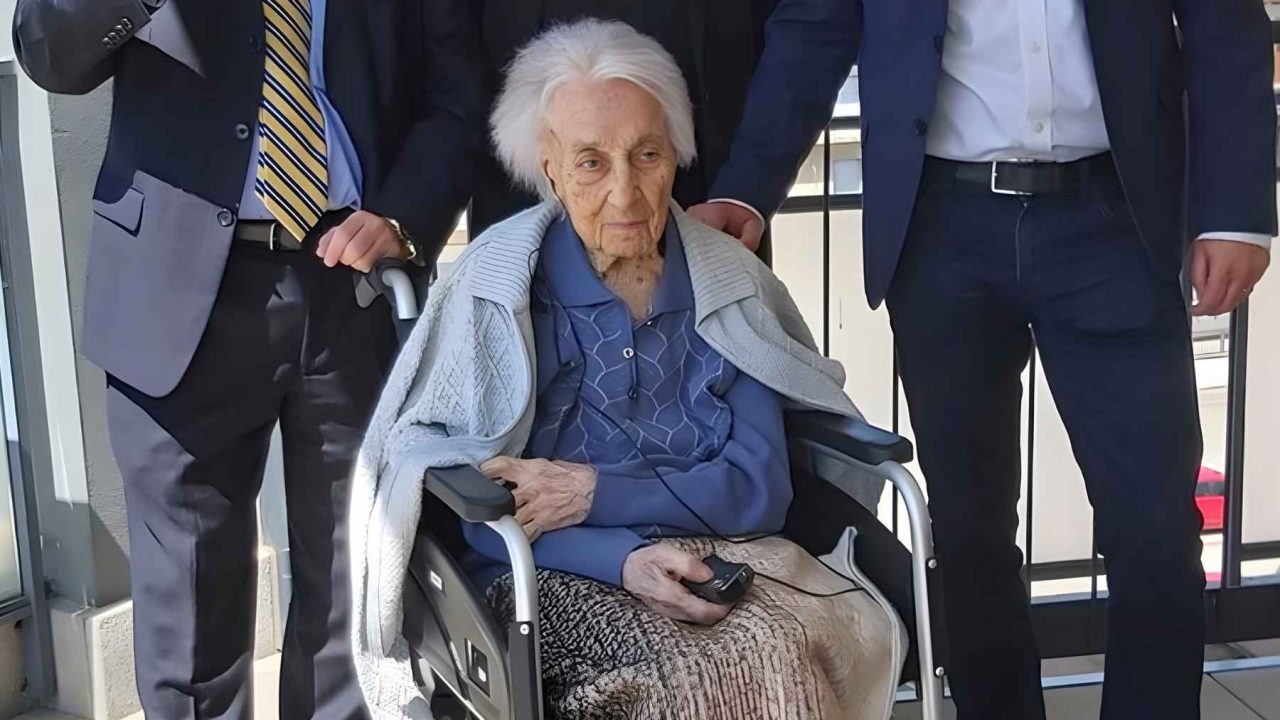
A woman who lived to 117 years and 168 days has become one of the most studied human beings in the history of longevity research — and what scientists found inside her biology was not what they expected.
Maria Branyas Morera, who held the title of the oldest living person on Earth at the time of her death, passed away peacefully in her sleep in August 2024. She had spent her final decades in Catalonia, Spain. Now, an international research team has published findings that may reframe how scientists think about extreme old age — and what it actually takes to reach it.
The results point to something deeper than lifestyle alone. Her body, at the cellular level, appeared to be aging on a different clock than everyone else’s.
The Woman Behind the Science: Who Maria Branyas Morera Was
Born in 1907 in San Francisco to Spanish parents, Branyas Morera moved to Barcelona as a child and eventually settled into a care home in the Catalan town of Olot. She outlived the average Catalan woman — whose life expectancy sits at around 86 years — by more than three decades.
In the published study, researchers refer to her not by name but as M116, a designation tied to a blood sample collected when she was 116 years old. That clinical label underscores the precision of the research — this was not a tribute. It was a biological investigation.
The team was led by Eloy Santos Pujol, with senior authorship from Manel Esteller. Together, they examined nearly every layer of her biology, from her genes and metabolism to her gut bacteria and epigenetic clocks — the molecular markers scientists use to estimate biological age independent of a person’s birth certificate.
What Her DNA and Biology Actually Revealed
The core finding is striking: despite showing the expected physical markers of extreme old age — she did experience late-life lung issues and arthritis — her internal biology told a different story.
According to the research team, several key biological systems appeared significantly younger than her chronological age. Researchers found that her genes, metabolism, gut bacteria, and epigenetic clocks all showed profiles more consistent with a much younger person. The scientists believe this may help explain why she largely avoided three of the most common killers among the elderly: heart disease, cancer, and dementia.
This is not simply a story about good genes or clean living. The researchers suggest the interaction between her genetic makeup and biological aging processes was genuinely unusual — something they describe as not having been previously imagined at this scale.
Key Facts From the Longevity Study at a Glance
| Detail | Information |
|---|---|
| Full name | Maria Branyas Morera |
| Age at death | 117 years and 168 days |
| Date of death | August 2024 |
| Year of birth | 1907 |
| Birthplace | San Francisco, USA (to Spanish parents) |
| Final residence | Care home in Olot, Catalonia, Spain |
| Research sample label | M116 (blood sample at age 116) |
| Lead researcher | Eloy Santos Pujol |
| Senior author | Manel Esteller |
| Average life expectancy (Catalan women) | Approximately 86 years |
- Her epigenetic clocks — biological markers of cellular aging — registered younger than her actual age
- Her gut microbiome showed profiles atypical for someone her age
- Her metabolic markers also appeared younger than expected
- She avoided heart disease, cancer, and dementia well into extreme old age
- Late-life health issues included lung problems and arthritis
Why This Research Matters Beyond One Remarkable Life
Most people will never reach 117. But the reason this study has drawn international attention is what it might mean for the rest of us.
If scientists can identify why Branyas Morera’s biological systems aged more slowly — and which specific genetic or epigenetic factors drove that — it opens the door to understanding aging as something that can be measured, monitored, and potentially influenced. The fact that her gut bacteria, metabolism, and cellular aging markers all pointed in the same direction suggests these systems may work together in ways researchers are only beginning to map.
The research also reinforces a growing consensus in longevity science: chronological age and biological age are not the same thing. Two people born in the same year can be aging at measurably different rates at the cellular level. What Branyas Morera’s case provides is a rare, extreme data point at the very edge of human lifespan — a biological snapshot of what “successful aging” might actually look like from the inside.
For the average reader, the takeaway is not that any single habit or food guarantees a long life. The researchers’ findings point toward a complex interplay of genetics, gut health, metabolism, and epigenetic regulation — not a simple formula. Her case is extraordinary precisely because it is so rare.
What Researchers Are Likely to Examine Next
The study represents one of the most comprehensive biological analyses ever conducted on a supercentenarian — a person who has reached 110 or beyond. The data collected from M116 is expected to contribute to ongoing research into the biological mechanisms of aging.
Scientists in this field generally focus next on whether findings from a single subject can be replicated or observed across other supercentenarians. The question researchers are now positioned to ask is whether the patterns found in Branyas Morera’s biology appear in others who reach extreme old age, or whether her case represents something genuinely singular.
What is confirmed is that the international team has produced a detailed multi-layered biological profile that other researchers can now work from — a scientific foundation built from one extraordinary life.
Frequently Asked Questions
How old was Maria Branyas Morera when she died?
She was 117 years and 168 days old at the time of her death in August 2024, making her the oldest living person on Earth at the time.
Where was she born and where did she live?
She was born in San Francisco in 1907 to Spanish parents, later moved to Barcelona as a child, and spent her final years in a care home in Olot, Catalonia.
Who led the scientific research into her biology?
The study was led by Eloy Santos Pujol, with Manel Esteller serving as senior author, as part of an international research team.
What did scientists find unusual about her biology?
Researchers found that her genes, metabolism, gut bacteria, and epigenetic clocks all appeared significantly younger than her chronological age, which may explain why she largely avoided heart disease, cancer, and dementia.
Did she have any health problems in her final years?
Yes —
What does the research code “M116” refer to?
M116 is the label researchers assigned to a blood sample taken from her when she was 116 years old, used to identify her in the published scientific study.



Leave a Reply