
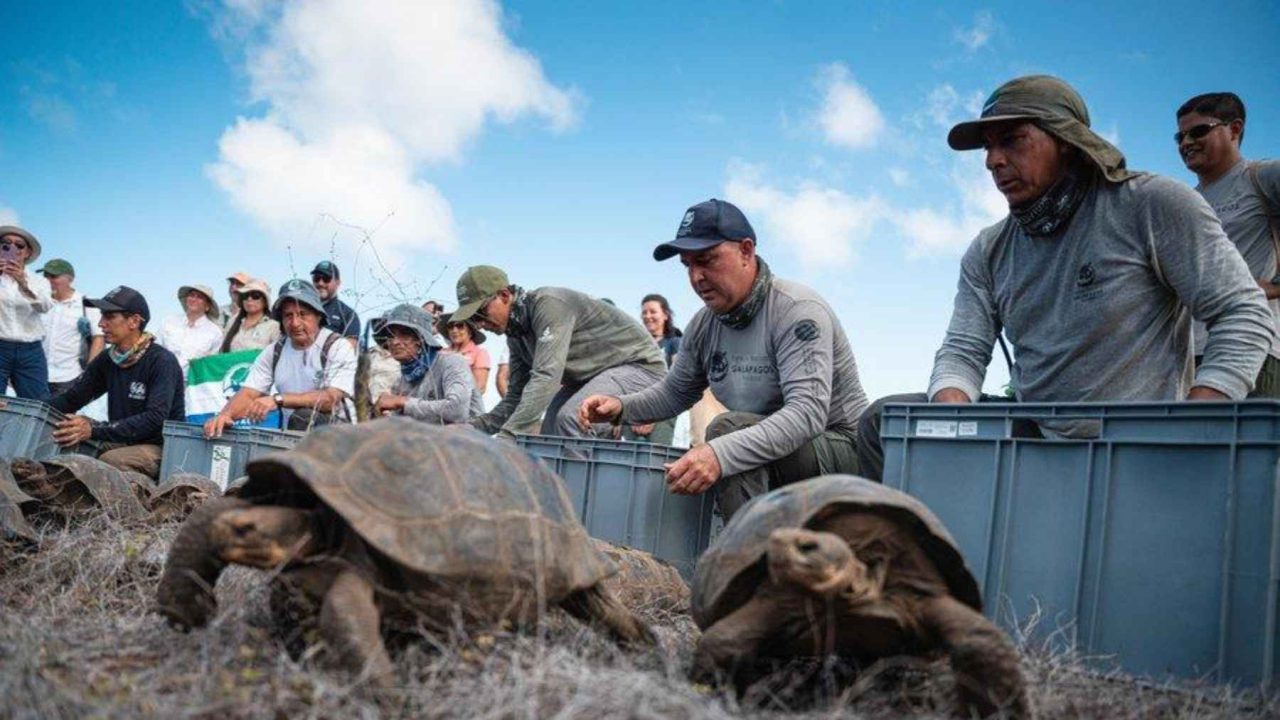
A species can vanish from an island for nearly two centuries — and still find its way back. In late February 2026, 158 juvenile giant tortoises were released onto Floreana Island in Ecuador’s Galápagos archipelago, marking the first time these animals have set foot on the island in more than 180 years. It is one of the most ambitious wildlife restoration efforts ever attempted in the Galápagos, and the stakes for the island’s ecosystem could not be higher.
The tortoises belong to a lineage that was thought to be gone forever. The Floreana giant tortoise — known scientifically as Chelonoidis niger niger — disappeared from the island in the mid-1800s, driven to local extinction by hunting, habitat destruction, and the arrival of invasive species. What makes this comeback possible at all is a remarkable biological footnote: the species’ lineage survived, hidden inside hybrid tortoises living on another island. Decades of DNA testing and carefully managed breeding programs have now produced young animals that are genetically close to the original Floreana population.
Now, for the first time in living memory — and many generations beyond that — giant tortoises are walking Floreana’s terrain again.
The Project Behind the Return of the Floreana Giant Tortoise
This release is not a spontaneous act of conservation optimism. It is the opening move in the Floreana Ecological Restoration Project, a coordinated, multi-organization effort years in the making. The project is led by the Galápagos National Park Directorate and the Galápagos Biosecurity and Quarantine Agency, working alongside a coalition of respected conservation organizations from around the world.
The scale of collaboration involved reflects just how complex a project like this really is. Restoring a species to a place it has been absent from for nearly two centuries is not simply a matter of releasing animals and hoping for the best. It requires careful preparation of the habitat, control of invasive species that moved in during the tortoises’ long absence, and years of monitoring to track whether the animals are surviving and reproducing.
The organizations involved bring expertise in genetics, island ecology, biosecurity, and breeding — all of which are essential to giving these 158 young tortoises the best possible chance.
Who Is Leading This Effort
| Organization | Role in the Project |
|---|---|
| Galápagos National Park Directorate | Lead government agency overseeing the restoration |
| Galápagos Biosecurity and Quarantine Agency | Co-lead; managing biosecurity on the island |
| Charles Darwin Foundation | Scientific research and conservation support |
| Fundación Jocotoco | Conservation partner |
| Island Conservation | Invasive species management and island restoration |
| Durrell Wildlife Conservation Trust | Breeding program expertise |
| Galapagos Conservancy | Funding and conservation support |
Why Tortoises Matter So Much to an Island Ecosystem
Giant tortoises are not just large, slow-moving animals. They are what ecologists call ecosystem engineers — species whose behavior physically shapes the environment around them. As they move through the landscape, they eat fruit and disperse seeds across wide distances. They trample vegetation, creating clearings. They open pathways through dense undergrowth that other animals use.
When the Floreana giant tortoise disappeared in the 1800s, all of that stopped. The island’s ecosystem did not collapse overnight, but it has been quietly deteriorating ever since — a slow unraveling that happens when a keystone species is removed. Plants that once relied on tortoises to spread their seeds have struggled. Vegetation patterns have shifted. The island’s natural “gardening,” as conservationists describe it, ground to a halt.
The hope driving this project is that reintroducing tortoises — even juvenile ones that will take years to reach full size — can restart those ecological processes. Slowly, the island could begin to function more like it did before human interference fundamentally altered it.
The Science That Made This Comeback Possible
The fact that this release is happening at all is a testament to decades of painstaking scientific work. When researchers discovered that hybrid tortoises on another Galápagos island carried genetic material from the extinct Floreana population, it opened a narrow but real path toward recovery.
Using DNA analysis, scientists identified which hybrid individuals carried the highest proportion of Floreana tortoise ancestry. Those animals were selected for a carefully managed breeding program designed to produce offspring that were as genetically close to the original species as possible. The 158 juvenile tortoises released in February 2026 are the result of that long process.
It is worth being clear about what they are and what they are not. These animals are not perfect genetic replicas of the original Floreana giant tortoise. They are the closest living approximation that modern science and careful breeding can produce. Whether that is close enough to fully restore the ecological role the original species played remains an open question — one that only time and careful monitoring will answer.
What Happens Next on Floreana Island
The release of 158 juvenile tortoises is just the beginning. Young tortoises take many years to mature, and the ecological impact of their presence will build slowly over time. Conservation teams will monitor the animals to track survival rates, movement patterns, and health — gathering data that will inform future phases of the project.
The broader restoration effort on Floreana also involves ongoing work to control invasive species that have taken hold during the tortoises’ long absence. Invasive plants and animals have reshaped the island’s ecology over generations, and removing or managing them is essential to giving the returning tortoises — and the native ecosystem — room to recover.
Supporters of the project argue that Floreana represents something rare in conservation: a genuine second chance. The genetic lineage was not completely lost. The island still exists. The will and the scientific tools are now in place. Whether the ecosystem responds the way researchers hope will unfold over years, possibly decades — but the tortoises are home.
Frequently Asked Questions
When were the giant tortoises released on Floreana Island?
158 juvenile giant tortoises were released in late February 2026, the first such release on the island in more than 180 years.
Why did the Floreana giant tortoise go extinct on the island?
The species, known as Chelonoidis niger niger, disappeared from Floreana in the mid-1800s.
How did the species survive if it was extinct on Floreana?
The lineage survived in hybrid tortoises found on another Galápagos island. DNA testing identified individuals carrying significant Floreana tortoise ancestry, which were then used in a managed breeding program.
Are these tortoises genetically identical to the original Floreana species?
No. They are described as genetically close to the original population, produced through selective breeding from hybrid animals — but they are not exact genetic replicas of the extinct species.
Which organizations are leading the Floreana Ecological Restoration Project?
The project is led by the Galápagos National Park Directorate and the Galápagos Biosecurity and Quarantine Agency, alongside the Charles Darwin Foundation, Fundación Jocotoco, Island Conservation, Durrell Wildlife Conservation Trust, and Galapagos Conservancy.
How long will it take to see results from the restoration?
Giant tortoises take many years to mature, and the full ecological impact of their return will develop slowly over time. A precise timeline for measurable results has not been confirmed in the available source material.

Leave a Reply