
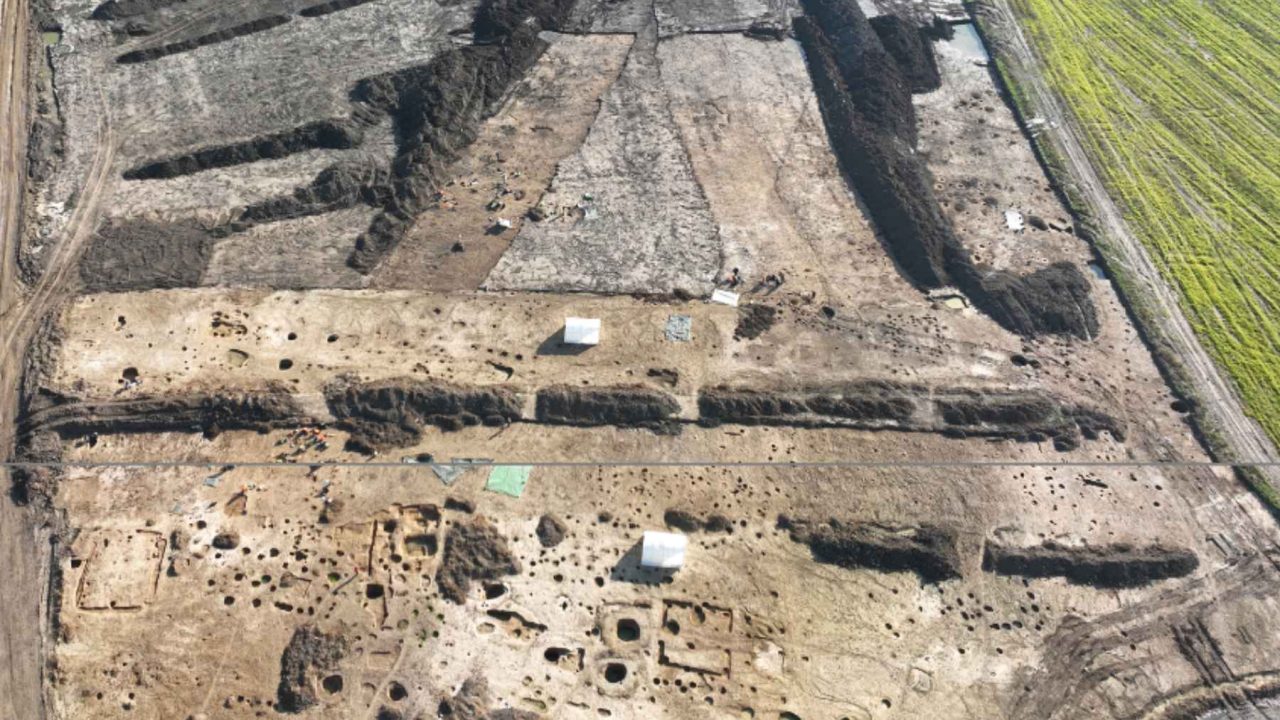
Beneath what was supposed to become a stretch of modern highway in the Czech Republic, construction crews and archaeologists stumbled onto something that stopped the project in its tracks — a sprawling, largely intact Celtic settlement packed with gold and silver coins, amber, jewelry, pottery, production workshops, and what may be ancient sanctuaries.
The site, discovered during preparatory surveys ahead of construction on the future D35 highway near Hradec Králové, has rewritten what researchers expected to find under that particular patch of Bohemian earth. What was meant to be a routine precautionary dig turned into one of the most significant La Tène period finds in the region in recent memory.
The timing feels almost cinematic. A road meant to connect modern Czech cities ended up revealing an older network of trade and craftsmanship that was doing something remarkably similar — moving wealth, raw materials, and skilled goods across Europe — roughly 2,000 years ago.
What Was Actually Found Beneath the D35 Route
The discovery came through rescue archaeology, a standard practice in Europe where teams survey land before major infrastructure work begins. In this case, the effort involved three institutions working together: the Museum of Eastern Bohemia, the University of Hradec Králové, and Archaia Praha.
Rather than a quick surface scan, teams worked methodically through repeated soil layers approximately 4 inches thick. That careful, slower approach made a significant difference. A faster survey would almost certainly have missed much of what was buried there.
What emerged from those layers was a large La Tène settlement — the La Tène culture being the archaeological term for the later Celtic Iron Age period in Europe, roughly spanning from around 450 BCE to the Roman conquest of various regions. The settlement contained an unusually rich collection of artifacts and structural remains that suggest a community engaged in both long-distance trade and skilled local production.
The Artifacts: Gold, Amber, and the Signs of a Working City
The range of objects recovered makes this more than just a coin hoard or a burial site. Researchers found evidence of a functioning settlement with multiple layers of economic and cultural life.
- Gold and silver coins — pointing to participation in wider Celtic trade networks
- Amber — a luxury raw material that traveled long distances across ancient Europe
- Jewelry — personal ornaments consistent with La Tène craftsmanship
- Pottery remains — everyday evidence of domestic and commercial life
- Production areas and workshops — suggesting skilled craftwork was happening on-site, not just passing through
- Possible sanctuaries — areas that may have served religious or ceremonial functions
The combination of luxury trade goods, raw materials like amber, and on-site production facilities paints a picture of a settlement that was neither a simple village nor just a waypoint. It appears to have been a place where things were made, traded, and possibly consecrated.
| Category | What Was Found | Significance |
|---|---|---|
| Currency | Gold and silver coins | Evidence of participation in Celtic trade networks |
| Luxury goods | Amber, jewelry | Long-distance trade connections across ancient Europe |
| Everyday life | Pottery remains | Signs of a settled, functioning community |
| Industry | Workshops and production areas | On-site skilled craftsmanship |
| Ritual | Possible sanctuaries | Potential religious or ceremonial use |
Why This Celtic City Discovery Changes the Picture of Ancient Europe
The broader significance here goes well beyond the artifacts themselves. Researchers involved in the project have noted that the site demonstrates long-distance trade in Europe was already moving wealth, raw materials, and skilled craftwork across the continent centuries before Roman power reshaped it.
That matters because there’s a tendency in popular history to treat the Roman Empire as the moment Europe “switched on” economically — as if complex trade, urban planning, and specialized labor appeared with the legions. Sites like this one push that story back considerably.
The Celtic settlement near Hradec Králové wasn’t a primitive outpost waiting to be civilized. It was a working node in an already-functioning continental network. The road the D35 was meant to build already existed, in a sense — just in a very different form, moving amber and gold instead of freight trucks.
The fact that the settlement appears largely intact also sets it apart. Many sites of this age have been disturbed over centuries by farming, later construction, or looting. The layered, careful excavation method used here suggests the archaeological record has been preserved in unusual detail.
The Institutions Behind the Find
Three organizations collaborated on the rescue archaeology effort that led to the discovery:
- Museum of Eastern Bohemia — regional institution with expertise in local archaeological heritage
- University of Hradec Králové — academic partner contributing research capacity
- Archaia Praha — a professional archaeological organization specializing in rescue excavations
The methodical approach — working through soil layers roughly 4 inches at a time rather than conducting a faster sweep — is credited with recovering significantly more material than standard survey methods would have yielded. That decision, likely made under time pressure from an active infrastructure project, turned out to be the difference between a minor find and a major one.
What Comes Next for the Site and the Highway
In cases like this across Europe, rescue archaeology findings of this significance typically trigger extended study periods and can result in route modifications or permanent heritage designations — but those outcomes have not been confirmed here.
What is clear is that the excavation has already produced enough material to keep researchers occupied for years. The production areas, possible sanctuaries, and volume of trade goods all require detailed analysis to understand how this settlement fit into the wider Celtic world of 2,000 years ago.
For now, the highway project has given archaeologists something far more valuable than a new road — a rare, intact window into a civilization that built its own version of one long before the Romans arrived.
Frequently Asked Questions
Where exactly was the Celtic settlement discovered?
The site was found near Hradec Králové in the Czech Republic, during preparatory surveys ahead of construction on the future D35 highway.
What types of artifacts were recovered from the site?
Researchers found gold and silver coins, amber, jewelry, pottery remains, production workshops, and areas that may have served as sanctuaries.
Which organizations conducted the excavation?
The rescue archaeology effort involved the Museum of Eastern Bohemia, the University of Hradec Králové, and Archaia Praha.
What is the La Tène culture?
La Tène refers to the later Celtic Iron Age period in Europe. The settlement found near Hradec Králové is described as a large La Tène site, dating to roughly 2,000 years ago.
Why is this discovery considered historically significant?
The site provides evidence that long-distance trade networks — moving luxury goods, raw materials, and skilled craftsmanship — existed in Europe centuries before Roman expansion reshaped the continent.
Will the highway construction continue?
This has not yet been confirmed in the available source material. The current status of the D35 project following the discovery has not been publicly detailed in the reporting reviewed.




Leave a Reply