
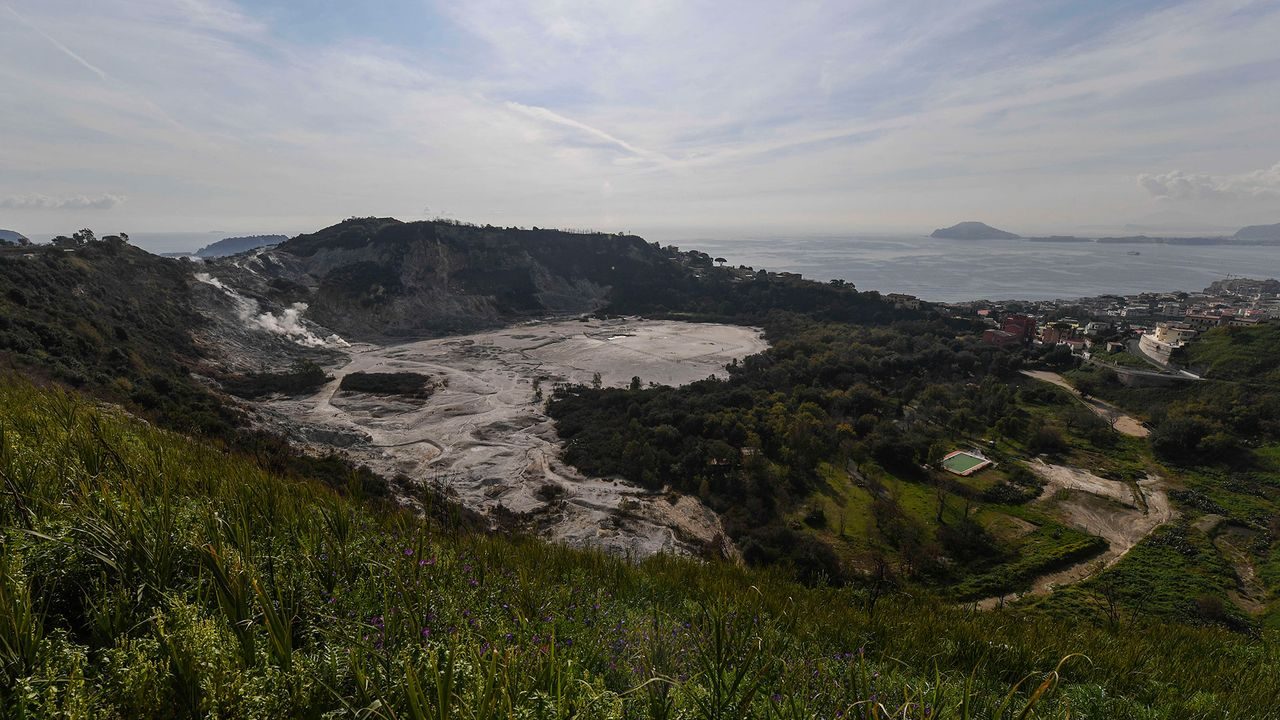
Half a million people live inside a volcano — and scientists say it may be approaching a breaking point. That’s the stark reality facing residents of the Campi Flegrei caldera in southern Italy, where new research suggests the volcanic system is accelerating toward some kind of major transition, potentially within the next decade.
The question keeping volcanologists up at night isn’t just if something is coming — it’s what. Researchers can’t yet say whether that transition will be a full-scale eruption or a significant shift in the volcano’s internal plumbing. Either way, the signal from the ground is getting harder to ignore.
What makes this situation especially unnerving is the scale of what’s at stake. Campi Flegrei isn’t a remote mountain wilderness. It’s a sprawling volcanic caldera stretching roughly 9 miles (15 kilometers) across, sitting just west of Naples, and approximately 500,000 people call it home.
What Campi Flegrei Actually Is — And Why It’s So Unusual
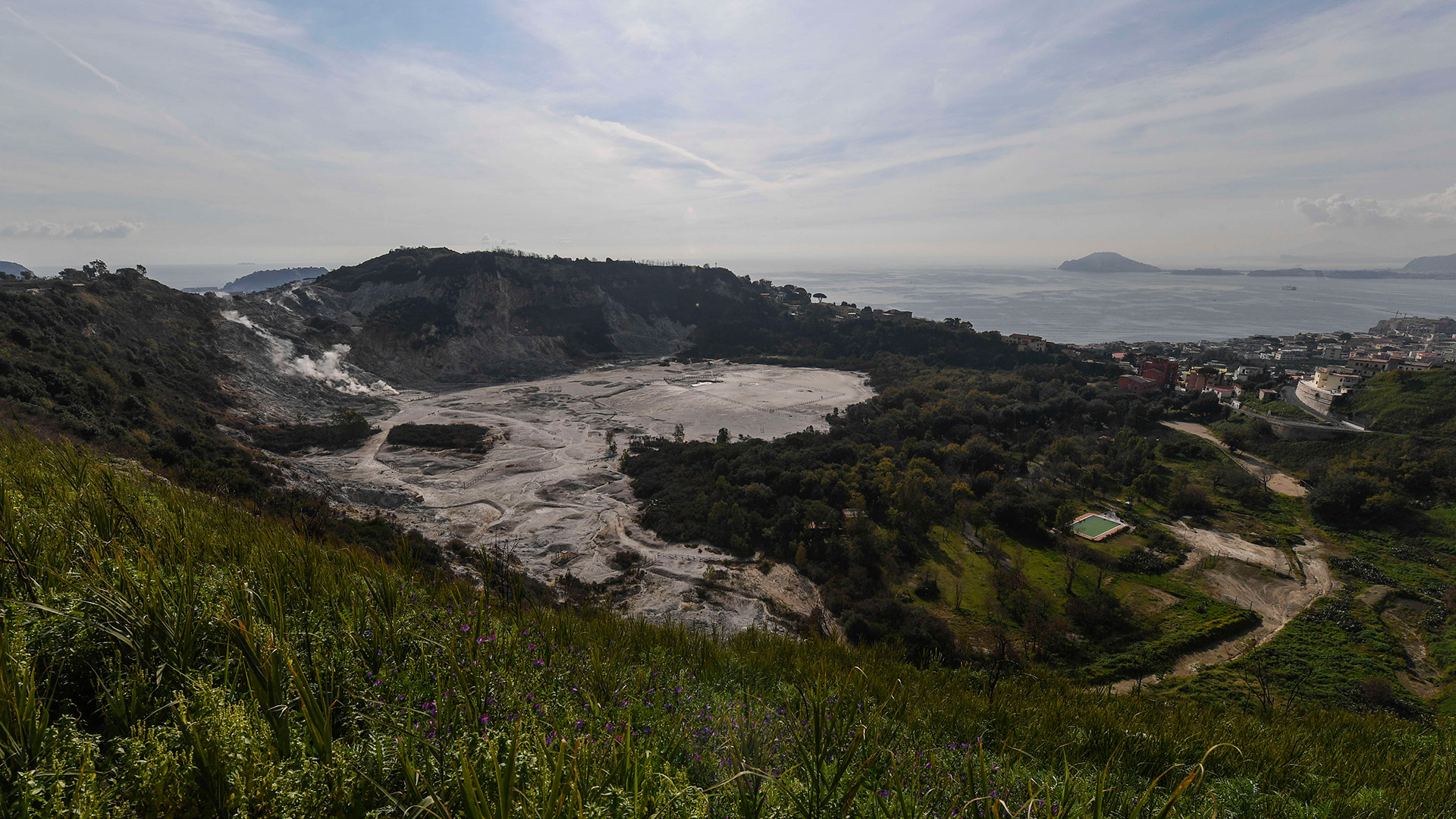
Most people picture a volcano as a single cone-shaped mountain. Campi Flegrei — also known as the Phlegraean Fields — is something far more complex and, in many ways, more dangerous. It’s a caldera, meaning it formed not by building upward but by collapsing inward after a catastrophic eruption emptied the magma chamber beneath it.
That original collapse happened roughly 40,000 years ago, in what would have been one of the most violent volcanic events in European prehistory. Since then, the caldera has never truly gone quiet. Smaller eruptions have continued to reshape the landscape over the millennia, including an explosive event in 1528 that was dramatic enough to build an entirely new hill — Monte Nuovo, a cinder cone standing 433 feet (132 meters) tall.
Today, the caldera sits beneath a dense urban landscape. Restaurants, homes, schools, and harbors occupy ground that is, geologically speaking, the roof of a restless volcanic system.
The Warning Signs That Have Scientists Worried
Campi Flegrei has been restless before. Researchers have documented periods of intense seismic activity and ground movement in the 1950s, 1970s, and 1980s — episodes that caused real damage to the caldera’s crust and forced temporary evacuations of the area. Each of those cycles weakened the rock structure beneath the surface.
But the current phase of activity, which began around 2005, appears to be different in character. Since then, the floor of the caldera has risen by approximately 4.6 feet (1.4 meters) — a significant amount of ground uplift that scientists believe may indicate the movement of volcanic gases beneath the surface.
The new research goes further, suggesting that this activity has now reached a point where not only is the unrest accelerating, but the acceleration itself is accelerating. In scientific terms, that kind of compounding increase in activity is a meaningful warning sign — one that points toward an approaching threshold of some kind.
| Time Period | Notable Activity |
|---|---|
| 40,000 years ago | Caldera-forming eruption — the original collapse event |
| 1528 | Explosive eruption builds Monte Nuovo, a 433-foot cinder cone |
| 1950s, 1970s, 1980s | Periods of frequent earthquakes and ground uplift, weakening the crust |
| 2005–present | Sustained increase in activity; ground floor risen ~4.6 feet (1.4 m) |
| Recent research findings | Acceleration of activity is itself accelerating; transition expected within a decade |
What “A Transition” Could Actually Mean
The language researchers use here matters. They’re not predicting an eruption with certainty — they’re describing a system that is moving toward a transition. That transition could take several forms.
- A major eruption — the most dramatic and dangerous outcome, which would threaten the roughly 500,000 residents living within the caldera
- A significant reorganization of the volcano’s internal plumbing — meaning gases, fluids, or magma shift position underground without necessarily breaking through the surface
- A new phase of intensified seismic activity that causes structural damage without a full eruption
Scientists have been careful to note that the data shows something will change — but the exact nature of that change remains uncertain. The crust of the caldera has already been weakened by decades of prior activity, which means it may be less capable of containing pressure than it once was.
Who Is at Risk and What It Would Mean for the Region
The human stakes here are enormous. With around 500,000 people living inside the caldera itself — and the city of Naples just to the east — any significant eruption at Campi Flegrei would rank among the most consequential volcanic disasters in modern European history.
Italy has evacuation plans for the region, and the area has been monitored closely by volcanologists for decades. But the sheer density of the population, combined with the unpredictable nature of caldera systems, makes preparation extraordinarily difficult. The 1980s period of unrest alone triggered the evacuation of tens of thousands of residents from the town of Pozzuoli.
The ground uplift seen since 2005 — nearly five feet of rise over roughly two decades — has already caused structural damage to buildings in parts of the caldera. For residents, the volcano isn’t an abstract threat. It’s visible in cracked walls, in the sulfurous steam that rises from the Solfatara crater, and in the low-frequency earthquakes that regularly rattle the region.
What Scientists Expect to Happen Next
The new study suggests the system is likely to reach some kind of breaking point within the next decade, though researchers are clear that predicting the exact timing or nature of volcanic events remains one of the hardest problems in earth science.
What scientists will be watching for includes continued ground deformation, changes in the chemistry of gases being released from the caldera’s vents, and the frequency and depth of seismic events. Any significant shift in those measurements could provide crucial lead time for authorities to act.
For now, monitoring continues — and the research community is increasingly treating Campi Flegrei not as a dormant system that occasionally stirs, but as an active volcanic environment that is building toward something significant.
Frequently Asked Questions
What is Campi Flegrei?
Campi Flegrei, also known as the Phlegraean Fields, is a large volcanic caldera located west of Naples, Italy. It stretches approximately 9 miles (15 kilometers) in diameter and was formed in a massive eruption around 40,000 years ago.
How many people live inside Campi Flegrei?
Approximately 500,000 people live within the caldera, making it one of the most densely populated volcanic zones in the world.
How much has the ground risen at Campi Flegrei since 2005?
Since 2005, the floor of the caldera has risen by approximately 4.6 feet (1.4 meters), which scientists believe may be related to the movement of volcanic gases beneath the surface.
Does the new research confirm an eruption is coming?
No. The research suggests the system is accelerating toward a transition within the next decade, but scientists cannot yet confirm whether that transition will be an eruption or some other change in the volcano’s internal structure.
Has Campi Flegrei erupted before in recorded history?
Yes. A notable eruption in 1528 was powerful enough to build Monte Nuovo, a cinder cone standing 433 feet (132 meters) tall, in a matter of days.
What caused the current period of increased activity?
The source of the increased activity since 2005 has not been fully confirmed, but scientists believe it may involve the movement of volcanic gases below the surface, which has contributed to the significant ground uplift observed over the past two decades.


Leave a Reply