
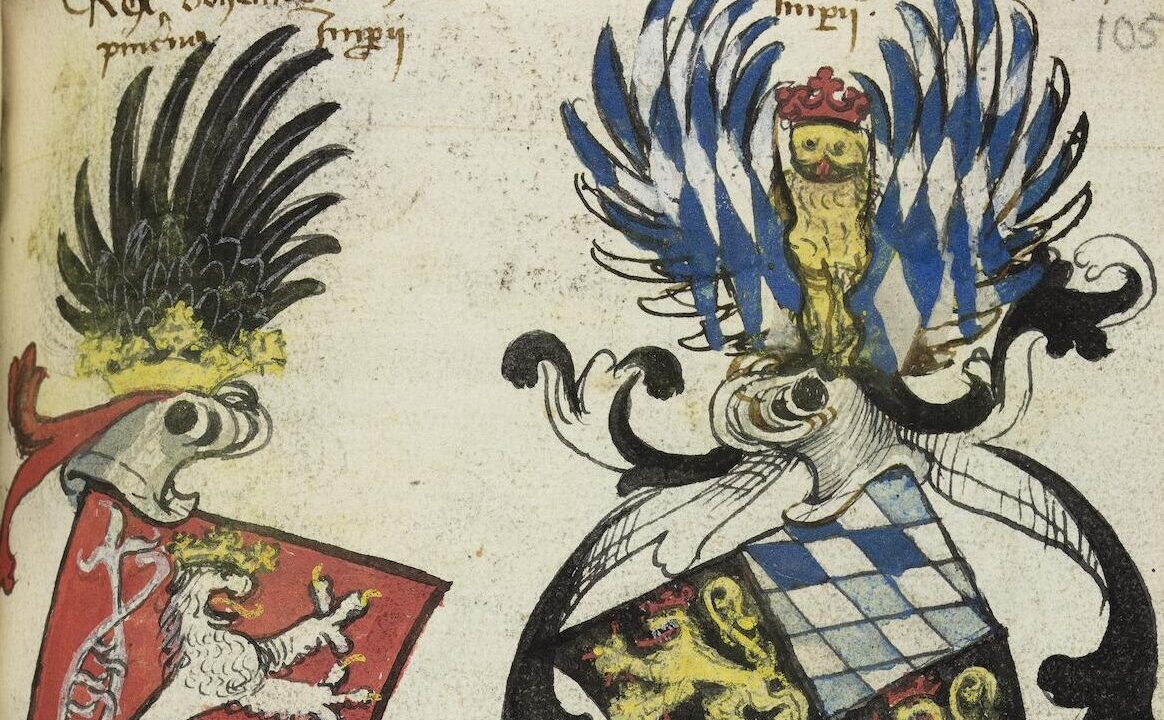
A fifteenth-century manuscript that sat quietly in a German university library for nearly ninety years — its true origins unrecognized — has finally been identified as a long-lost piece of one of the most important libraries in European history. The rediscovery reconnects a forgotten codex to the legendary Bibliotheca Palatina, a Renaissance-era collection that was torn apart by war four centuries ago and has never been fully reassembled.
The find was made at Heidelberg University Library in Germany, where researchers confirmed that a manuscript the library had quietly held since 1937 was originally part of the Bibliotheca Palatina — often described as the most important German library of the Renaissance. It is the kind of discovery that reminds historians how much history is still hiding in plain sight.
For scholars of medieval manuscripts and the history of European libraries, the reunion carries real weight. The Bibliotheca Palatina was not just a collection of old books. It was a symbol of intellectual ambition, a repository of centuries of knowledge, and a casualty of one of Europe’s most destructive conflicts. Getting even one piece of it back matters.
The Library That War Tore Apart
The Bibliotheca Palatina was assembled in Heidelberg during the late medieval and Renaissance periods and grew into one of Europe’s great scholarly collections. Scholars, princes, and clergy contributed to it over generations, building a library that stood as a monument to German Renaissance culture.
That all changed in 1623, during the Thirty Years’ War. Much of the collection was seized and transported to the Vatican as war booty — a staggering act of cultural appropriation that effectively dismembered one of Germany’s greatest intellectual treasures. Today, the holdings are split primarily between two institutions: the Vatican Apostolic Library in Rome and Heidelberg University Library.
The physical separation has made it enormously difficult to study the collection as a whole. Manuscripts that once shared shelves are now separated by over a thousand miles, held by institutions with different cataloguing systems, different access policies, and different research priorities. Every reunion, however small, is a step toward understanding what the complete collection once looked like.
How the Lost Manuscript Was Identified
The codex in question had been in Heidelberg’s manuscript holdings since the library acquired it from an antiquarian bookseller in 1937. For decades, it sat without its true origins being recognized — catalogued as part of the general collection, its connection to the Bibliotheca Palatina overlooked.
The rediscovery was made by Dr. Karin Zimmermann, Head of the Department of Historical Collections at Heidelberg University Library. Through careful research, she established the manuscript’s connection to the Palatina collection, triggering a more detailed study of the codex’s history and contents.
That deeper investigation was carried out by Dr. Thorsten Huthwelker, a member of staff in Historical Collections. According to his findings, the manuscript was probably written in Constance and Basel for a man named Johannes Zeller, who held a number of offices in the dioceses and prince-bishoprics of that region during the fifteenth century.
“The manuscript was probably written in Constance and Basel for a certain Johannes Zeller, who held a number of offices in the dioceses and prince-bishoprics there in the fifteenth century,” explained Dr. Thorsten Huthwelker.
The manuscript is now catalogued as Cod. Pal. lat. 778 within the Heidelberg holdings, formally rejoining the Palatina collection — at least on paper — after centuries of separation.
Key Facts at a Glance
| Detail | Information |
|---|---|
| Manuscript identifier | Cod. Pal. lat. 778 |
| Century of origin | Fifteenth century |
| Probable place of writing | Constance and Basel |
| Original owner | Johannes Zeller |
| Year library acquired it | 1937 |
| Source of acquisition | Antiquarian bookseller |
| Researcher who identified it | Dr. Karin Zimmermann |
| Researcher who studied its history | Dr. Thorsten Huthwelker |
| Collection it rejoins | Bibliotheca Palatina, Heidelberg |
- The Bibliotheca Palatina is considered the most important German library of the Renaissance period.
- Most of the collection was seized in 1623 and sent to the Vatican as war booty during the Thirty Years’ War.
- Holdings are currently divided between the Vatican Apostolic Library and Heidelberg University Library.
- The manuscript had been held at Heidelberg since 1937 without its Palatina origins being recognized.
Why This Discovery Reaches Beyond One Manuscript
Stories like this one matter for reasons that go beyond a single codex. The Bibliotheca Palatina represents a particular kind of historical wound — a collection that was deliberately broken apart as an act of war, its pieces scattered across borders and centuries. Each time a fragment is identified and reconnected, scholars gain a slightly clearer picture of what was lost.
The fact that this manuscript spent nearly ninety years at Heidelberg — the very institution that houses part of the original collection — without being identified also raises questions about how many other misattributed or unrecognized manuscripts might be sitting in European libraries right now. The tools of modern scholarship, including detailed provenance research and cross-institutional collaboration, are making those connections possible in ways that simply were not feasible in earlier decades.
For historians of the medieval church and German Renaissance culture, the manuscript’s connection to Johannes Zeller is also significant. A figure who held multiple offices across the dioceses and prince-bishoprics of Constance and Basel would have been a person of considerable influence in the ecclesiastical world of fifteenth-century Germany. The books commissioned by such figures often reveal a great deal about intellectual life, religious practice, and the circulation of ideas in that period.
What Comes Next for the Palatina Collection
The formal reintegration of Cod. Pal. lat. 778 into the Palatina holdings at Heidelberg marks the end of one chapter and the beginning of another. Researchers will now be able to study the manuscript in the context of the broader collection — comparing it with related codices, tracing its influence, and filling in gaps in the historical record.
Whether this discovery will prompt a wider systematic review of unattributed manuscripts at Heidelberg or other institutions has not been confirmed. But the methodology that Dr. Zimmermann and Dr. Huthwelker applied here — careful provenance research combined with deep knowledge of the Palatina’s history — is precisely the kind of work that could yield further results if applied more broadly.
The Bibliotheca Palatina may never be fully reunited in a physical sense. The Vatican and Heidelberg hold their respective portions thousands of miles apart, and the political and logistical obstacles to any large-scale reunification remain significant. But scholarly reunification — identifying, cataloguing, and studying the pieces as a coherent whole — is an ongoing project, and this discovery is a meaningful contribution to it.
Frequently Asked Questions
What is the Bibliotheca Palatina?
The Bibliotheca Palatina is a renowned Renaissance-era library assembled in Heidelberg, Germany, widely considered the most important German library of the Renaissance period.
Why was the Bibliotheca Palatina broken up?
Much of the collection was seized in 1623 during the Thirty Years’ War and transported to the Vatican as war booty. Today, holdings are split primarily between the Vatican Apostolic Library and Heidelberg University Library.
How was the lost manuscript identified?
Dr. Karin Zimmermann, Head of the Department of Historical Collections at Heidelberg University Library, identified the codex as part of the Palatina collection. A detailed study of its history was subsequently conducted by Dr. Thorsten Huthwelker.
Who was Johannes Zeller?
According to researchers, Johannes Zeller was the original owner of the manuscript, a man who held a number of offices in the dioceses and prince-bishoprics of Constance and Basel during the fifteenth century.
How did Heidelberg come to hold the manuscript?
The library acquired the manuscript from an antiquarian bookseller in 1937. Its true origins as part of the Palatina collection went unrecognized until the recent identification by Dr. Zimmermann.
Will more lost Palatina manuscripts be identified in the future?
This has not been confirmed, but the research methods used in this discovery — detailed provenance study and historical analysis — could potentially be applied to other unattributed manuscripts in European collections.



Leave a Reply