
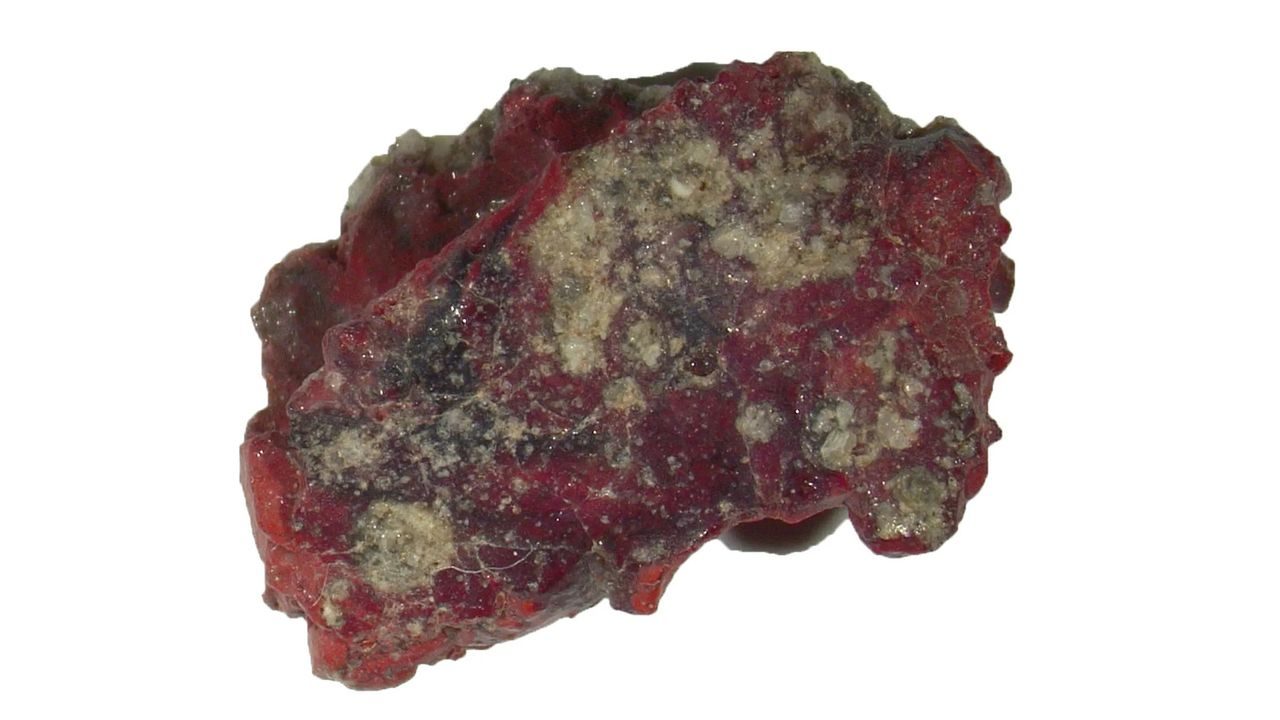
When the world’s first nuclear bomb detonated in the New Mexico desert on a dark July morning in 1945, it didn’t just change history — it created something that scientists are still trying to understand more than 80 years later. The blast, equivalent to 25,000 tons of TNT, melted the desert sand into a faintly radioactive glass. Now researchers have found that buried inside some of that glass are crystals with a structure never seen anywhere else in nature.
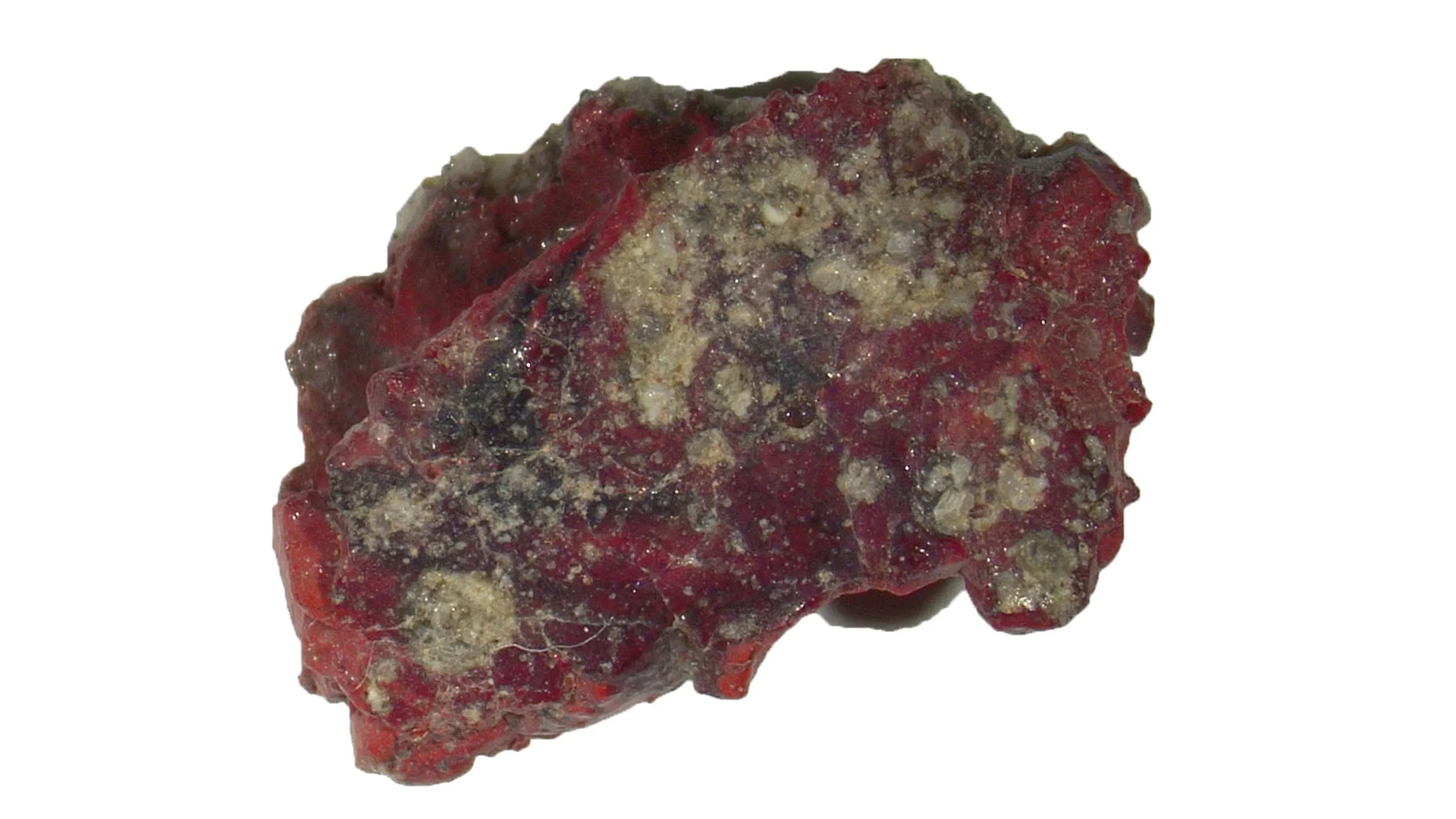
The discovery, published May 11 in the journal PNAS, centers on a material called trinitite — the pale-green-and-red glass formed when the Trinity test’s extreme heat fused the surrounding desert floor. Scientists have known about trinitite for decades, but its deeper secrets are still coming to light.
What makes this finding so striking isn’t just the novelty. It’s a reminder that the most violent events imaginable — whether a nuclear explosion or a meteorite impact — can produce materials that ordinary geology never could.
What Trinitite Actually Is — and Where It Came From
The Trinity test, conducted at a remote site in New Mexico on July 16, 1945, was the culmination of the Manhattan Project. When the device detonated, the energy released was so immense that it completely vaporized the bomb’s steel drop tower and turned the desert sand within a roughly 1,000-foot (300-meter) radius into glass.
That glass was later named trinitite, after the test site itself. It typically appears in pale green and red hues and carries a faint residual radioactivity — a permanent signature of the event that created it.
For most of the decades since, trinitite was treated largely as a historical curiosity. Collectors prize it. Museums display it. But scientists have increasingly recognized it as a natural laboratory for studying what happens to matter under the most extreme conditions possible on Earth.
The Crystal That Shouldn’t Exist
The new research was actually sparked by an earlier, separate discovery: an unusual quasicrystal that had already been identified in samples of red trinitite. Quasicrystals are strange materials — their atoms are arranged in patterns that are ordered but never repeat, which breaks one of the fundamental rules of classical crystallography.
Most known quasicrystals are composed primarily of aluminum. But the one found in trinitite was different — it was rich in silicon instead, making it unlike the vast majority of quasicrystals ever documented. That oddity raised a question: if one bizarre crystal had formed in this glass, what else might be hiding in it?
Luca Bindi, a mineralogist at the University of Florence, was among the researchers who decided to look deeper. According to the study, the team wanted to further explore what they described as “extreme-formation products” — materials that could only come into existence under the kind of catastrophic conditions a nuclear detonation produces.
What they found exceeded expectations. Buried within red trinitite samples were crystals with a structure that has not been observed anywhere else in nature — not in any known mineral, not in any laboratory synthesis, not in any other extreme-event material studied so far.
Key Facts About Trinitite and the Discovery
| Detail | Fact |
|---|---|
| Event that created trinitite | Trinity nuclear test, July 1945 |
| Energy released | Equivalent to 25,000 tons of TNT |
| Area of sand converted to glass | Within ~1,000 feet (300 meters) radius |
| Appearance of trinitite | Pale green and red, faintly radioactive |
| Study publication date | May 11, journal PNAS |
| Lead researcher | Luca Bindi, mineralogist, University of Florence |
| Previous unusual find in trinitite | Silicon-rich quasicrystal (unlike typical aluminum-based quasicrystals) |
| New discovery | Crystals with a structure never seen elsewhere in nature |
- Trinitite is named after the Trinity nuclear test site in New Mexico
- Red trinitite, in particular, appears to contain the most unusual crystal formations
- The silicon-rich quasicrystal found earlier in trinitite defied the norm for quasicrystals, which are usually aluminum-dominant
- The newly identified crystals have no known equivalent in nature or in laboratory-created materials
- The research team described these as “extreme-formation products” — materials that require catastrophic conditions to form
Why This Matters Beyond the History Books
It might be tempting to file this under “interesting but obscure.” Don’t. The implications stretch well beyond a single piece of radioactive glass sitting in a museum case.
Understanding how extreme energy events transform ordinary materials — desert sand, steel, copper wire — into entirely new crystal structures gives scientists a window into processes that happen elsewhere in the universe. Meteorite impacts, lightning strikes, and even certain volcanic events can generate similar, if less intense, conditions. Trinitite is essentially a controlled case study of matter pushed to its absolute limits.
There’s also a materials science angle. Crystals and quasicrystals with unusual structures sometimes possess unexpected physical properties — hardness, conductivity, or thermal resistance that conventional materials lack. Identifying new structural arrangements, even in radioactive glass from a 1945 bomb test, adds to the catalog of what’s theoretically possible to engineer.
For the scientific community, trinitite has become something of a time capsule — not just of a historical moment, but of a set of physical and chemical conditions that are extraordinarily difficult to replicate safely or ethically in a modern laboratory.
What Researchers Are Looking For Next
The discovery of never-before-seen crystals in red trinitite has opened a broader line of inquiry. The original investigation into the silicon-rich quasicrystal was itself a follow-up to earlier work, suggesting this is a field that tends to reward persistence.
Researchers are expected to continue analyzing trinitite samples for additional extreme-formation materials. The fact that two highly unusual crystal structures have already been found in the same material suggests there may be more waiting to be identified — potentially including crystal types that could inform future materials research.
The study’s authors have framed this as an ongoing exploration of what nuclear-scale energy does to matter at the atomic level. Each new find builds a more complete picture of the chemistry of extreme events — one radioactive glass sample at a time.
Frequently Asked Questions
What is trinitite?
Trinitite is a faintly radioactive glass formed when the 1945 Trinity nuclear test melted desert sand in New Mexico. It typically appears in pale green and red colors.
What makes the crystals found in trinitite so unusual?
Researchers found crystals in red trinitite with a structure that has never been observed anywhere else in nature — not in any known mineral or laboratory-created material.
What is a quasicrystal, and why is the one in trinitite strange?
Quasicrystals have an ordered but non-repeating atomic structure. The one previously found in trinitite is unusual because it is silicon-rich, whereas most known quasicrystals are composed primarily of aluminum.
Who led the research into trinitite’s unusual crystals?
Luca Bindi, a mineralogist at the University of Florence, was among the lead researchers. The study was published May 11 in the journal PNAS.
How powerful was the Trinity nuclear test?
The blast released energy equivalent to 25,000 tons of TNT, vaporizing the bomb’s steel drop tower and converting desert sand within a roughly 1,000-foot radius into glass.
Can trinitite be safely handled?
Anyone handling trinitite samples should consult appropriate safety protocols.

Leave a Reply