
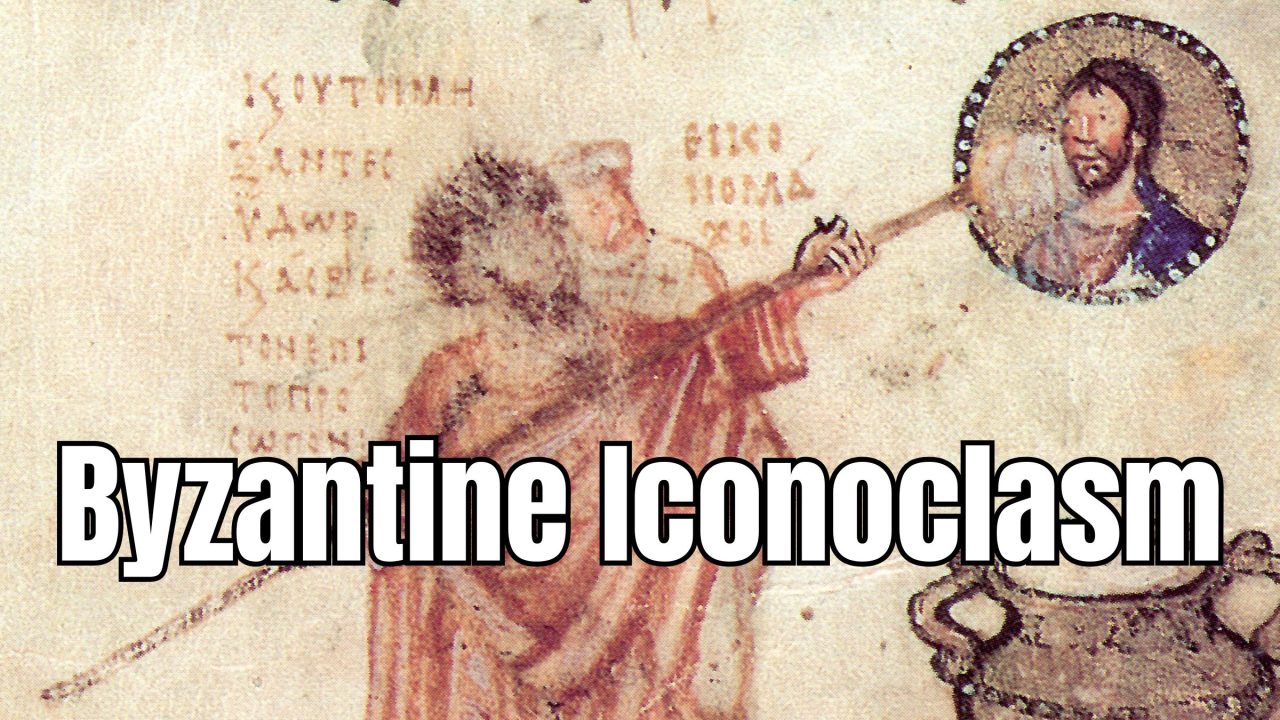
For more than a century, the Byzantine Empire tore itself apart over a question that sounds almost impossibly abstract: should religious images be allowed to exist at all? The answer — or rather, the violent disagreement over it — triggered riots, persecutions, political coups, and one of the most consequential theological battles the medieval world ever produced.
This was Byzantine iconoclasm. And while it’s tempting to frame it as a narrow argument about art, what it actually represented was a full-scale collision between imperial power, monastic authority, popular devotion, and the fundamental identity of the Christian Roman state.
As scholar Zoe Tsiami has examined, the conflict that erupted in the eighth and ninth centuries shook the very foundations of Byzantine theological thought — and the tremors lasted long after the images were restored.
What Icons Actually Were — and Why People Died for Them
To understand why iconoclasm was so explosive, you first have to understand what icons meant to ordinary Byzantine believers. These weren’t decorative paintings. They weren’t art in any modern sense of the word.
In Byzantium, icons were understood as sacred portals to the divine — tangible, physical connections to Christ, the Virgin Mary, and the saints. To venerate an icon was to reach across the boundary between the earthly and the holy. For the faithful, destroying one wasn’t an act of reform. It was a desecration.
That’s why when emperors began ordering images removed and smashed, the response wasn’t quiet compliance. It was fury.
How Byzantine Iconoclasm Unfolded
The conflict played out across the eighth and ninth centuries, with the empire swinging back and forth between two positions: the iconoclasts, who condemned religious images as idolatrous, and the iconophiles, who defended them as essential to Christian worship.
What made this more than a theological seminar was the involvement of imperial authority. Emperors threw their power behind iconoclasm at key moments, turning a religious dispute into a test of who actually controlled the Byzantine church — the crown or the clergy.
Monks, in particular, became central figures in the resistance. Monastic communities were among the most vocal defenders of icons, and they paid for it with persecution, exile, and worse. The conflict forced Byzantine society to ask hard questions about the limits of imperial power over religious life — questions that had no easy answers.
| Period | Dominant Position | Key Characteristics |
|---|---|---|
| 8th Century | Iconoclasm rises | Imperial edicts against images; destruction of icons; persecution of defenders |
| Late 8th Century | Temporary restoration | Icons restored; iconophile position gains ground |
| 9th Century | Second wave of iconoclasm | Renewed imperial suppression; continued monastic resistance |
| 843 CE (Triumph of Orthodoxy) | Icons permanently restored | Iconophile victory; lasting theological settlement |
The Part of This Story Most Accounts Get Wrong
Popular retellings of Byzantine iconoclasm often treat it as a simple story of superstitious image-worshippers versus enlightened reformers. The reality was far messier — and far more interesting.
The iconoclast position wasn’t fringe extremism. It had serious theological backing and genuine imperial muscle. Those who condemned icons argued that venerating images crossed into idolatry, a charge with deep roots in both Jewish scripture and early Christian anxiety about pagan practice.
On the other side, defenders of icons weren’t simply attached to pretty pictures. Their argument was sophisticated: that the Incarnation itself — God becoming human in Christ — made physical representation not just permissible but theologically necessary. If Christ had a real human face, that face could be depicted. To deny that was, in their view, to deny the reality of the Incarnation.
This is why the stakes were so high. Both sides believed the other was promoting heresy. Both sides believed the soul of the empire was on the line.
Why the Conflict Went So Deep Into Byzantine Society
What made iconoclasm so destabilizing wasn’t just the theological argument — it was how completely the argument penetrated every layer of Byzantine life.
- Imperial politics: Emperors used iconoclasm as a tool of authority, and the conflict contributed to coups and political upheaval when the balance of power shifted.
- Monastic power: Monks became the backbone of iconophile resistance, cementing their role as a counterweight to imperial religious control.
- Popular worship: Ordinary believers, many of whom had grown up venerating icons as a core part of their faith, experienced iconoclasm as a direct assault on their religious lives.
- Imperial identity: The Byzantine Empire understood itself as the Christian Roman state — the living continuation of Rome under God’s protection. A fight over how to worship was inevitably also a fight over what the empire fundamentally was.
For over a century, the empire oscillated between these two poles. The psychological and social toll was enormous. Families, communities, and institutions were divided. Persecutions left lasting wounds.
What the Resolution of Iconoclasm Left Behind
When icons were finally and permanently restored — an event the Eastern Orthodox Church still commemorates as the Triumph of Orthodoxy — the settlement wasn’t just about images. It represented a decisive answer to questions that had been tearing the empire apart for generations.
The iconophile victory established clear theological boundaries around the veneration of images that persist in Eastern Orthodox Christianity to this day. It also reinforced the role of the church and monastic communities as genuine checks on imperial religious authority — a balance of power that would continue to shape Byzantine civilization for centuries.
The conflict also left a permanent mark on the empire’s sense of itself. Having survived iconoclasm, Byzantium emerged with a sharper, more defined religious identity — one forged not in consensus but in prolonged, painful struggle.
Frequently Asked Questions
What was Byzantine iconoclasm?
Byzantine iconoclasm was a prolonged religious and political conflict in the eighth and ninth centuries over whether religious images — known as icons — should be permitted in Christian worship, or condemned as idolatrous.
Why did icons matter so much to Byzantine Christians?
Icons were understood not merely as artistic objects but as sacred portals to the divine — tangible connections to Christ and the saints that played a central role in everyday worship and spiritual life.
Who were the main groups involved in the conflict?
The conflict primarily involved Byzantine emperors, who at various points backed iconoclasm, and the church — particularly monks — who largely defended icons and faced persecution for doing so.
How long did the iconoclast controversy last?
The conflict convulsed the Byzantine Empire for more than a century, spanning the eighth and ninth centuries before icons were permanently restored.
How did the iconoclasm controversy end?
Icons were permanently restored in what the Eastern Orthodox Church commemorates as the Triumph of Orthodoxy, representing a definitive theological and political victory for the iconophile position.
Did iconoclasm affect only religion, or did it have broader consequences?
The conflict extended far beyond theology, triggering riots, persecutions, and political coups, and fundamentally reshaping questions about imperial authority, monastic power, and the identity of the Byzantine Christian state.
Leave a Reply