
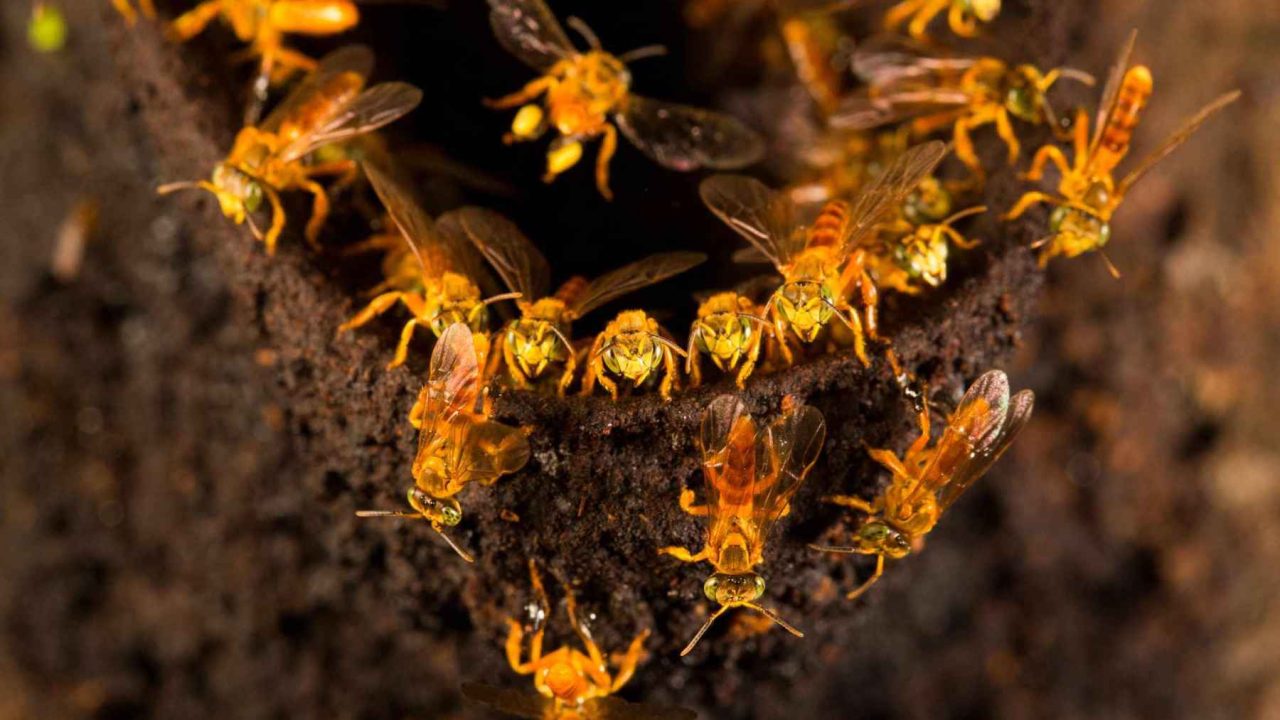
For the first time in recorded legal history, an insect species has been granted formal legal rights — and it happened not in a courtroom, but in the heart of the Peruvian Amazon. The tiny stingless bees native to that rainforest now have the legal standing to exist, to thrive, and to be defended under the law.
That is not a metaphor. Municipalities in Satipo and Nauta, Peru have passed local ordinances officially recognizing native stingless bees and their habitat as legal subjects. No insect anywhere in the world has ever held that status before.
The move builds on a broader national shift. In 2024, Peru’s Congress passed a reform bringing stingless bees under formal state protection, classifying them as native bees and as part of the country’s biological heritage. The municipal ordinances take that protection a step further — giving the bees themselves a legal identity.
What “Legal Rights for Insects” Actually Means
The idea of a bee having legal rights sounds abstract until you understand what it changes in practice. Legal personhood — the status of being a recognized subject under the law — has historically been reserved for humans and, in many countries, corporations. Some rivers and forests have been granted similar protections in recent years. But an insect species? This is genuinely new ground.
When stingless bees are recognized as legal subjects, it means their right to exist and their habitat can be formally defended in court. Advocates can bring legal action on their behalf. Developers, polluters, or anyone whose actions threaten the bees or their environment can face legal consequences grounded in the bees’ own recognized rights — not just in general environmental regulations.
It is a subtle but significant shift in how the law thinks about nature. Rather than treating ecosystems purely as resources to be managed, this model treats certain species as entities with interests worth protecting for their own sake.
Why Stingless Bees — and Why the Amazon
The stingless bees of the Peruvian Amazon are not simply a symbolic choice. They are ecologically critical pollinators that quietly support much of the biodiversity — and the food supply — that the region depends on. Researchers have noted that their pollination work underpins a substantial share of what ends up in local food systems and, by extension, on kitchen tables far beyond the rainforest.
Unlike honeybees, which are widely farmed and discussed, stingless bees are native to the Amazon and deeply embedded in its specific ecological relationships. They pollinate plant species that other insects do not, making them irreplaceable in ways that are difficult to quantify but easy to lose.
Their small size and lack of a sting have historically made them easy to overlook. That invisibility, advocates argue, is exactly why legal protection matters — because without it, the pressures of deforestation, agricultural expansion, and habitat loss tend to eliminate what no one is formally obligated to protect.
The Legal Framework Behind the Milestone
| Legal Action | Level | Year | What It Does |
|---|---|---|---|
| Congressional Reform | National (Peru) | 2024 | Brings stingless bees under formal state protection as native bees and biological heritage |
| Municipal Ordinance — Satipo | Local | Recent | Recognizes stingless bees and their habitat as legal subjects with rights |
| Municipal Ordinance — Nauta | Local | Recent | Recognizes stingless bees and their habitat as legal subjects with rights |
The layered structure here matters. National legislation set the foundation by recognizing these bees as part of Peru’s biological heritage. The municipal ordinances then built on that foundation to do something more radical — granting the bees and their ecosystems the status of legal subjects. Each layer reinforces the other.
Why This Decision Reaches Far Beyond Peru
Peru is not the first country to extend legal rights to elements of the natural world. Ecuador enshrined the rights of nature in its constitution in 2008. Various courts and legislatures have granted legal personhood to rivers in New Zealand, Colombia, and India. But those precedents all involved large, visible natural features — rivers, glaciers, entire ecosystems.
Extending that framework to a specific insect species is a different kind of move entirely. It signals that legal personhood for nature does not have to stop at the scale of a mountain or a waterway. It can reach down to the smallest, least-noticed contributors to an ecosystem’s health.
Supporters of the rights-of-nature movement are watching closely. If this model holds — if local ordinances protecting insect species prove legally durable and practically effective — it opens a template that could be applied to other threatened pollinators, invertebrates, and species that have historically fallen outside the reach of conservation law.
The stingless bee, in other words, may be small. But what it represents in legal terms is much larger than its size suggests.
What Comes Next for the Bees — and the Broader Movement
The ordinances in Satipo and Nauta are in place, but the harder work is enforcement. Legal rights are only meaningful if there are mechanisms to defend them — advocates, legal structures, and political will to follow through when those rights are threatened.
Peru’s 2024 national reform provides a formal foundation, and the municipal ordinances build real local accountability on top of it. Whether other Peruvian municipalities follow suit, and whether this model spreads to other countries, will depend largely on how effectively these first ordinances are applied in practice.
The global legal rights of nature movement has been building for years. This latest development suggests that movement is now willing to go smaller — and in doing so, may ultimately reach further.
Frequently Asked Questions
Which specific places in Peru have granted legal rights to stingless bees?
The municipalities of Satipo and Nauta in Peru have passed ordinances recognizing native stingless bees and their habitat as legal subjects with rights to exist, thrive, and be defended in court.
Is this really the first time an insect has received legal rights anywhere in the world?
According to the available reporting, yes — this marks the first time in global legal history that an insect species has been granted this kind of formal legal status.
What did Peru’s national government do to protect stingless bees?
In 2024, Peru’s Congress passed a reform that brought stingless bees under formal state protection, classifying them as native bees and as part of the country’s biological heritage.
Why are stingless bees considered so important to protect?
Stingless bees are native pollinators in the Peruvian Amazon that play a critical role in supporting biodiversity and local food systems, pollinating plant species that other insects do not.
Do stingless bees actually sting?
As their name indicates, these bees do not sting — a characteristic that has historically contributed to them being overlooked despite their ecological importance.
Could this legal model be applied to other insect species in other countries?
This has not yet been confirmed, but supporters of the rights-of-nature movement suggest this framework could serve as a template for protecting other threatened pollinators and invertebrates elsewhere.



Leave a Reply