
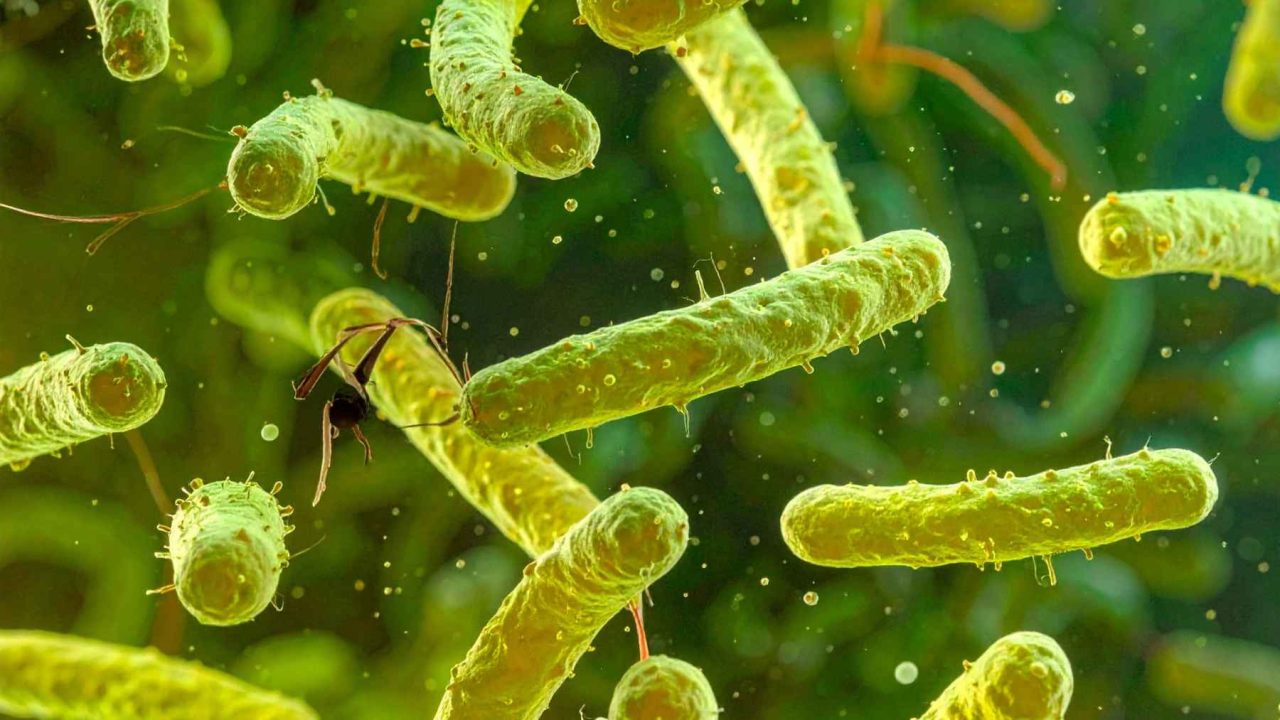
What if a living organism could be built in reverse — using the mirror image of every biological molecule that exists in nature — and in doing so, become essentially invisible to every immune system, predator, and natural defense on Earth? That is not a science fiction premise. It is the central concern behind a serious scientific warning that researchers say the world is not ready for.
A risk assessment signed by 38 prominent scientists, including two Nobel Prize winners, published in December 2024, is urging the global scientific community to establish safety boundaries now — before the technology to create so-called “mirror life” actually exists. Their argument is straightforward: if the potential consequences are planetary in scale, you do not wait for a near-miss before writing the rules.
The debate was reignited recently by a MIT Technology Review article examining the state of mirror life research and the risks that come with it. No lab has successfully created a living mirror organism capable of reproducing on its own. But many researchers believe that milestone could be reached within a decade — and that window, the scientists argue, is exactly when the conversation needs to happen.
What Mirror Life Actually Means
The term “mirror life” refers to organisms built from molecules that are the chemical opposite of the ones used by every known living thing on Earth. The technical word for this property is chirality — and it describes the way molecules, like human hands, can exist as identical but non-superimposable mirror images of each other.
Every organism alive today — from bacteria to blue whales — uses the same molecular handedness. Proteins are built from left-handed amino acids. DNA spirals in a right-handed direction. This is not a coincidence. It reflects a deep chemical consistency that has persisted across billions of years of evolution.
A mirror organism would flip all of that. Its proteins would be right-handed. Its genetic material would spiral the other way. And crucially, the biological machinery that natural organisms use to detect, fight, and break down other life forms is specifically tuned to the molecular handedness that already exists in nature.
A mirror bacterium, in theory, would not register as a recognizable threat to any natural immune system. It would be as though it were biologically invisible.
Why 38 Scientists Are Sounding the Alarm Now
The December 2024 risk assessment did not emerge from a fringe corner of the scientific world. It was signed by 38 researchers, two of whom are Nobel laureates, representing a serious cross-section of scientific expertise. Their concern is not that mirror life exists — it does not, at least not in any self-replicating form — but that the pace of synthetic biology is accelerating fast enough that the question of whether it could exist is becoming increasingly relevant.
The core logic of the warning rests on a simple principle: the time to set limits on a potentially catastrophic technology is before the breakthrough, not after. Once a self-replicating mirror organism exists, the options for containing or reversing any unintended release become dramatically more limited.
The scientists argue that natural predators, enzymes, and immune responses that keep microbial populations in check would have no reliable mechanism for recognizing or neutralizing mirror life. The usual checks and balances that regulate biology on Earth would not apply.
The Key Risks at a Glance
| Factor | Natural Organisms | Mirror Life (Hypothetical) |
|---|---|---|
| Molecular handedness | Left-handed amino acids, right-handed DNA | Opposite chirality throughout |
| Immune system recognition | Detectable by natural defenses | Potentially undetectable |
| Natural predators | Kept in check by viruses, enzymes, other organisms | No known natural predators would apply |
| Current existence | Universal across all known life | Does not yet exist in self-replicating form |
| Estimated timeline to creation | N/A | Potentially within a decade, per researchers |
- Mirror life would be constructed using synthetic biology techniques applied to molecules with reversed chirality
- No self-replicating mirror organism has been created in any laboratory as of the time of the warning
- The risk assessment was signed by 38 scientists, including two Nobel Prize winners
- The warning was published in December 2024
- A MIT Technology Review article recently brought renewed public attention to the issue
Who Would Actually Be Affected — and How
This is not a risk confined to laboratories or to the scientists who work in them. If a mirror bacterium were ever released into the environment — accidentally or otherwise — the concern is that existing biological systems would have no reliable way to stop it.
Natural ecosystems depend on a web of relationships between organisms, many of which involve chemical recognition based on molecular handedness. Viruses that attack bacteria, for example, rely on recognizing specific molecular structures. Immune systems in animals and humans operate on the same principle. A mirror organism could, in theory, move through those systems without triggering any of the usual responses.
The scientists behind the December 2024 assessment are not predicting that this will happen. They are arguing that the possibility is serious enough — and the potential consequences severe enough — that the scientific community should not wait until the capability exists before deciding how to govern it.
What Needs to Happen Before the Breakthrough Arrives
The window the scientists are pointing to is now. Mirror life does not yet exist in self-replicating form, and many researchers estimate that capability remains at least a decade away. That gap, however short it may seem, represents the period in which meaningful safety frameworks could realistically be developed and adopted.
The December 2024 risk assessment reflects a broader principle that has gained traction in discussions around emerging biotechnology: precautionary governance works best when it is established before a technology matures, not scrambled together in response to an incident that has already occurred.
Whether that kind of coordinated international action will materialize in time remains an open question. But the scientists who signed the warning are clear about one thing — the conversation cannot afford to wait.
Frequently Asked Questions
What is mirror life?
Mirror life refers to hypothetical organisms built from molecules with the opposite chemical handedness to those used by all known life on Earth, a property scientists call chirality.
Does mirror life exist right now?
No. As of the December 2024 risk assessment, no laboratory has created a self-replicating mirror organism. Many researchers estimate that capability could be at least a decade away.
Why would mirror bacteria be dangerous?
Because natural immune systems, predators, and enzymes are tuned to recognize molecules with a specific handedness — mirror organisms could potentially evade all of those defenses.
Who signed the warning about mirror life?
The December 2024 risk assessment was signed by 38 prominent scientists, including two Nobel Prize winners.
Why are scientists raising this concern now rather than later?
The signatories argue that safety frameworks should be established before a technology reaches its breakthrough moment, not after — particularly when the potential consequences could be global in scale.
Is any government or international body already regulating mirror life research?
This has not been confirmed in the available source material. The scientists’ warning appears to be a call for that kind of governance to begin, not a report that it already exists.


Leave a Reply