
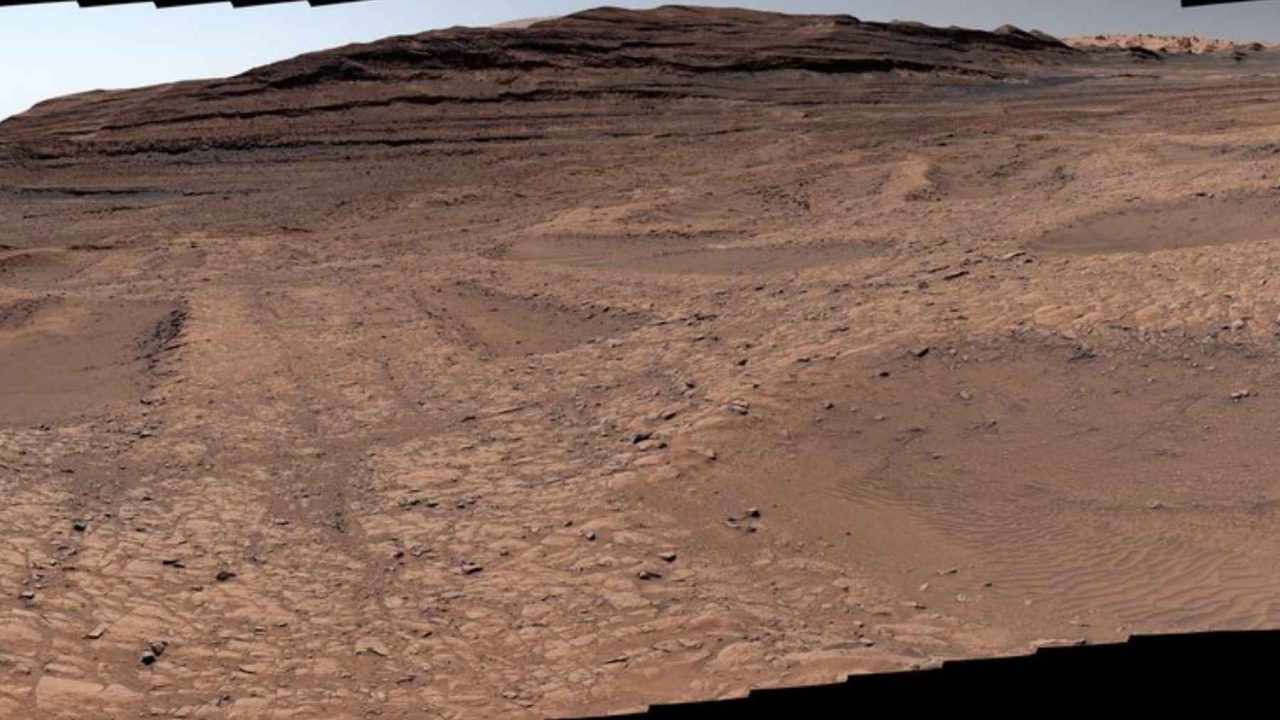
For nearly two decades, scientists stared at a strange web-like pattern etched across the Martian surface and had no good explanation for it. First photographed from orbit in 2006, the formation looked like something enormous had spun a giant spiderweb across the red planet’s terrain. Now, NASA finally has an answer — and it points to something far more significant than an unusual landscape feature.
NASA’s Curiosity rover has been exploring these formations up close on Mount Sharp inside Gale Crater, and the science team has confirmed that the so-called “spiderwebs” are actually boxwork — a network of mineral-hardened ridges created by groundwater that moved through rock fractures billions of years ago. That answer, while satisfying on its own, immediately raises a much bigger question: if water was still flowing underground long after Mars began drying out, could habitable conditions have survived there far longer than anyone previously thought?
That question is now driving serious scientific attention back toward Mars in a way that feels genuinely new.
What These “Spiderwebs” on Mars Actually Are
The first clear image came from NASA’s Mars Reconnaissance Orbiter, which captured the weblike ridge network on December 10, 2006. Dark sand had settled between the raised lines, making the pattern stand out sharply from above. Scientists could see that the network stretched across enormous distances — mapping revealed the formations can run 6 to 12 miles long, or roughly 10 to 20 kilometers.
For years, the orbital images were striking but inconclusive. You can only learn so much from a photograph taken hundreds of miles above the surface. What the team needed was boots on the ground — or in this case, wheels.
Curiosity has been climbing Mount Sharp since 2014, and in 2025 the rover began detailed close-up work in the boxwork region, spending approximately six months crossing ridges and sandy hollows. What looked like thin threads from orbit turned out to be real, substantial terrain features — raised ridges rising several feet above the surrounding surface.
Boxwork forms when mineral-rich water seeps into cracks in rock and deposits harder material along those fractures. Over time, the softer surrounding rock erodes away, leaving the tougher mineral-filled veins standing proud as ridges. On Earth, you can find boxwork in caves. On Mars, finding it at this scale tells scientists that groundwater was actively circulating through subsurface rock long after the planet’s surface had already begun its long transformation into the cold, dry desert it is today.
The Key Facts Behind the Discovery
| Detail | Confirmed Information |
|---|---|
| First orbital observation | December 10, 2006, by Mars Reconnaissance Orbiter |
| Formation type | Boxwork — mineral-hardened ridges from groundwater |
| Network size | 6 to 12 miles long (10 to 20 kilometers) |
| Location | Mount Sharp, Gale Crater, Mars |
| Curiosity’s arrival at Mount Sharp | 2014 |
| Close-up boxwork exploration began | 2025, approximately six months of fieldwork |
- The boxwork ridges are formed by ancient groundwater depositing minerals into rock fractures
- Softer surrounding rock eroded over time, leaving the harder mineral veins as raised ridges
- The scale of the network suggests sustained, widespread subsurface water activity
- The formations date to billions of years ago, during a critical period in Mars’s geological history
Why This Rewrites the Timeline of Water on Mars
Here is where the discovery gets genuinely important. Scientists have known for a long time that Mars once had liquid water on its surface — ancient riverbeds, lake deposits, and shoreline features have made that clear. What has been harder to nail down is exactly when that water disappeared, and whether any of it lingered underground as the surface dried up.
The boxwork ridges suggest that subsurface water kept moving through rock fractures later than scientists expected — even as Mars was already transitioning into the frozen desert we observe today. That is a meaningful distinction. Surface water and underground water are very different things when you’re thinking about the potential for life.
On Earth, life thrives in underground aquifers, deep rock formations, and subsurface environments that are completely cut off from the surface. If Mars had active groundwater circulation persisting well into its drying phase, that dramatically extends the window during which microbial life could theoretically have survived — sheltered from radiation, insulated from the collapsing atmosphere above.
Scientists are not claiming life existed there. But the geology is telling them that the conditions which could support life may have lasted much longer underground than surface evidence alone would suggest.
What This Means for the Search for Life on Mars
The practical consequence of this discovery is a shift in where and how scientists think about habitability on Mars. For years, the search has focused heavily on ancient lake beds and river deltas — places where surface water once pooled. Gale Crater itself was chosen as Curiosity’s landing site partly because it shows evidence of an ancient lake.
But if groundwater was the longer-lasting resource, then subsurface geology becomes the more promising place to look for biosignatures — chemical or physical traces that life once existed. The boxwork formations are essentially a geological record of where that water traveled and how long it stayed active.
Curiosity’s six months of close fieldwork in the boxwork region in 2025 is helping scientists build a much more detailed picture of that underground water history. Each ridge the rover examines carries information about the chemistry of the water that formed it, the pressure and temperature conditions at the time, and how the system changed over millions of years.
What Comes Next in This Investigation
Curiosity continues its slow climb up Mount Sharp, and the boxwork region represents one of the most scientifically rich areas the rover has explored. The data collected during those six months of close-up work is still being analyzed, and researchers expect it to refine estimates of how long groundwater remained active in this part of Mars.
The broader question — how long water persisted underground across the planet, not just in Gale Crater — remains open. But this discovery gives scientists a much clearer framework for asking it, and a specific geological feature they can now search for in other regions using orbital data.
What started as a puzzling photograph from 2006 has become one of the most compelling pieces of evidence yet that Mars’s story of water, and possibly of life, is more complicated — and more hopeful — than the barren surface suggests.
Frequently Asked Questions
What are the “spiderwebs” on Mars that scientists have been studying?
They are boxwork formations — networks of mineral-hardened ridges created when ancient groundwater deposited minerals into rock fractures. The surrounding softer rock eroded away, leaving the harder veins raised above the surface.
When were the Mars spiderweb formations first spotted?
NASA’s Mars Reconnaissance Orbiter first photographed the weblike ridge network on December 10, 2006.
How large are the boxwork formations on Mars?
The network of ridges can stretch 6 to 12 miles long, or approximately 10 to 20 kilometers.
What is Curiosity’s role in solving this mystery?
Curiosity has been climbing Mount Sharp since 2014 and began close-up exploration of the boxwork region in 2025, spending about six months examining the ridges and surrounding terrain in detail.
Does this discovery mean there was life on Mars?
Scientists are not claiming life existed there, but the findings suggest underground water persisted longer than expected, which extends the potential window during which habitable conditions could have existed beneath the surface.
Why does underground water matter more than surface water for the life question?
Subsurface water environments can be shielded from radiation and atmospheric loss, making them potentially habitable long after surface conditions become hostile — much like deep underground ecosystems on Earth.


Leave a Reply