
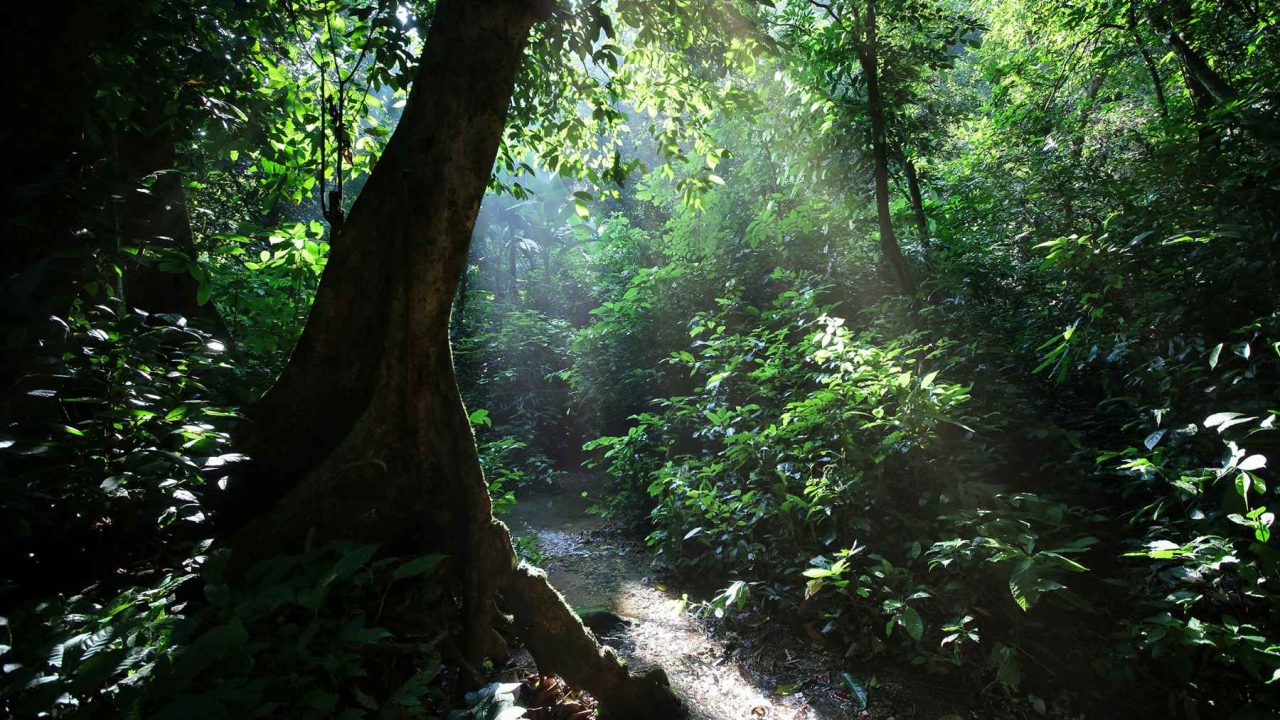
Fine root production in Panama’s tropical forests dropped by nearly 50 percent in the top four inches of soil during a sustained drought experiment — and what researchers found deeper underground is raising serious new questions about how forests will survive a hotter, drier future.
The changes are happening where no one can see them. While most of the public conversation about climate change and forests focuses on dying canopies, wildfires, or shrinking tree cover, this research points to a quieter crisis unfolding underground. Roots — the hidden engine of forest carbon storage — are responding to drought in ways that are both surprisingly adaptive and genuinely worrying.
The findings arrive at a critical moment. As rainfall patterns shift across the tropics, understanding how forests absorb and store carbon below the surface may be just as important as protecting the trees themselves.
The Experiment That Looked Below the Surface
The study, titled “Drying suppresses fine root production to 1 m depths and alters root traits in four distinct tropical forests,” tracked belowground changes across four lowland forests on the Isthmus of Panama. Researchers launched the experiment in 2018, designing it to simulate the kind of prolonged drying that climate models predict will become more common across tropical regions.
The four study sites span a meaningful range of conditions, from roughly 92.5 to 134.6 inches of annual rainfall — or 2,350 to 3,420 millimeters — with an average temperature near 79 degrees Fahrenheit (26 degrees Celsius). That diversity was intentional. By studying forests that already experience different moisture levels, researchers could test whether drought responses were consistent across varying ecosystems or highly site-specific.
What they found in the uppermost layer of soil was stark. Fine root production — the growth of the thin, hair-like roots responsible for absorbing water and nutrients — fell by approximately half in the top four inches. But the story did not end there. Many trees responded by pushing new root growth deeper into the ground, essentially chasing moisture downward as the surface dried out.
What These Numbers Actually Mean for Tropical Forests
Fine roots are small, but their role in forest ecosystems is enormous. They are among the most metabolically active parts of a tree, constantly growing, dying, and decomposing. That cycle is central to how forests move carbon from the atmosphere into the soil — a process that makes tropical forests one of the planet’s most important carbon sinks.
When fine root production drops sharply, the entire carbon pipeline slows down. Less root growth means less organic material being added to the soil. Less decomposition means less nutrient cycling. Over time, those changes can reduce the amount of carbon a forest is able to lock away underground.
The deeper root growth observed in the study reflects genuine resilience — trees are not simply giving up when the top soil dries out. But researchers note that this adaptation comes with a cost. Redirecting energy to grow roots deeper requires resources that might otherwise go toward above-ground growth or reproduction. And it does not fully compensate for what is lost at the surface.
| Study Detail | Data |
|---|---|
| Experiment launch year | 2018 |
| Number of forest sites studied | 4 lowland forests |
| Annual rainfall range across sites | 92.5 to 134.6 inches (2,350–3,420 mm) |
| Average temperature at study sites | ~79°F (26°C) |
| Fine root production decline (top 4 inches) | ~50 percent |
| Depth range monitored for root changes | To 1 meter (approximately 39 inches) |
A Mix of Resilience and Risk That Should Not Be Dismissed
Researchers describe the overall picture as a combination of resilience and risk — and that framing matters. The forests are not collapsing. Trees are adapting. But the adjustments they are making may still drain carbon from soils over time, which undermines one of the key roles tropical forests play in slowing climate change.
The concern is not just about what happens during a drought. It is about what happens after. If persistent drying repeatedly suppresses fine root production across the top layers of soil, the long-term carbon balance of these forests could shift in ways that are difficult to reverse. Soils that lose organic matter become less capable of storing carbon even when rainfall eventually returns.
This is the unsettling question sitting at the center of the research: what happens when the rainy season no longer arrives the way it used to, and the forest floor stays dry longer than normal, season after season? The answer, scientists suggest, is hidden in roots that are quietly making decisions about where to grow — and those decisions have consequences far beyond the forest itself.
Why This Matters Beyond Panama
Panama’s forests are not an isolated case study. Tropical forests worldwide are facing increasing pressure from shifting rainfall patterns linked to climate change. The Isthmus of Panama, with its range of moisture conditions across a relatively small geographic area, offered researchers a rare natural laboratory to examine drought responses across multiple forest types simultaneously.
The fact that root suppression was observed consistently across four distinct forests — despite their different rainfall profiles — suggests the response may be widespread rather than localized. That makes the findings relevant to tropical forest regions far beyond Central America, including the Amazon basin, Southeast Asia, and sub-Saharan Africa, where forests store enormous quantities of carbon and face growing drought pressure.
The broader implication is that climate projections which rely on tropical forests continuing to absorb carbon at current rates may need to account for this underground dynamic. A forest that looks intact from above may be quietly losing its capacity to store carbon below.
What Researchers Are Watching Next
Because the Panama experiment was launched in 2018 and monitors changes to depths of one meter, it is designed to capture long-term trends rather than short-term fluctuations. Researchers are continuing to track how root traits shift as drought conditions persist, and whether the deeper root growth observed in some trees can meaningfully offset losses at the surface.
The central concern going forward is whether forests can sustain their carbon storage role under conditions that are expected to become more frequent and more intense. The early data suggest the answer is complicated — and that the ground beneath our feet deserves far more attention than it typically receives.
Frequently Asked Questions
What did researchers find happened to fine roots during the Panama drought experiment?
Fine root production in the top four inches of soil dropped by approximately 50 percent during the sustained drought conditions studied.
When did the Panama drought experiment begin?
The experiment was launched in 2018 and monitored belowground changes across four lowland forests on the Isthmus of Panama.
Did trees show any signs of adaptation to the drought?
Yes — while surface root production fell sharply, many trees responded by pushing new root growth deeper underground, essentially following moisture downward.
Why does fine root loss matter for carbon storage?
Fine roots play a central role in moving carbon from the atmosphere into the soil. When their production drops, the forest’s ability to store carbon underground over time may be reduced.
How much annual rainfall do the study sites receive?
The four forest sites receive between approximately 92.5 and 134.6 inches of rain per year, representing a range of moisture conditions across the Isthmus of Panama.
Does this research apply to tropical forests outside Panama?
The consistent findings across four distinct forest types suggest the drought response may be widespread, though whether identical patterns occur in other tropical regions has not yet been confirmed by this specific study.




Leave a Reply