
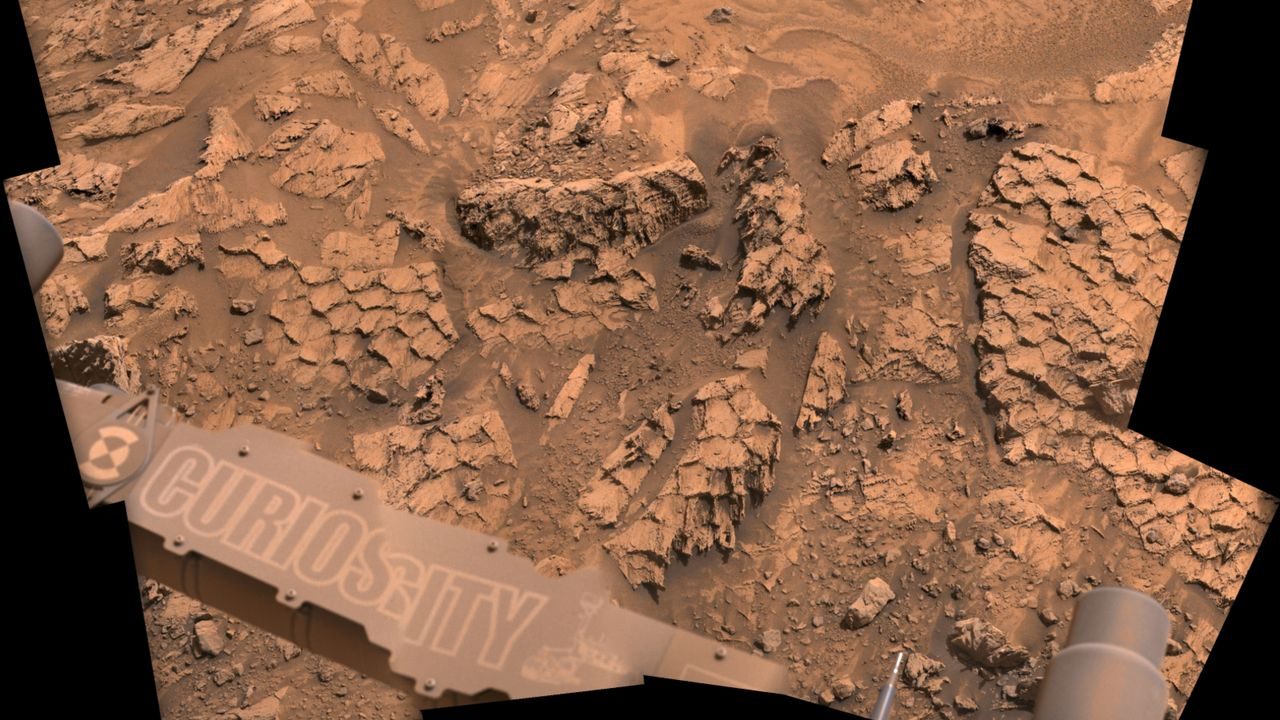
Photos captured by NASA’s Curiosity rover have revealed something that looks almost too strange to be real — dozens of polygon-covered rocks scattered across a section of Mars, each one resembling a clump of giant fossilized reptile scales. The images are striking enough to stop you mid-scroll, and the science behind them may be even more fascinating than the visuals.
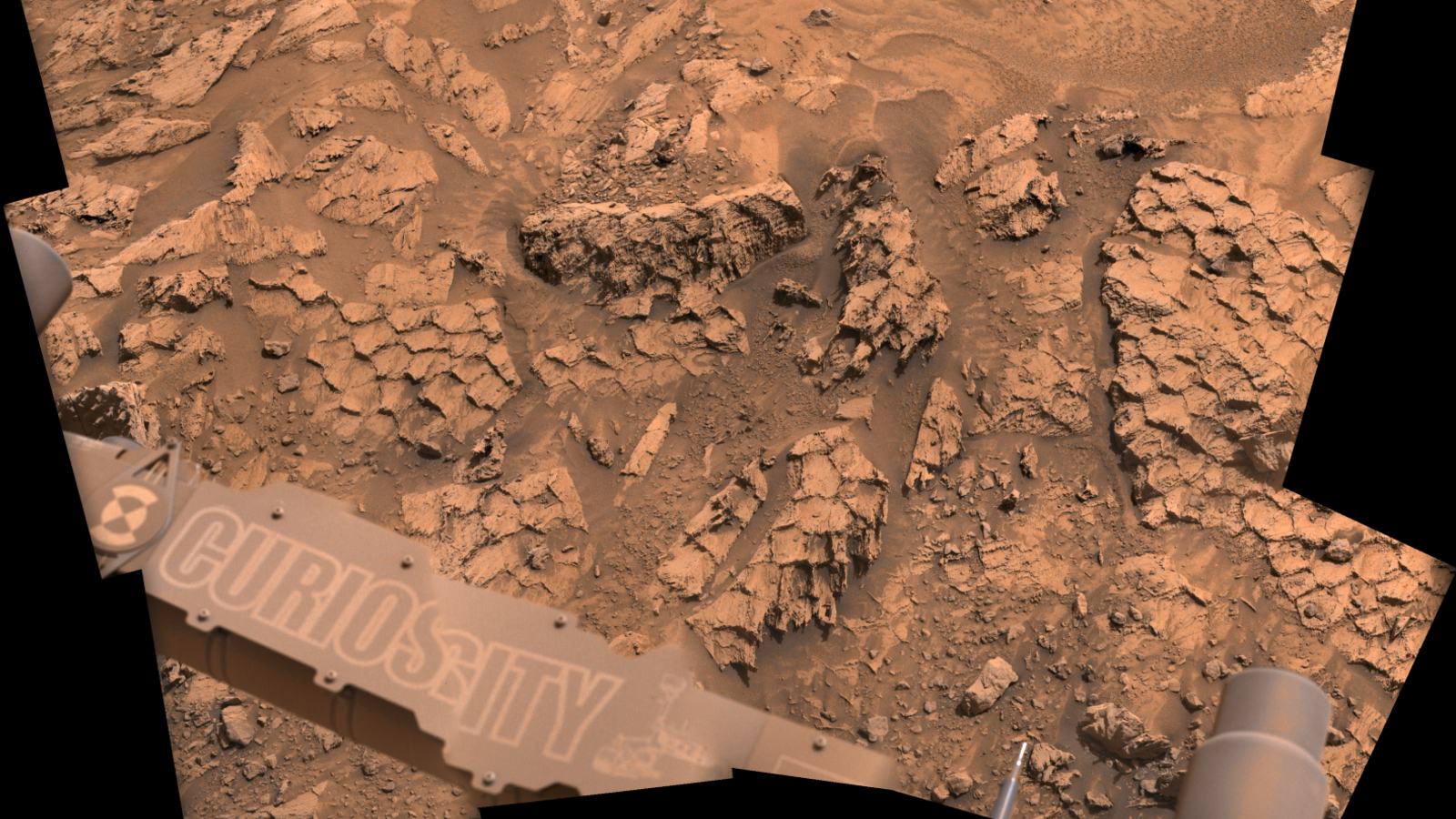
The rocks were photographed near a region called Antofagasta, located within the Gale crater on Mars. The formations don’t come from alien creatures, despite what your first instinct might suggest. Instead, researchers believe these strange textures may be connected to something far more significant in the story of Mars: ancient water.
It’s the kind of discovery that reminds you why robotic explorers like Curiosity continue to matter, even years into their missions. Mars keeps offering up surprises, and this one is genuinely hard to look away from.
What Curiosity Actually Found on Mars
The rocks photographed by Curiosity are covered in distinctive polygonal patterns — geometric, interlocking shapes that tile across the surface of each stone in a way that strongly resembles scales on a reptile’s skin. When dozens of these rocks are clustered together, the effect is dramatic. From above, the scene looks less like a barren planet and more like the shed skin of something enormous.
But the scientific explanation is grounded in geology, not mythology. Polygonal cracking patterns like these are commonly associated with the drying and shrinking of wet materials. On Earth, you see similar textures in dried mud flats, cracked clay, and ancient lake beds. When water-saturated sediment loses moisture, it contracts and fractures in these characteristic geometric patterns.
The presence of these formations near Antofagasta in Gale crater adds to a growing body of evidence suggesting that this region of Mars once held liquid water — and that the planet’s ancient past was far more dynamic than the cold, dry world we see today.
Why Gale Crater Keeps Delivering Discoveries
Gale crater is not a random landing site. NASA chose it deliberately for Curiosity’s mission because scientists suspected it held a rich geological record. The crater contains a central mountain — Mount Sharp — whose layered sedimentary rocks essentially function as a timeline of Martian history, with older material at the base and younger layers higher up.
Over its years of exploration, Curiosity has found multiple signs of past water activity in this region, including ancient riverbeds, minerals that only form in the presence of water, and chemical signatures consistent with a once-habitable environment. The dragon scale rocks are the latest addition to that record.
What makes this particular find visually arresting — and scientifically useful — is the sheer number of these formations in one area. It isn’t a single oddly-shaped rock. It’s dozens of them, spread across the surface, suggesting a widespread geological process rather than a one-off quirk of erosion.
Key Facts About the Mars Dragon Scale Discovery
- The rocks are located near a region called Antofagasta within Gale crater on Mars
- The formations are described as polygon-covered rocks that resemble fossilized reptile scales
- The images were captured by NASA’s Curiosity rover
- Dozens of these rocks were found clustered together in the same area
- Scientists suggest the structures may have ties to ancient water activity on Mars
- The polygonal texture is consistent with geological processes involving drying and cracking of wet material
| Feature | Detail |
|---|---|
| Location on Mars | Near Antofagasta, Gale crater |
| Rover responsible | NASA’s Curiosity rover |
| Visual description | Polygon-covered rocks resembling reptile scales |
| Number of formations | Dozens found in the same area |
| Proposed origin | Possible connection to ancient water activity |
| Image credit | NASA/JPL-Caltech/MSSS/Kevin M. Gill |
What This Could Mean for Mars’ Ancient History
The potential link to ancient water is what elevates this discovery beyond a visual curiosity. If these polygonal rock textures were indeed shaped by the drying of wet sediment, they serve as physical evidence that liquid water once existed at this location — not just as a passing trickle, but in quantities significant enough to saturate the ground and leave lasting geological marks.
Mars today is a frozen desert. Its atmosphere is too thin and its surface too cold for liquid water to exist under normal conditions. But the geological record preserved in places like Gale crater tells a different story about the planet’s distant past — one where water flowed, lakes formed, and conditions may have been suitable for microbial life.
Each new piece of evidence, including formations like these, helps scientists build a more complete picture of when Mars had water, how long it persisted, and what eventually caused the planet to lose it. These are not small questions. They sit at the heart of one of the biggest scientific puzzles of our time: whether life ever existed beyond Earth.
What Comes Next for Curiosity and Mars Exploration
Curiosity has been operating on Mars since 2012, far outlasting its original two-year mission. The rover continues to traverse Gale crater, analyzing rock samples, capturing images, and sending data back to Earth. Each new area it explores adds another chapter to our understanding of Martian geology.
The dragon scale rocks near Antofagasta will likely be subject to further analysis as scientists examine the images and any accompanying chemical data from the rover’s instruments. Whether they can definitively confirm a water-related origin for these formations remains to be seen, but the visual evidence alone is compelling enough to warrant serious attention.
Meanwhile, NASA’s Perseverance rover continues its own mission in Jezero crater, collecting rock samples that may eventually be returned to Earth for laboratory analysis — a level of detail no rover instrument can currently match. Together, these missions are assembling the most detailed portrait of Mars ever constructed, one strange and surprising discovery at a time.
Frequently Asked Questions
What are the “dragon scale” rocks on Mars?
They are polygon-covered rocks photographed by NASA’s Curiosity rover that resemble clumps of giant fossilized reptile scales. Dozens of them were found clustered together near Antofagasta in Gale crater.
Where exactly were these formations found?
The rocks were discovered near a region called Antofagasta, located within Gale crater on Mars.
Are these formations evidence of alien life?
No. Scientists believe the polygonal textures are geological in origin, potentially connected to ancient water activity rather than any biological source.
What rover took the photos?
NASA’s Curiosity rover captured the images, with image credit attributed to NASA/JPL-Caltech/MSSS/Kevin M. Gill.
Why do scientists think water may be involved?
Polygonal cracking patterns are commonly associated with the drying and shrinking of water-saturated material, suggesting the rocks may have formed in an environment that once contained liquid water.
Has Curiosity found signs of water in Gale crater before?
Yes. Gale crater has previously yielded evidence of ancient riverbeds, water-formed minerals, and other signs of past liquid water activity, making it one of the most scientifically significant sites on Mars.

Leave a Reply