
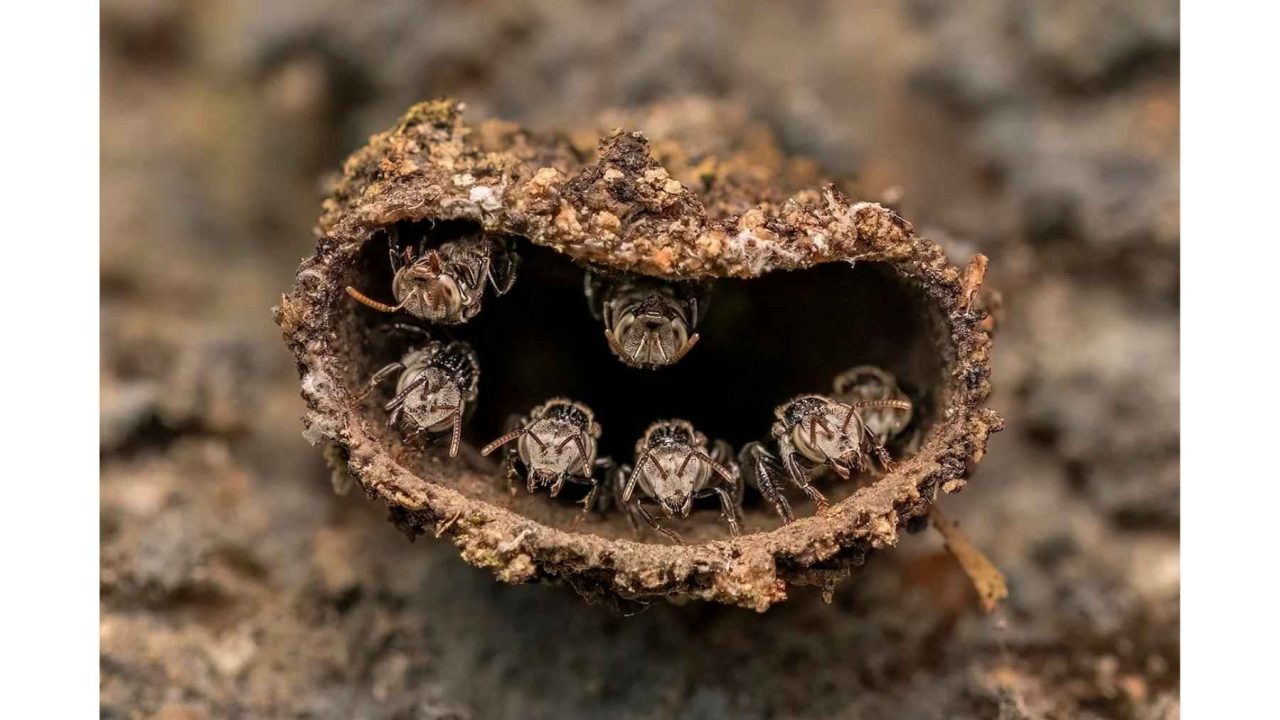
A 14-year-old photographer just beat competitors from around the world — using a camera that’s a decade old — to win one of the most prestigious macro photography competitions on the planet. The photograph that did it wasn’t taken in a studio or with expensive modern gear. It was captured during a school break, in a backyard in Kerala, India, while most teenagers were probably sleeping in.
Rithved Girish, who lives in the United Arab Emirates but regularly travels to India during school holidays, has been named Young Close-up Photographer of the Year 7 for his image titled “Guardians of the Hive.” The win came in the youth category of the international Close-up Photographer of the Year competition — widely regarded as the world’s most important contest in macro photography.
What makes this story worth paying attention to isn’t just the age of the photographer or the age of the camera. It’s what the photograph actually shows — and why it matters far beyond the world of wildlife photography.
What “Guardians of the Hive” Actually Shows
The image captures stingless bees standing guard at the entrance of their nest in Mezhathur, Kerala. These bees — likely from the Tetragonula family — build a narrow tube made of mud and resin at the opening of their nest. It functions as both a front door and a fortress, funneling access to a single narrow point that’s easier to defend.
In the photograph, guard bees cluster at that entrance, their bodies forming what looks like a living shield. They’re watching for threats. The scene transforms a patch of old wall into something that resembles architecture or sculpture — but every element of it is pure, undisturbed natural behavior caught in real time.
Rithved didn’t bait the nest or interfere with the bees in any way. He simply waited. That patience — arguably the most important skill in wildlife photography — is what made the shot possible.
The Gear, the Location, and the Approach
One of the most striking details about this win is what Rithved didn’t use. He photographed the bees with a camera that is ten years old. In a field where photographers routinely invest thousands of dollars in cutting-edge equipment, this is a meaningful reminder that observation and timing matter more than hardware.
Rithved spends his school breaks exploring farms, backyards, and patches of semi-wild land in India. That kind of deliberate, unhurried fieldwork — returning to the same landscapes, learning where to look — is what led him to the nest in Mezhathur in the first place.
| Detail | Fact |
|---|---|
| Photographer’s name | Rithved Girish |
| Age at time of win | 14 years old |
| Award received | Young Close-up Photographer of the Year 7 |
| Photograph title | “Guardians of the Hive” |
| Location photographed | Mezhathur, Kerala, India |
| Subject | Stingless bees (likely Tetragonula family) |
| Camera age | 10 years old |
| Photographer’s country of residence | United Arab Emirates |
Why Stingless Bees Deserve More Attention Than They Get
Most people think of bees in broad strokes — honeybees, bumblebees, maybe the occasional wasp they’ve misidentified. Stingless bees barely register in public awareness, despite being critical pollinators across tropical regions including South and Southeast Asia, Australia, Africa, and Central and South America.
The Tetragonula genus, which likely includes the bees in Rithved’s photograph, are small, often overlooked, and genuinely fascinating in their behavior. Their nests — with those distinctive mud-and-resin entrance tubes — are engineering marvels at a tiny scale. The guard behavior captured in the image is a real defensive strategy: bees positioning themselves at the narrow entrance to screen anything that tries to enter.
The photograph does something that conservation campaigns often struggle to do. It makes an insect that most people would walk past without a second glance look extraordinary. That shift in perception — from invisible to remarkable — is one of the most powerful things wildlife photography can achieve.
- Stingless bees are important pollinators in tropical ecosystems worldwide
- They build distinctive entrance tubes from mud and resin as a defensive structure
- Guard bees physically station themselves at the entrance to protect the colony
- The Tetragonula family is found across South and Southeast Asia, among other regions
- Despite their ecological role, stingless bees receive far less public attention than honeybees
What This Win Says About Wildlife Photography Right Now
The Close-up Photographer of the Year competition is considered the most important macro photography contest in the world. Winning its youth category at 14 — with decade-old equipment — sends a clear signal about what the judges value: patience, observation, and genuine connection to the natural world.
Rithved’s approach — spending school breaks in agricultural and semi-wild areas, learning to read landscapes and animal behavior — reflects a philosophy that serious wildlife photographers have long argued matters more than any technical specification. You can upgrade a camera. You can’t shortcut the hours spent learning where animals live and how they behave.
There’s also something worth noting about access. Rithved found this shot not in a remote jungle or on an expensive guided expedition, but in the kind of ordinary outdoor space that exists in towns and villages across Kerala. The implication is that remarkable natural behavior is happening all around us — in backyards, on old walls, in the narrow cracks of everyday environments — and most of us simply aren’t looking closely enough.
What Comes Next for a 14-Year-Old World Champion
What is confirmed is that he continues to divide his time between the UAE and India, using school breaks for fieldwork. Given that he achieved this level of recognition at 14, the trajectory from here is genuinely open.
For the Close-up Photographer of the Year competition itself, this seventh edition of the youth award has produced its most high-profile young winner to date — a result that will likely draw wider attention to both the contest and to macro photography as a discipline accessible to young people without professional-grade equipment.
Frequently Asked Questions
Who is Rithved Girish?
Rithved Girish is a 14-year-old wildlife photographer who lives in the United Arab Emirates and regularly visits India during school breaks to photograph wildlife.
What competition did he win?
He won the youth category of the Close-up Photographer of the Year competition, receiving the title of Young Close-up Photographer of the Year 7.
What does his winning photograph show?
The image, titled “Guardians of the Hive,” shows stingless bees standing guard at the entrance of their nest in Mezhathur, Kerala, India.
What kind of camera did he use?
Rithved used a camera that is approximately 10 years old, demonstrating that high-end modern equipment is not a prerequisite for world-class nature photography.
What type of bees are in the photograph?
The bees are stingless bees, likely from the Tetragonula family, which build distinctive mud-and-resin entrance tubes at their nests as a defensive structure.
Where exactly was the photograph taken?
The photograph was taken in Mezhathur, Kerala, India, during one of Rithved’s school holiday visits to the country.



Leave a Reply