
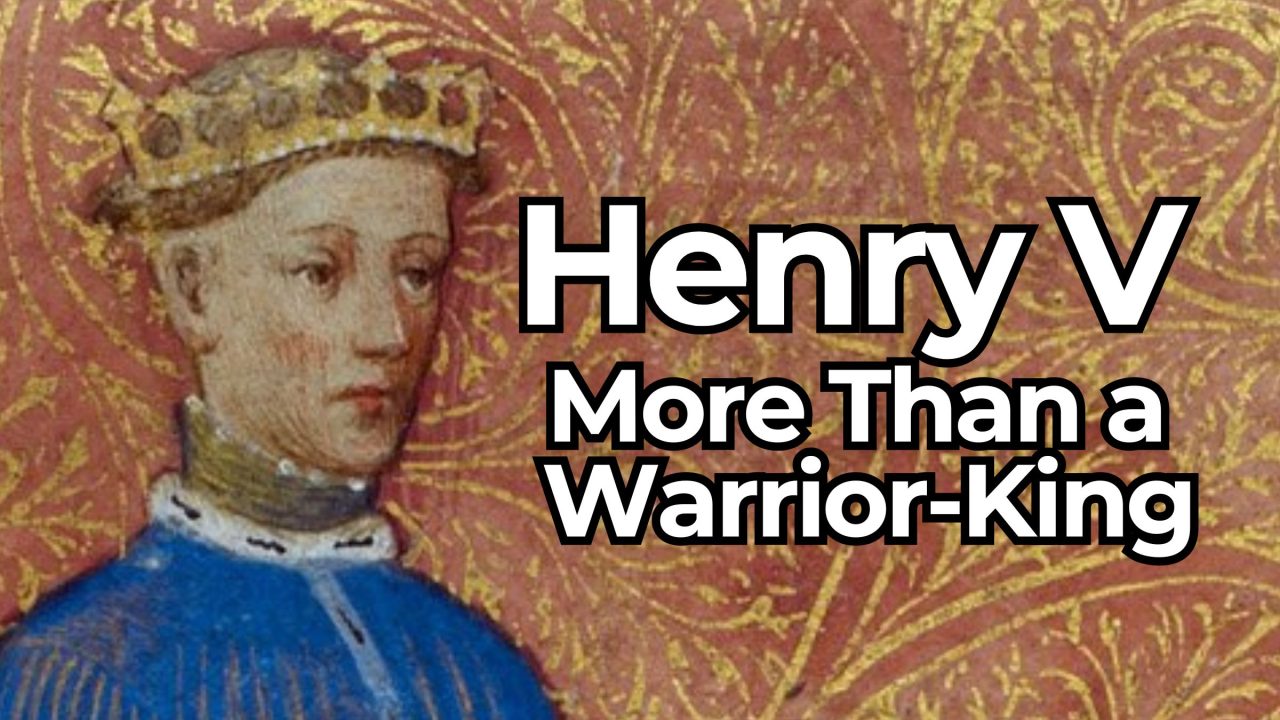
At just thirteen years old, the future Henry V was already living inside a political crisis — his father had just seized the English crown from Richard II, and the threats were closing in from every direction. What followed would shape one of the most celebrated, and most misunderstood, monarchs in English history.
Henry V is best remembered for Agincourt, for Shakespeare’s stirring speeches, and for the dramatic arc of a wild prince becoming a warrior-king. But historian Michael Livingston argues that the real Henry V was far more layered than that legend allows — a ruler forged not just on the battlefield, but through years of political instability, border warfare, and hard-won lessons in survival.
The story of how he became that king is worth telling properly.
The World Henry V Inherited Was Already on Fire
When Henry IV seized the throne from Richard II in 1399, he created a dynasty built on contested ground. For the young heir, growing up meant growing up fast. The threats facing the new Lancastrian crown were not abstract — they were immediate, multiple, and dangerous.
France, then fractured by competing noble coalitions, watched England’s instability and looked for ways to exploit it. Scotland, recognizing an opportunity, pressed at the northern border. And in Wales, a revolt led by Owain Glyndŵr erupted into what Livingston describes as a “perilously dangerous” uprising that would demand years of military attention and political will to contain.
Even within the English court itself, plots and schemes threatened the new king and his family. The young prince was surrounded by the reality that power, once taken by force, had to be defended constantly.
These were not abstract history lessons. They were the conditions of his daily life.
How Henry V Was Actually Trained to Rule
As soon as he received the title of Prince of Wales, the future Henry V entered a deliberate program of preparation. According to Livingston’s research, his education combined politics, economics, and military training — a curriculum shaped by the very instability surrounding him.
Shakespeare famously portrayed the young prince — calling him “Hal” — as something of a youthful delinquent in Henry IV, Part 1. But Livingston suggests there is little historical evidence to support that characterization. The real prince appears to have been engaged, serious, and actively learning the craft of kingship from an early age.
That gap between the Shakespeare version and the historical record matters. It tells us something about how legend accumulates around figures like Henry V — and how much of what we think we know is actually inherited from drama rather than documented history.
Key Facts About Henry V’s Early Life and Rise to Power
- Henry V’s father, Henry IV, seized the English crown from Richard II in 1399, when the future Henry V was approximately thirteen years old.
- The new Lancastrian dynasty immediately faced threats from France, Scotland, and Wales simultaneously.
- The Welsh revolt under Owain Glyndŵr was among the most serious domestic crises of the period.
- Henry received the title of Prince of Wales and began formal training in politics, economics, and military leadership.
- Shakespeare’s portrayal of the young prince as a delinquent in Henry IV, Part 1 does not appear to be supported by historical evidence.
- Historian Michael Livingston has examined the formative experiences that shaped Henry’s character and leadership style.
| Threat Facing Henry IV’s England | Source | Nature of the Challenge |
|---|---|---|
| French noble coalitions | France | Exploiting English political instability |
| Border pressure | Scotland | Probing the northern frontier during weakness |
| Owain Glyndŵr’s revolt | Wales | Large-scale and dangerous domestic uprising |
| Internal plots and schemes | English court | Threats from within the ruling circle |
Why the Shakespeare Version Gets Henry V Wrong
The image of a reckless young prince who transforms overnight into a great king is one of the most enduring stories in English literature. It is also, according to Livingston’s work, largely a dramatic construction rather than a historical one.
The real prince was being trained for leadership from the moment he received his title. The chaos surrounding his father’s reign was not a backdrop to adolescent mischief — it was an active classroom. Every conspiracy, every border skirmish, every diplomatic calculation was a lesson in what it actually took to hold a kingdom together.
That context also reframes what Henry V later achieved in France. His battlefield brilliance, which history has celebrated extensively, did not emerge from nowhere. It was the product of years spent watching, learning, and operating inside genuine political danger.
What Henry V’s Story Still Tells Us About Leadership
Livingston’s examination of Henry V points toward something that resonates well beyond medieval history. Leaders who appear to arrive fully formed — decisive, brilliant, fearless — almost always have a less visible history of formation behind them.
For Henry V, that formation happened during one of the most turbulent periods in late medieval English politics. He was not a prince living in comfortable preparation. He was a young man at the center of a dynasty that could have collapsed at any moment, learning to read threats, manage competing pressures, and project authority under conditions that would have overwhelmed a less resilient figure.
The warrior-king at Agincourt was real. But so was the thirteen-year-old navigating a court full of plots while Wales burned and Scotland watched from the north. Understanding both versions is what brings the actual person — not the legend — into focus.
Frequently Asked Questions
How old was Henry V when his father took the English throne?
Henry V was approximately thirteen years old when his father, Henry IV, seized the crown from Richard II in 1399.
Who led the Welsh revolt that threatened Henry IV’s reign?
The Welsh uprising was led by Owain Glyndŵr, and it is described by historian Michael Livingston as a perilously dangerous revolt for the new Lancastrian dynasty.
Is Shakespeare’s portrayal of the young Henry V historically accurate?
According to Michael Livingston, there is little historical evidence to support Shakespeare’s depiction of the young prince as a delinquent in Henry IV, Part 1.
What kind of education did the future Henry V receive?
Once he received the title of Prince of Wales, his training combined politics, economics, and military education — a preparation shaped by the very instability surrounding the Lancastrian court.
What threats did Henry IV’s England face during Henry V’s youth?
The new dynasty faced simultaneous threats from French noble coalitions, Scottish border pressure, the Owain Glyndŵr revolt in Wales, and plots within the English court itself.
Who is Michael Livingston?
Michael Livingston is the historian whose research into Henry V’s formative years informs this reassessment of the king’s character and the experiences that shaped his leadership.

Leave a Reply