
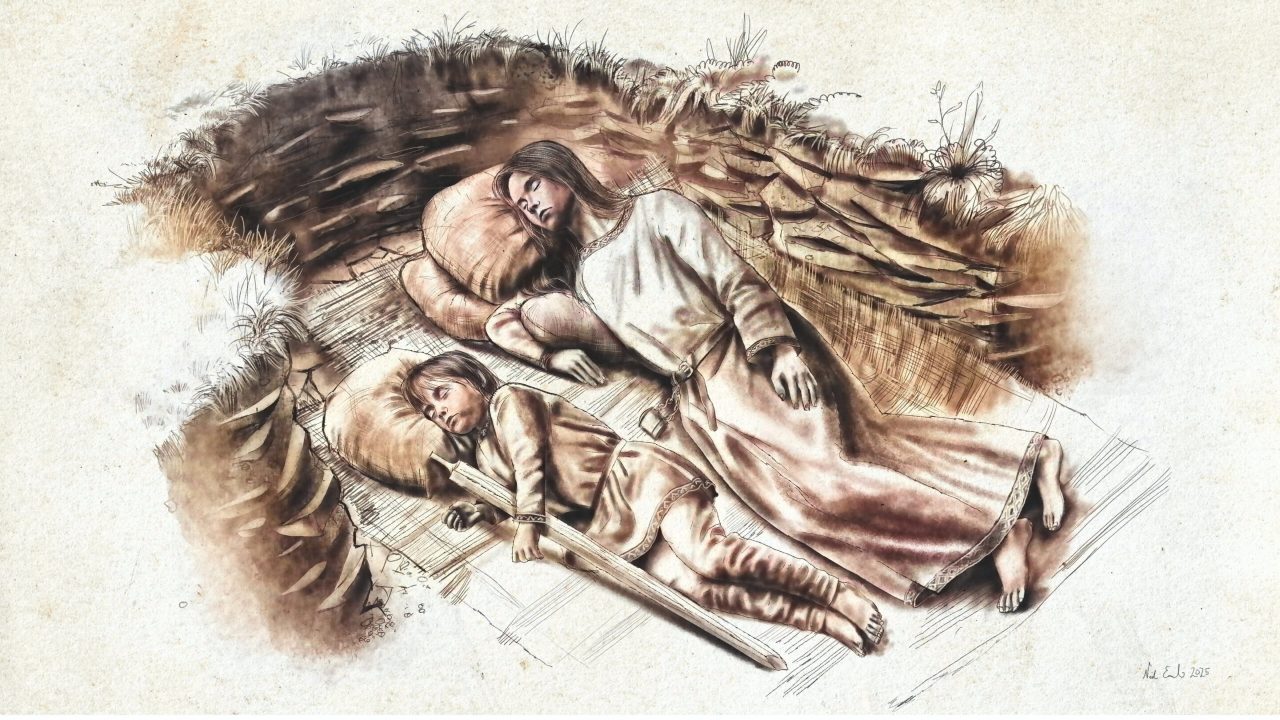
A thousand years ago, two children were laid to rest side by side in a grave in Gloucestershire, England — and only now, through the power of ancient DNA analysis, do we know they were brother and sister.
The discovery, made at an early medieval cemetery in Cherington, has given archaeologists something genuinely rare: a confirmed family relationship reaching back more than a millennium into the Anglo-Saxon world. It’s the kind of find that transforms old bones into real people — children with a family, a story, and a bond that survived even death.
What makes this even more striking is how carefully they were buried. The girl was placed facing the boy, in what researchers describe as a deliberate and intimate arrangement. Someone, more than a thousand years ago, chose to position these two children so they faced each other. That detail alone says something profound about how this community understood grief, family, and the afterlife.
What Was Found in the Cherington Grave
The double burial at Cherington contained more than just skeletal remains. Each child was interred with objects that appear to carry real meaning — items that speak to the roles and identities attributed to them, even at a young age.
The boy was buried with a sword. The girl, who was older, was buried with a workbox. These weren’t random grave goods. In the Anglo-Saxon world, objects placed with the dead were carefully chosen, often reflecting the person’s status, gender role, or future potential. A sword for a young boy and a workbox for a girl suggests that even in death, their community was projecting an identity onto them — warrior and homemaker, perhaps, or simply the roles they were beginning to grow into.
The positioning of the bodies reinforced this sense of intention. The girl was placed facing the boy, a composition that archaeologists believe reflects a conscious decision by those who buried them — not a coincidence of space or logistics, but an expression of closeness.
Why This Medieval Burial Is So Unusual
Double burials in Anglo-Saxon cemeteries are relatively uncommon on their own. But even when two people are found in the same grave, they aren’t always buried at the same time. Graves were sometimes reopened to add a second individual years or even decades later.
In this case, the positioning of the children strongly suggests their burials were contemporary — that they were placed in the ground together, at the same time, as part of a single act of mourning. That raises an immediate and sobering question: what happened to them?
Researchers have suggested that a fast-acting infectious disease may have claimed both children around the same time. No definitive cause of death has been established, but the simultaneous nature of the burial points toward a shared fate — two siblings lost together, possibly within days of each other.
It’s a detail that cuts through the centuries. Families today still know the devastation of losing a child. The idea of a family in Anglo-Saxon England losing two children at once — and choosing to bury them together, facing each other — carries a weight that no amount of historical distance can fully diminish.
Key Facts About the Cherington Discovery
| Detail | What the Evidence Shows |
|---|---|
| Location | Cherington, Gloucestershire, England |
| Period | Early medieval / Anglo-Saxon (over 1,000 years ago) |
| Individuals | A younger boy and an older girl |
| Relationship confirmed by | Ancient DNA analysis |
| Boy’s grave goods | Sword |
| Girl’s grave goods | Workbox |
| Burial arrangement | Girl placed facing the boy; burials believed to be contemporary |
| Suspected cause of death | Possibly a fast-acting infectious disease (unconfirmed) |
- Double burials in Anglo-Saxon cemeteries are relatively uncommon
- When double burials are found, the two individuals are not always interred at the same time
- The deliberate positioning in this case indicates a simultaneous, intentional burial
- Ancient DNA analysis was essential in confirming the sibling relationship
What Science Made Possible Here
This discovery would not have been possible a generation ago. Ancient DNA analysis has transformed archaeology over the past two decades, allowing researchers to extract and sequence genetic material from skeletal remains that are centuries or even millennia old.
In this case, it answered a question that no amount of visual examination or artifact study could have resolved: were these two children related? The answer — confirmed through their DNA — is yes. Brother and sister.
“I was fascinated to hear this incredible news – the results show how important scientific advances have been for archaeology,” said Richard Osgood MBE, Senior Archaeologist for the Ministry of Defence and founder of the project.
Osgood’s reaction reflects a broader truth about where archaeology is heading. The combination of traditional excavation and modern genomic science is producing insights that simply weren’t accessible before — turning anonymous remains into identified individuals, and isolated finds into family stories.
What This Tells Us About Anglo-Saxon Family Life
Beyond the science, this burial offers something more personal: a window into how Anglo-Saxon families understood and honored their dead. The care taken in arranging these two children — the deliberate positioning, the meaningful grave goods, the shared grave — suggests a community that grieved deeply and marked that grief with intention.
The objects buried with each child are particularly telling. Rather than burying them with identical items, the community chose goods that reflected each child’s individual identity. The boy received a sword — a symbol of masculine aspiration and warrior culture. The girl received a workbox — associated with skill, domesticity, and perhaps status in a society where textile work carried real social value.
These weren’t afterthoughts. They were statements. And now, more than a thousand years later, we can read them.
Frequently Asked Questions
Where was the medieval grave discovered?
The grave was found at an early medieval cemetery in Cherington, Gloucestershire, England.
How do researchers know the children were brother and sister?
Ancient DNA analysis confirmed the sibling relationship between the two children buried together.
What objects were found in the grave?
The boy was buried with a sword, and the older girl was buried with a workbox.
Were the two children buried at the same time?
Based on the positioning of the bodies, archaeologists believe the burials were contemporary — meaning the children were interred together at the same time.
What caused the children’s deaths?
Researchers have suggested a fast-acting infectious disease as a possible cause, but no definitive cause of death has been established.
Are double burials common in Anglo-Saxon cemeteries?
No — double burials are relatively uncommon in Anglo-Saxon cemeteries, making this discovery particularly significant.
Leave a Reply