
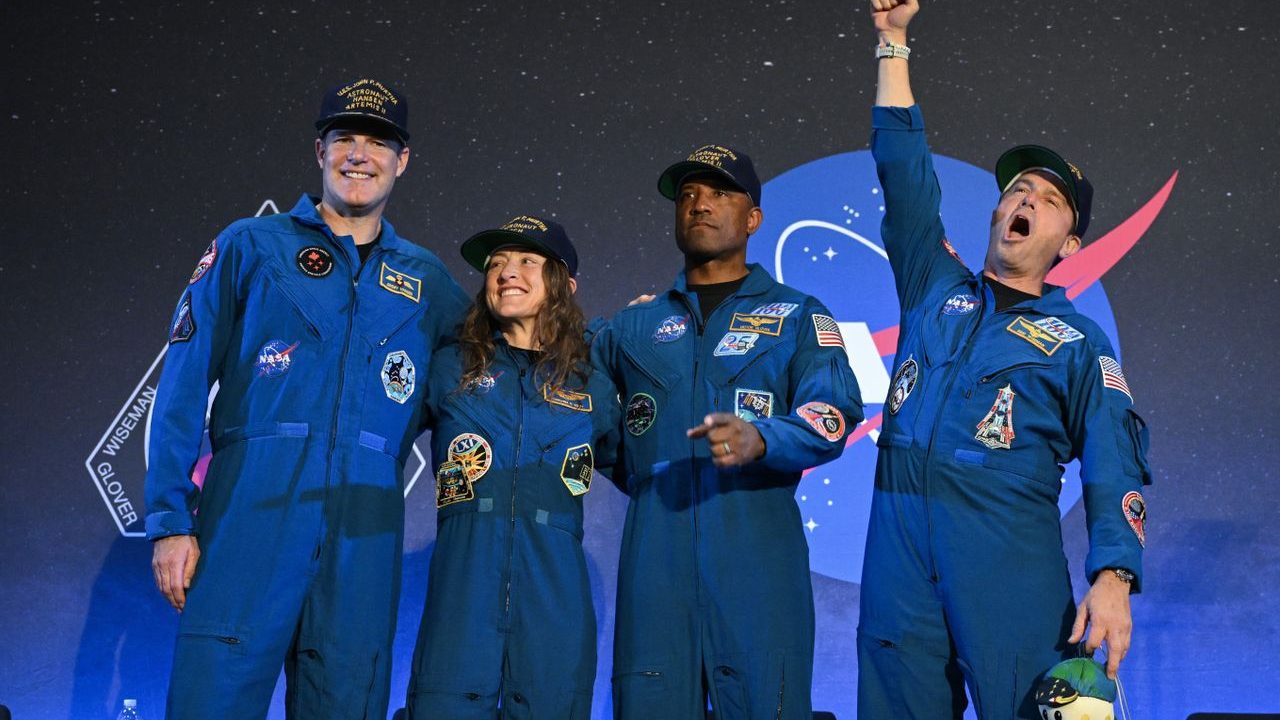
Traveling farther from Earth than any human beings in more than 50 years, hurtling back through the atmosphere at over 24,000 mph (38,600 km/h), and splashing down safely in the ocean — the four astronauts of NASA’s Artemis II mission have just completed one of the most ambitious crewed test flights in the history of space exploration. And now, for the first time since their return, they’re talking about what it was actually like.
The crew held their first public news conference following splashdown, offering the world a candid, unfiltered look at what it feels like to fly to the far side of the moon and come home. The mission marked a historic milestone: the first crewed lunar flyby in over half a century, and the most distant humans have traveled from Earth in the modern spaceflight era.
The reactions from the crew were as striking as the mission itself — raw, emotional, and deeply human. One crew member summed up the collective feeling in a phrase that resonated immediately:
“I have not processed what we just did.”
Who Were the Artemis II Astronauts?
The four-person crew brought together some of NASA’s most experienced and celebrated astronauts, along with a historic first for the Canadian Space Agency.
- Reid Wiseman — Mission Commander
- Victor Glover — Pilot
- Christina Koch — Mission Specialist
- Jeremy Hansen — Mission Specialist (Canadian Space Agency)
The crew also carried a mission mascot and zero-gravity indicator named Rise — a small plush figure that serves the dual purpose of representing the spirit of the mission and acting as a simple, reliable indicator of when the spacecraft achieves weightlessness.
Together, they represent the first humans to travel to the vicinity of the moon since the Apollo era, making Artemis II a genuine turning point in humanity’s return to deep space.
What the Mission Actually Involved
Artemis II was a crewed test flight — not a lunar landing, but something arguably just as technically demanding. The mission sent the crew aboard NASA’s Orion spacecraft on a trajectory that took them around the far side of the moon and back, testing every critical system that will eventually be needed for a full lunar landing attempt.
The reentry alone was a feat of engineering and nerve. Coming back from lunar distances means the spacecraft hits Earth’s atmosphere far faster than a typical return from the International Space Station. At more than 24,000 mph (38,600 km/h), the heat and forces involved push both the spacecraft and the crew to their absolute limits.
The fact that all four crew members returned safely is not just a relief — it’s a data point that NASA has been working toward for years.
Key Mission Facts at a Glance
| Detail | Information |
|---|---|
| Mission Name | Artemis II |
| Commander | Reid Wiseman |
| Pilot | Victor Glover |
| Mission Specialists | Christina Koch, Jeremy Hansen |
| Reentry Speed | Over 24,000 mph (38,600 km/h) |
| Mission Type | Crewed lunar flyby / test flight |
| Mission Mascot | Rise (zero-gravity indicator) |
| Recovery Method | Splashdown |
Why This Mission Matters Beyond the Headlines
It’s easy to hear “lunar flyby” and think of it as a warm-up act — something less significant than an actual landing. But that framing misses the point entirely. Artemis II was specifically designed to stress-test every component of the system that will carry humans back to the lunar surface for the first time since 1972.
Every sensor reading, every system response, every moment of crew performance during the mission feeds directly into the planning for Artemis III, which aims to put boots on the moon — including, for the first time in history, a woman and a person of color.
The record-breaking nature of this test flight also shouldn’t be understated. The crew traveled farther from Earth than any humans since the Apollo program, making this one of the most significant crewed missions of the 21st century by any reasonable measure.
The news conference after splashdown wasn’t just a formality. It was a rare, unscripted window into what four people experience when they do something no living human has done before — fly to the far side of the moon and return safely to Earth.
What Comes Next for the Artemis Program
With Artemis II now complete and its crew safely home, NASA will spend considerable time analyzing the data and feedback gathered throughout the mission. The crew’s firsthand accounts — including those shared at the post-splashdown news conference — are a critical part of that process.
This is pretty much why it makes sense to 10x NASAs budget ngl pic.twitter.com/0CiKm2ETM4
— Pintle (@pintleinjector) April 12, 2026
The next major milestone in the program is Artemis III, which is intended to be the first crewed lunar landing of the modern era. While no firm launch date has been confirmed in the available reporting, the success of Artemis II represents a major green light for that ambition.
For now, the four crew members are back on Earth, processing — or trying to process — what they just accomplished. If their own words are any guide, even the people who lived it are still coming to terms with the magnitude of what happened.
Frequently Asked Questions
What was the Artemis II mission?
Artemis II was a crewed NASA test flight that sent four astronauts on a flyby of the far side of the moon, making it the most distant crewed mission since the Apollo era.
Who were the four Artemis II crew members?
The crew consisted of commander Reid Wiseman, pilot Victor Glover, and mission specialists Christina Koch and Jeremy Hansen.
How fast did the Artemis II crew reenter Earth’s atmosphere?
The crew reentered at over 24,000 mph (38,600 km/h), one of the most demanding reentry profiles in crewed spaceflight.
What is “Rise,” the mission mascot?
Rise is a small plush figure that served as the mission mascot and zero-gravity indicator aboard the Artemis II spacecraft, floating freely once the crew achieved weightlessness.
What happens after Artemis II?
NASA’s next goal is Artemis III, which aims to land humans on the moon for the first time since 1972, though a confirmed launch date has not yet been reported.
Did the Artemis II crew break any records?
Yes — the crew traveled farther from Earth than any humans in more than 50 years, setting a record for the modern spaceflight era.


Leave a Reply