
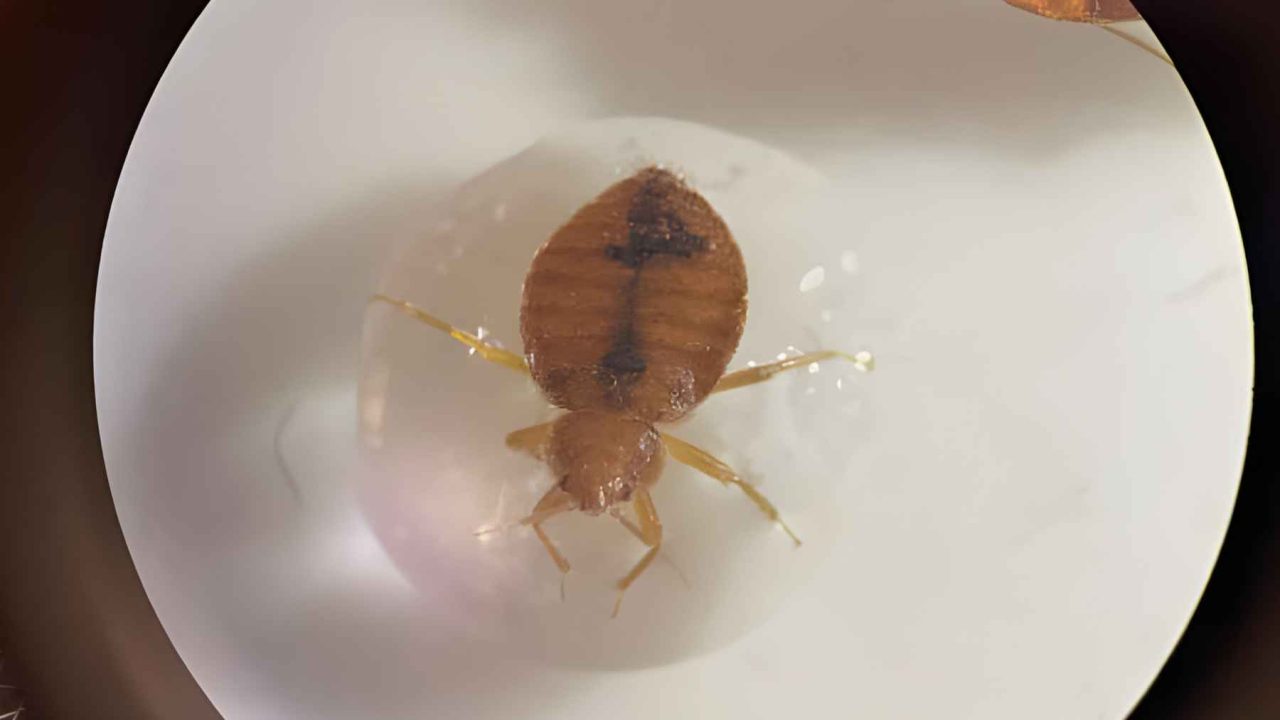
Bed bugs have survived for thousands of years by being remarkably good at hiding — tucked into mattress seams, baseboards, and luggage zippers, staying out of sight and largely out of reach. But new research suggests there may be something sitting in virtually every home that these insects are hardwired to avoid: plain water.
A study out of the University of California, Riverside found that bed bugs consistently turned away from wet surfaces during motion-tracking tests — and when they did flee, they sped up to do it. It is a small biological quirk, but one that researchers believe could reshape how pest control professionals think about treating infestations in apartments, hotels, and shared living spaces.
The discovery was not even the original goal of the research. It started with a leak.
How a Feeder Leak Accidentally Revealed a Bed Bug Weakness
According to researcher Dong-Hwan Choe at UC Riverside, the finding came from an unexpected observation inside a colony vial used to house and study the insects. A small feeder had sprung a leak, dampening the paper lining inside the vial. Instead of moving freely across the surface as they normally would, the bed bugs were actively steering clear of the wet patch — even though the liquid soaking that paper was blood, the very thing bed bugs feed on.
That detail is striking. These insects are driven almost entirely by the search for a blood meal, and yet moisture alone was enough to override that instinct. It pointed researchers toward something more fundamental: a deep-seated aversion to water rooted in the biology of the insect itself.
“If they physically contact a body of water, they’ll get stuck to its surface, blocking their respiratory openings,” said Choe.
That explanation gets to the heart of why water poses such a real threat to bed bugs. Their bodies are flat and low to the ground, and they breathe through tiny openings called spiracles. When those openings come into contact with even a thin film of water, the surface tension of the liquid can trap the insect and cut off its air supply. For a bed bug, a puddle is not just an inconvenience — it can be lethal.
What the Motion-Tracking Tests Actually Showed
To confirm the observation was not a fluke, researchers conducted controlled motion-tracking experiments to watch how bed bugs responded to damp surfaces under consistent conditions. The results were clear: the insects turned away from wet areas the majority of the time, and their movement speed increased as they fled.
That combination — avoidance plus acceleration — suggests the response is not just passive. Bed bugs appear to actively recognize wet surfaces as a threat and react accordingly, rather than simply wandering away by chance.
| Observed Behavior | What It Suggests |
|---|---|
| Turned away from damp surfaces most of the time | Strong, consistent aversion to moisture |
| Increased movement speed when fleeing wet areas | Active escape response, not random wandering |
| Avoided blood-soaked wet paper | Moisture aversion overrides feeding drive |
| Spiracles (breathing openings) vulnerable to water | Biological basis for the behavioral response |
Why This Could Change How We Treat Infestations
Understanding that bed bugs flee from moisture is more than a curiosity. It has practical implications for how liquid-based treatments — sprays, solutions, and other wet applications — are used in real infestations.
If a bed bug’s instinct is to turn and run the moment it encounters a damp surface, then a spray applied to one area of a room could potentially push bugs further into walls, under flooring, or into adjacent rooms rather than eliminating them in place. That may help explain why some liquid treatments produce inconsistent results in the field.
- Bed bugs in apartments, hotels, and dorm rooms can spread quickly between units — and understanding their movement triggers matters for containment
- Moisture aversion could be factored into how and where treatments are applied to prevent bugs from simply relocating
- The research opens the door to moisture-based deterrents as a supplementary pest control tool
- The flat body shape and spiracle placement that make bed bugs vulnerable to water are fixed biological traits — they cannot adapt their way out of this weakness
Shared living environments are especially relevant here. In a dense apartment building or a hotel, a bed bug that flees a treated room does not have far to travel before it finds a new host. Knowing that water acts as a hard boundary the insects prefer not to cross could inform smarter, more targeted treatment strategies.
The Bigger Picture for Pest Control Research
Bed bugs have been notoriously difficult to eradicate. They have developed resistance to many common pesticides over decades, they hide in places that are nearly impossible to treat thoroughly, and they can survive for months without feeding. Researchers have been searching for new angles of attack, and behavioral vulnerabilities — things the insect is biologically compelled to do or avoid — represent one promising direction.
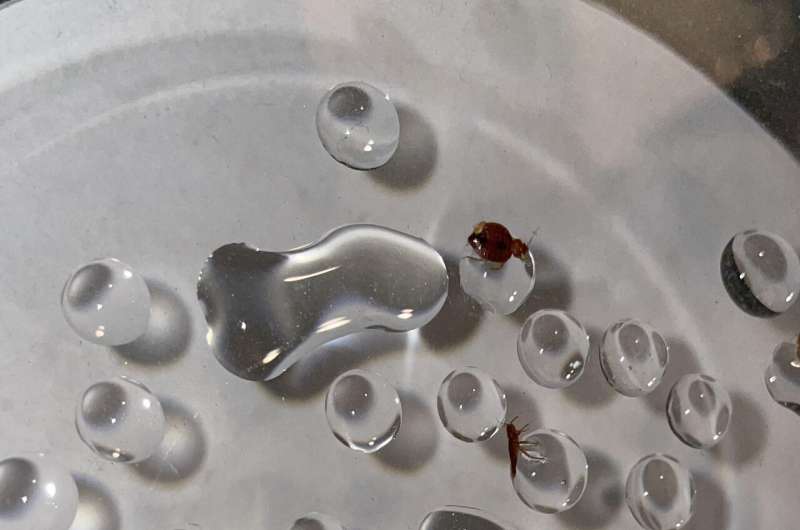
This discovery does not mean that splashing water around a bedroom will solve an infestation. But it does suggest that moisture plays a role in how these insects navigate their environment, and that role has largely been overlooked until now. The research out of UC Riverside adds a meaningful piece to a puzzle that pest control scientists have been working on for years.
Whether this leads to new products, new application methods, or simply better guidance for how existing treatments are deployed remains to be seen. But the fact that something as ordinary as water can send bed bugs fleeing at speed is the kind of finding that tends to open new doors.
Frequently Asked Questions
Why are bed bugs afraid of water?
Bed bugs have flat bodies and tiny breathing openings called spiracles that can be blocked by water’s surface tension, potentially trapping and suffocating them — which appears to drive their instinct to avoid wet surfaces.
Who conducted this research on bed bugs and water?
The research was conducted at the University of California, Riverside, with Dong-Hwan Choe named as a key researcher involved in the study.
How did researchers discover that bed bugs avoid moisture?
The discovery originated when a small feeder leaked inside a colony vial, dampening the paper lining. Researchers noticed the bed bugs were actively avoiding the wet area, even though it was soaked with blood — their food source.
Can I use water to get rid of bed bugs in my home?
Does moisture aversion affect how bed bug sprays work?
Researchers suggest it might, noting that bed bugs’ instinct to flee wet surfaces could cause them to relocate rather than be eliminated when liquid treatments are applied, which may help explain inconsistent results in some cases.
Where are bed bugs most likely to spread because of this behavior?
The research highlights apartments, hotels, and dorm rooms as environments where bed bugs can spread quickly — and where understanding their movement responses to moisture could be especially important for containment.




Leave a Reply