
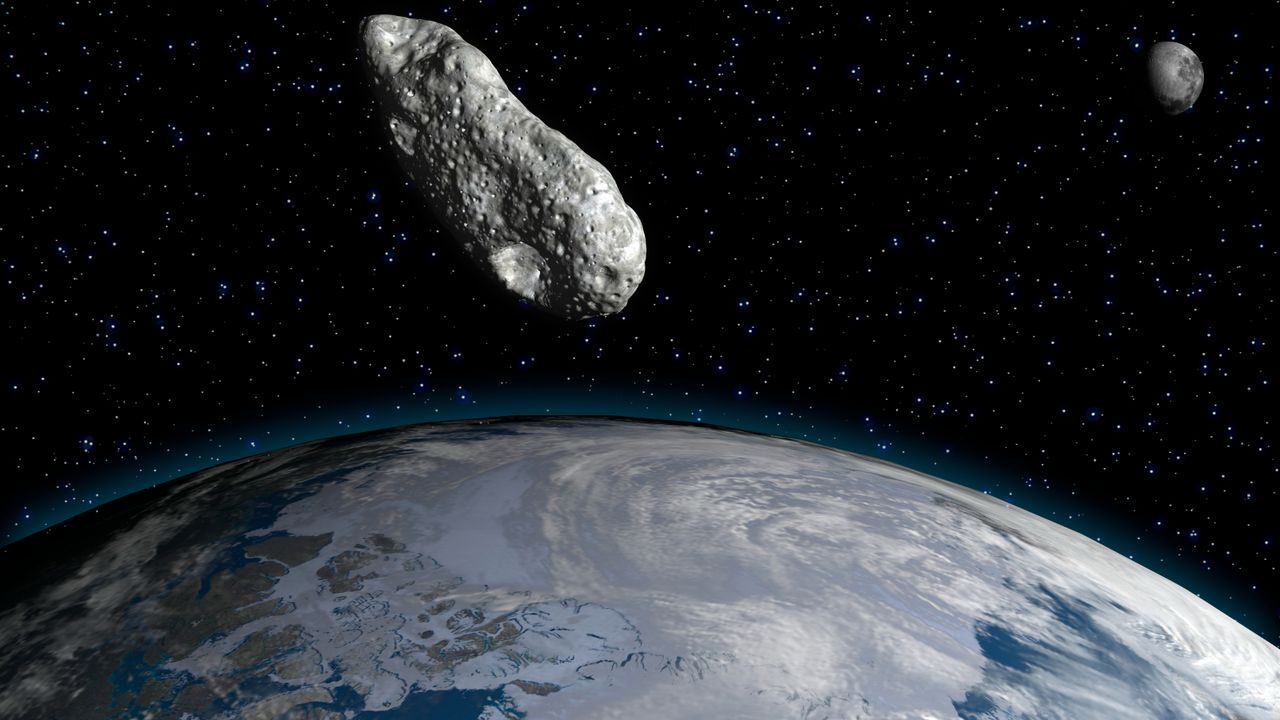
A newly discovered asteroid the size of a blue whale is set to make an unusually close pass by Earth this Monday, May 18 — flying within just 56,000 miles (91,000 kilometers) of our planet’s surface. That’s closer than many satellites orbiting Earth right now, and it’s a flyby that has astronomers paying close attention.
The asteroid, officially designated 2026 JH2, was only spotted for the first time on May 10 — barely a week before its closest approach. It’s traveling at roughly 20,000 mph (32,000 km/h), and despite its size and speed, scientists say it poses no threat to Earth. But that doesn’t make the encounter any less remarkable.
What makes this event particularly striking is that anyone can watch it unfold — no telescope required. A live stream of the flyby is being made available to the public, offering a rare front-row seat to a cosmic near-miss that scientists are still learning about in real time.
Where Asteroid 2026 JH2 Came From — and Where It’s Been
The asteroid was discovered by astronomers at the Mount Lemmon Observatory near Tucson, Arizona — the same facility that identified the superbright Comet Lemmon last year. Once flagged, observatories around the world quickly verified the find, piecing together a clearer picture of the space rock’s path through our solar system.
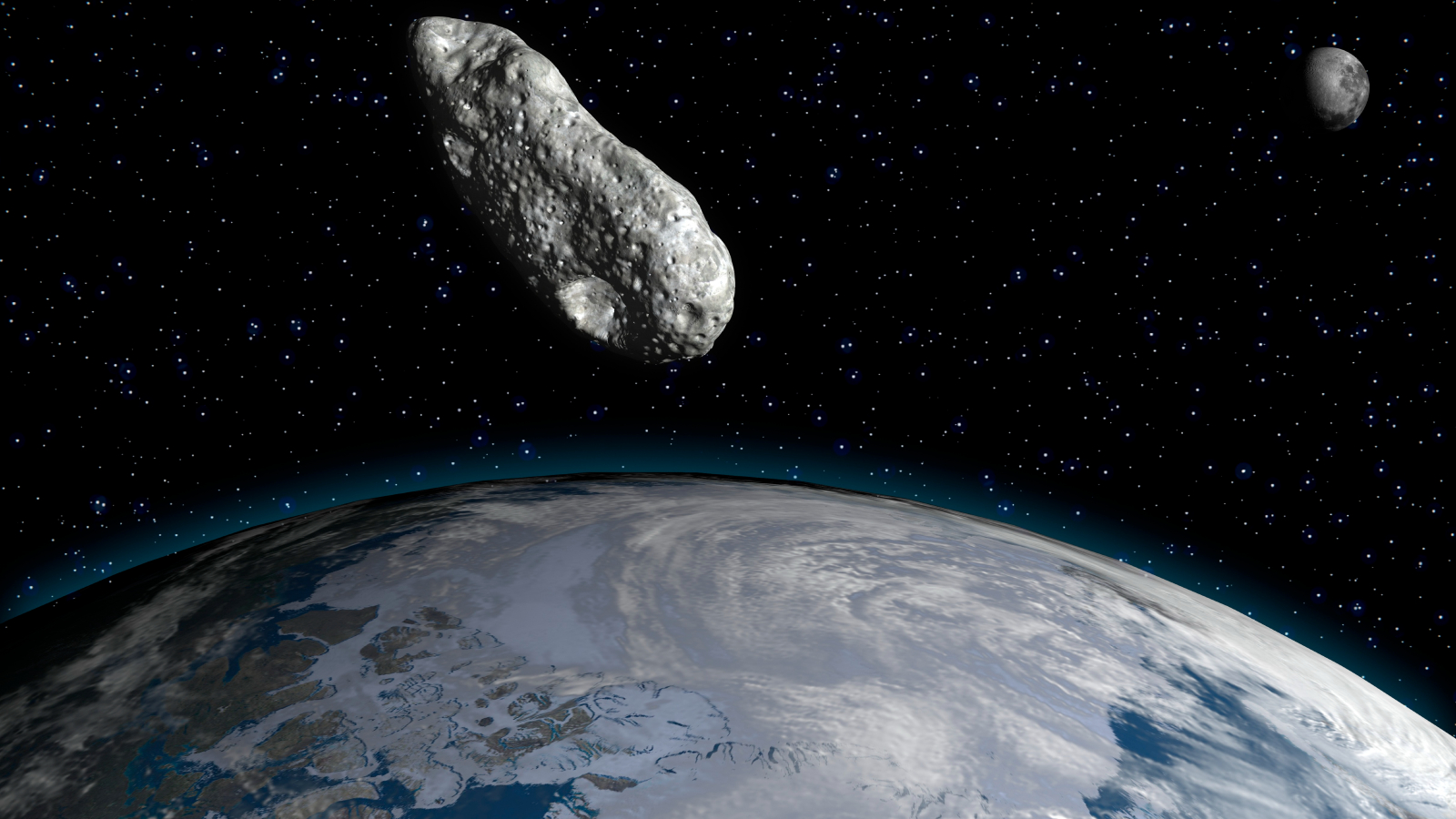
According to NASA’s Jet Propulsion Laboratory’s Small-Body Database Lookup, 2026 JH2 follows an elliptical orbit that takes it as far out as Jupiter, circling the sun approximately every 3.7 years. That means this rock has been quietly looping through our solar neighborhood for who knows how long — and Monday marks the first time humans have ever laid eyes on it.
The fact that it was discovered only eight days before its closest approach underscores a persistent challenge in planetary defense: space is vast, and not every incoming object gives us much warning.
Just How Big Is This Asteroid?
Size estimates put 2026 JH2 at up to 115 feet (35 meters) across — roughly on par with or just slightly larger than the maximum length of a blue whale, Earth’s largest known animal. To put that in perspective, that’s about the length of a 10-story building laid on its side.
That comparison matters for more than just dramatic effect. An asteroid of this size sits in a particularly significant size range — large enough to cause serious regional destruction if it were to enter Earth’s atmosphere, but not quite large enough to pose a global catastrophe.
The most chilling real-world comparison is the Chelyabinsk meteor, which exploded above Russia in 2013. That space rock — considered the largest to enter Earth’s atmosphere in nearly a century at the time — was similar in scale to 2026 JH2. The Chelyabinsk event released energy equivalent to dozens of nuclear bombs and injured over 1,500 people from the resulting shockwave, even though it never actually reached the ground intact.
Key Facts About the Monday Flyby
| Detail | Data |
|---|---|
| Asteroid name | 2026 JH2 |
| Date of closest approach | Monday, May 18 |
| Minimum distance from Earth’s surface | 56,000 miles (91,000 km) |
| Speed | ~20,000 mph (32,000 km/h) |
| Estimated size | Up to 115 feet (35 meters) |
| Discovery date | May 10 |
| Discovery location | Mount Lemmon Observatory, Tucson, Arizona |
| Orbital period around the sun | ~3.7 years |
| Farthest point in orbit | Near Jupiter |
- The flyby distance of 56,000 miles is closer than some satellites currently in orbit around Earth
- The asteroid’s orbit has been verified by multiple observatories worldwide since its discovery
- Its size is comparable to the Chelyabinsk meteor that caused widespread damage over Russia in 2013
- A public live stream of the event is available, meaning no personal equipment is needed to watch
Why This Flyby Is Closer Than You Might Realize
To appreciate just how close 56,000 miles actually is, consider that the Moon sits about 239,000 miles from Earth on average. This asteroid will pass at roughly one-quarter of the Moon’s distance — well within what astronomers classify as a “close approach” by any standard.
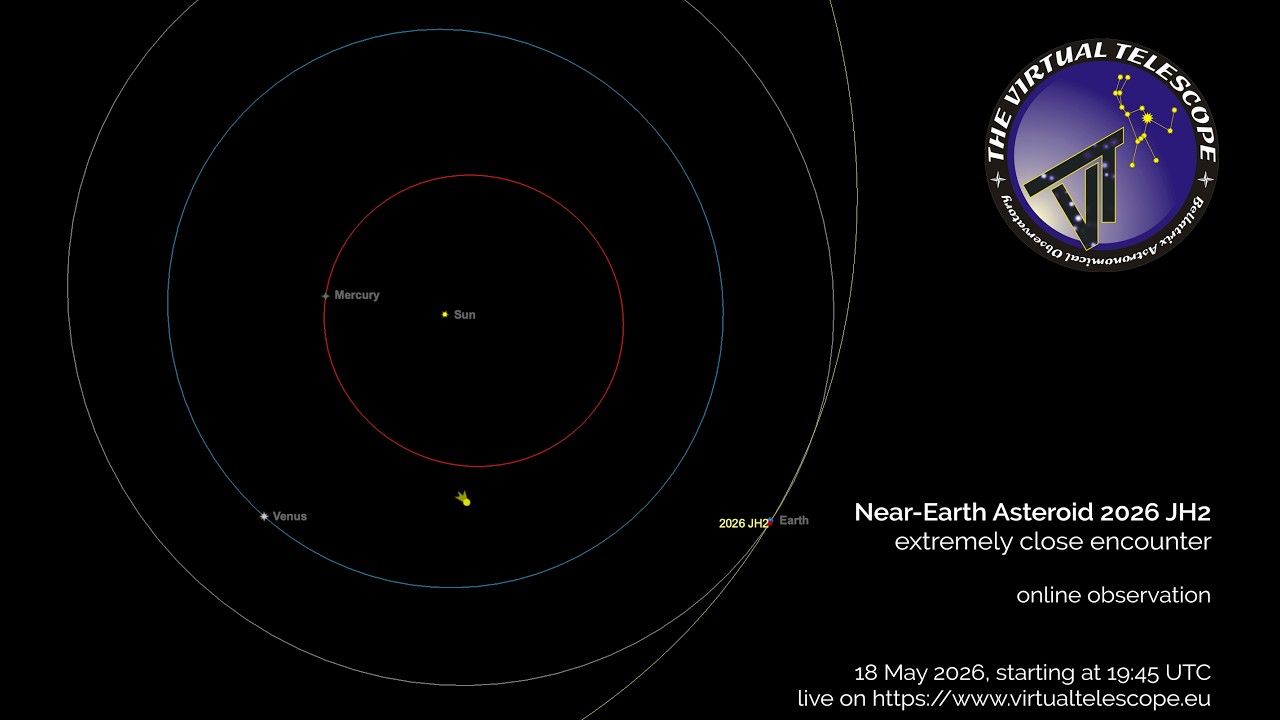
Many communications and weather satellites operate in geostationary orbit at around 22,000 miles above Earth’s surface. Some satellites in higher orbits operate even farther out. The fact that 2026 JH2 will slip past at 56,000 miles means it’s threading through a zone that humanity’s own technology already occupies.
Scientists note there is no danger of impact. But the encounter is a vivid reminder that space rocks of this size are out there — and they don’t always give us much time to prepare for a close look.
What Happens After Monday
Once 2026 JH2 makes its closest approach on May 18, it will continue along its elliptical orbit, swinging back out toward the orbit of Jupiter before looping around the sun again over the course of its roughly 3.7-year cycle. Astronomers now have confirmed data to track its future path with greater accuracy.
Events like this one also serve a larger purpose. Every close-approach asteroid that scientists can study adds to the broader database used to model planetary defense scenarios. The more precisely researchers can track objects like 2026 JH2, the better prepared humanity becomes for identifying any future rock that might actually be on a collision course.
For now, though, Monday’s flyby is an opportunity to witness something genuinely rare — a never-before-seen space rock, discovered less than two weeks ago, passing closer to Earth than some of our own satellites. It’s the kind of event that reminds you the solar system is a busier place than it might appear on a clear night.
Frequently Asked Questions
What is asteroid 2026 JH2?
It is a newly discovered asteroid up to 115 feet (35 meters) across that will fly past Earth on May 18, passing within 56,000 miles (91,000 kilometers) of our planet’s surface.
Is asteroid 2026 JH2 dangerous?
Scientists say it poses no threat to Earth — the asteroid will pass safely by, though its close distance and size make it a notable event worth monitoring.
How was 2026 JH2 discovered?
It was discovered on May 10 by astronomers at the Mount Lemmon Observatory near Tucson, Arizona, and has since been verified by observatories around the world.
How close will the asteroid actually get?
It will reach a minimum distance of approximately 56,000 miles (91,000 kilometers) from Earth’s surface — closer than some satellites currently in orbit.
Can I watch the flyby without a telescope?
Yes. A live stream of the event is being made available to the public, so no personal stargazing equipment is needed to watch the encounter.
How does this asteroid compare to the Chelyabinsk meteor?
2026 JH2 is similar in size to the Chelyabinsk meteor, which exploded over Russia in 2013 and is considered the largest space rock to have entered Earth’s atmosphere in nearly a century.


Leave a Reply