
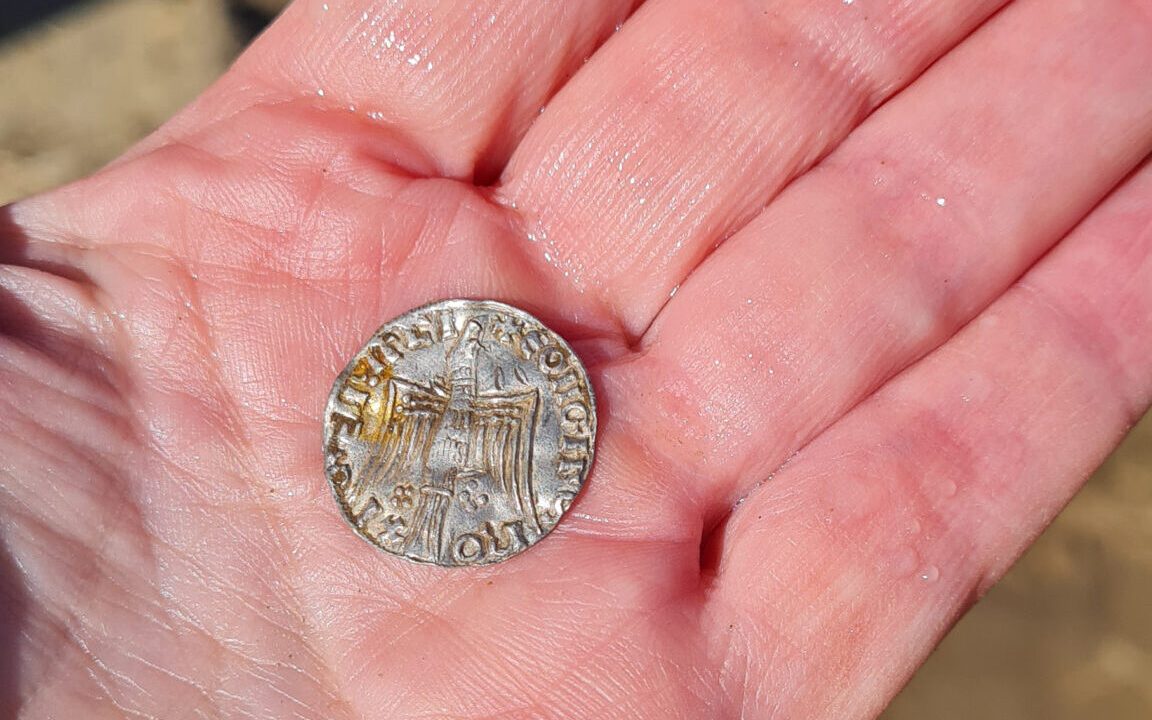
Nearly 5,000 medieval coins have now been pulled from a single site in rural Norway — and archaeologists believe they haven’t found them all yet. The Mørstad Hoard, discovered near Rena in the Østerdalen valley, has grown to 4,772 coins following the latest round of excavations, making it the largest Viking Age coin hoard ever found in Norway by a significant margin.
To put that in perspective: this single find is larger than the next four biggest Viking Age coin hoards discovered in Norway combined. The last time Norway saw a major hoard discovery of any comparable scale was in Trondheim — and that was in 1950.
This isn’t just a remarkable number. Researchers believe the hoard may hold clues about how inland Norway was connected to medieval trade routes stretching across Europe, potentially through the iron trade. What started as a metal detectorist’s lucky find has turned into one of the most significant archaeological discoveries Scandinavia has seen in decades.
How the Mørstad Hoard Was Found — and How It Kept Growing
The discovery began earlier this spring when metal detectorists Vegard Sørlie and Rune Sætre identified the site near Rena. What followed was a careful, methodical excavation carried out by archaeologists from Innlandet County Authority and the Museum of Cultural History in Oslo.
The most recent phase of fieldwork was completed on May 13th, and it dramatically expanded the known size of the hoard. Each new dig has added hundreds of coins to the total, and the pace of discovery shows no signs of slowing.
Researchers now expect the final count to exceed 5,000 coins once a new excavation — planned for later this year — is completed. That projection alone would push this find even further into record-breaking territory.
What the Coins Themselves Reveal
The coins aren’t just impressive in number. Their origins tell a story about the world this hoard was buried in. Among the finds is a Danish penny from the reign of Harthacnut, believed to have been minted in Lund around 1030–1035 — the final years of the reign of his father, the powerful King Cnut.
That particular coin, catalogued as coin number 4,000 in the hoard, carries a snake motif — an image researchers interpret as a worm, snake, or dragon, a symbol associated with Cnut’s coinage. Its presence in inland Norway speaks to the reach of Viking Age trade and political influence well beyond Scandinavia’s coastlines.
The geographic origins of the coins point toward broad international connections. Researchers believe the hoard may be linked to the iron trade, with iron from inland Norway serving as a commodity that plugged the region into vast medieval European trade networks.
| Detail | Information |
|---|---|
| Hoard name | Mørstad Hoard |
| Discovery location | Near Rena, Østerdalen, Norway |
| Discovered by | Vegard Sørlie and Rune Sætre (metal detectorists) |
| Excavating institutions | Innlandet County Authority; Museum of Cultural History, Oslo |
| Current coin total | 4,772 coins |
| Projected final total | Expected to exceed 5,000 |
| Latest fieldwork completed | May 13th |
| Previous major Norwegian hoard | Trondheim, 1950 |
| Notable individual coin | Danish penny of Harthacnut, minted in Lund, c. 1030–1035 |
Why This Find Matters Beyond the Numbers
Large Viking Age coin hoards are extremely rare in Norway. The country has produced nothing on this scale in living memory, which makes the Mørstad Hoard genuinely extraordinary — not just as a treasure, but as a historical document.
The leading theory among researchers is that the hoard is connected to the iron trade. Østerdalen, where the coins were found, sits inland — far from the coastal trading centers most people associate with Viking commerce. If iron produced in this region was being exchanged for foreign coins from places like Denmark, it would suggest that medieval Norway’s interior was far more economically integrated into European trade than previously understood.
The presence of coins minted during the era of King Cnut — who ruled a North Sea empire spanning England, Denmark, and Norway — adds a political dimension to the find. These weren’t just local transactions. They reflect a world where Scandinavian rulers wielded influence across multiple kingdoms, and where coins moved across borders as routinely as goods did.
For historians and archaeologists, a hoard of this size offers a rare window into how wealth was accumulated, stored, and potentially lost during the Viking Age. Whether it was buried for safekeeping and never retrieved, or deposited for another purpose entirely, remains an open question — one that further excavation may help answer.
What Happens When Archaeologists Return Later This Year
The dig isn’t over. Archaeologists have confirmed that a new excavation is planned for later in 2025, and based on the trajectory of discoveries so far, that work is expected to push the total past the 5,000-coin threshold.
Each phase of excavation has been methodical and careful, with coins individually catalogued and analyzed. The process is slow by design — rushing a find of this significance risks losing the contextual information that makes each coin meaningful beyond its face value.
Researchers will also continue to analyze the composition and origins of the coins already recovered, working to build a fuller picture of where they came from and what trade routes they traveled before ending up buried in an Østerdalen field.
The Mørstad Hoard is already rewriting what we know about Viking Age Norway. By the time the final excavation wraps up, it may rewrite even more.
Frequently Asked Questions
What is the Mørstad Hoard?
The Mørstad Hoard is Norway’s largest-ever Viking Age coin hoard, discovered near Rena in the Østerdalen valley. It currently contains 4,772 coins and is expected to exceed 5,000 once excavation is complete.
Who discovered the Mørstad Hoard?
The hoard was initially discovered by metal detectorists Vegard Sørlie and Rune Sætre. Professional archaeologists from Innlandet County Authority and the Museum of Cultural History in Oslo then took over excavation.
How does the Mørstad Hoard compare to other Norwegian finds?
It is larger than the next four biggest Viking Age coin hoards found in Norway combined. The last major hoard discovered in Norway before this was found in Trondheim in 1950.
What are the coins made of, and where do they come from?
The full geographic origins of all coins have not yet been confirmed in available reporting.
Why was the hoard buried there?
This has not yet been confirmed. Researchers believe the hoard may be connected to the iron trade from inland Norway, but the specific reason for its burial remains under investigation.
When will the next excavation take place?
A new excavation is planned for later in 2025, at which point archaeologists expect the total coin count to surpass 5,000.



Leave a Reply