
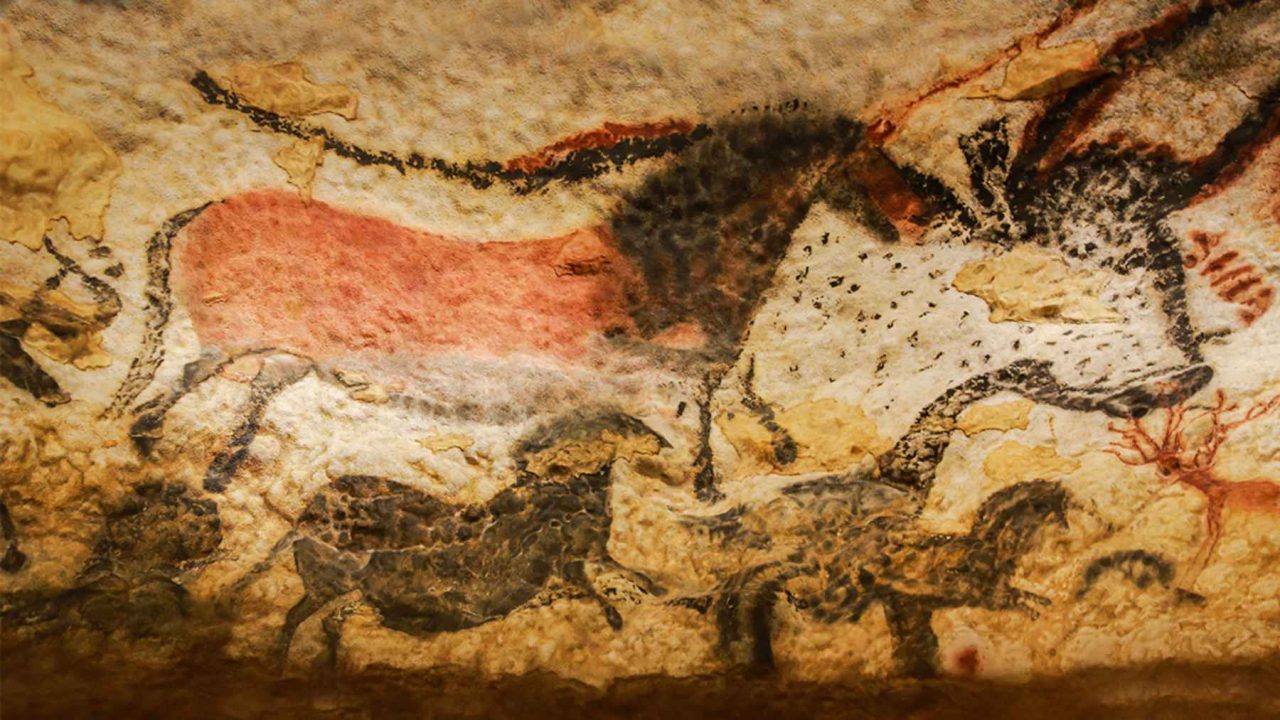
A cave sealed for thousands of years. More than 2,000 images of animals painted by human hands roughly 17,000 years ago. And the whole thing discovered because a group of teenagers went looking around a hole in the ground in rural France.
The Lascaux cave paintings are among the most significant archaeological finds in human history — and the story of how they came to light is just as remarkable as what was found inside. What began as a youthful adventure on September 12, 1940, near the town of Montignac in southwestern France, ended up reshaping our understanding of prehistoric human life and creativity.
Yet today, most people will never see the originals. And the reason why tells us something surprising about how fragile ancient things really are — and how much effort it takes to protect them from us.
The Day Four Teenagers Changed Archaeological History
The discovery unfolded simply enough. Four local teenagers widened a small opening in a wooded hillside and slipped underground, carrying a hastily made lamp. According to France’s Ministry of Culture, they walked along a passage roughly 98 feet long before spotting the first paintings in what is now called the Axial Gallery.
You may have heard a version of this story involving a dog named “Robot,” who supposedly led the boys to the opening. Some sources do repeat that detail, though others note the account is uncertain. The official Ministry of Culture account focuses on the boys’ own exploration rather than the dog’s role. Either way, what they found when they got inside was staggering.
The cave sits beneath a wooded hill near Montignac, in the Dordogne region of southwestern France. It had remained sealed for millennia — which is precisely why what was inside survived in such extraordinary condition.
What the Lascaux Paintings Actually Show
The scale of the discovery is hard to overstate. The cave contains more than 2,000 individual images, painted approximately 17,000 years ago. The artwork includes depictions of animals — horses, bulls, deer, bison, and other creatures — alongside geometric shapes and other markings left by prehistoric people.
The paintings were created during the Upper Paleolithic period, a time when anatomically modern humans were producing some of the earliest known examples of symbolic art anywhere on earth. The level of detail and technique found at Lascaux has led researchers to regard it as one of the finest examples of prehistoric cave art ever discovered.
| Detail | Confirmed Information |
|---|---|
| Discovery date | September 12, 1940 |
| Location | Near Montignac, southwestern France |
| Estimated age of paintings | Approximately 17,000 years old |
| Total number of images | More than 2,000 |
| Key gallery name | The Axial Gallery |
| Passage length before first paintings | Approximately 98 feet |
| Cave closed to general public | 1963 |
Why You Cannot Walk In and See Them Yourself
This is where the story takes a turn that feels oddly modern. Lascaux was opened to the public after the war, and visitors came in large numbers. But they brought something with them that the cave had never experienced in thousands of years: human breath, body heat, carbon dioxide, and microscopic biological life.
The cave’s delicate internal environment — the same conditions that had preserved the paintings for 17 millennia — began to change. By 1963, the damage was clear enough that French authorities made the decision to close the cave to general visitors entirely.
Conservators working to protect Lascaux today are dealing with a combination of carbon dioxide levels, moisture control, and microscopic organisms that have colonized parts of the cave. Officials have noted that managing the cave’s biology now resembles the kind of environmental monitoring used to track the health of a wetland or coral reef — living, shifting systems that require constant attention.
The problem is not fixed. It is ongoing. And the very popularity of the discovery is part of what makes preservation so difficult.
How the World Still Gets to Experience Lascaux
Because the original cave is off-limits to the general public, replica sites and digital tools have become the primary way most people engage with the paintings. Authorities and cultural institutions have invested significantly in recreating the experience — allowing visitors to see faithful reproductions of the art without adding to the environmental burden on the real thing.
Digital technology has also extended access further, with high-resolution imaging and virtual experiences making the paintings available to people who may never travel to France at all. Supporters of this approach argue that replicas and digital access are not a compromise — they are the only responsible way to share something this fragile with a world that wants to see it.
The originals remain where those four teenagers found them in 1940: underground, in the dark, watched over by conservators trying to hold back time.
What This Discovery Still Means Today
Lascaux matters for reasons that go beyond the paintings themselves. It is evidence that humans were creating sophisticated, intentional art tens of thousands of years ago — not crude scratches, but detailed, expressive images that required planning, skill, and materials.
The cave also raises questions that researchers are still working through: Who made these images, and why? What did the animals represent to the people who painted them? Were the galleries used for ritual purposes, or were they something closer to a record of the world these people inhabited?
None of those questions have simple answers. But the fact that we are still asking them — 85 years after a group of teenagers squeezed through a hole in a hillside — says something about just how much was waiting in the dark.
Frequently Asked Questions
When was the Lascaux cave discovered?
The cave was discovered on September 12, 1940, by four local teenagers near Montignac in southwestern France.
How old are the Lascaux cave paintings?
The paintings are estimated to be approximately 17,000 years old, dating to the Upper Paleolithic period.
How many images are in the Lascaux cave?
The cave contains more than 2,000 individual images, including depictions of animals and other markings.
Why is the Lascaux cave closed to the public?
The cave was closed to general visitors in 1963 because human presence — bringing carbon dioxide, moisture, and microscopic organisms — was damaging the ancient paintings.
Is the story about the dog named “Robot” true?
Some sources include the detail about a dog named “Robot” helping lead the boys to the cave opening, but the account is uncertain. The official Ministry of Culture account focuses on the teenagers’ own exploration.
Can anyone visit Lascaux today?
The original cave is not open to general visitors. Replica sites and digital tools have been developed to allow the public to experience the paintings without damaging the originals.




Leave a Reply