
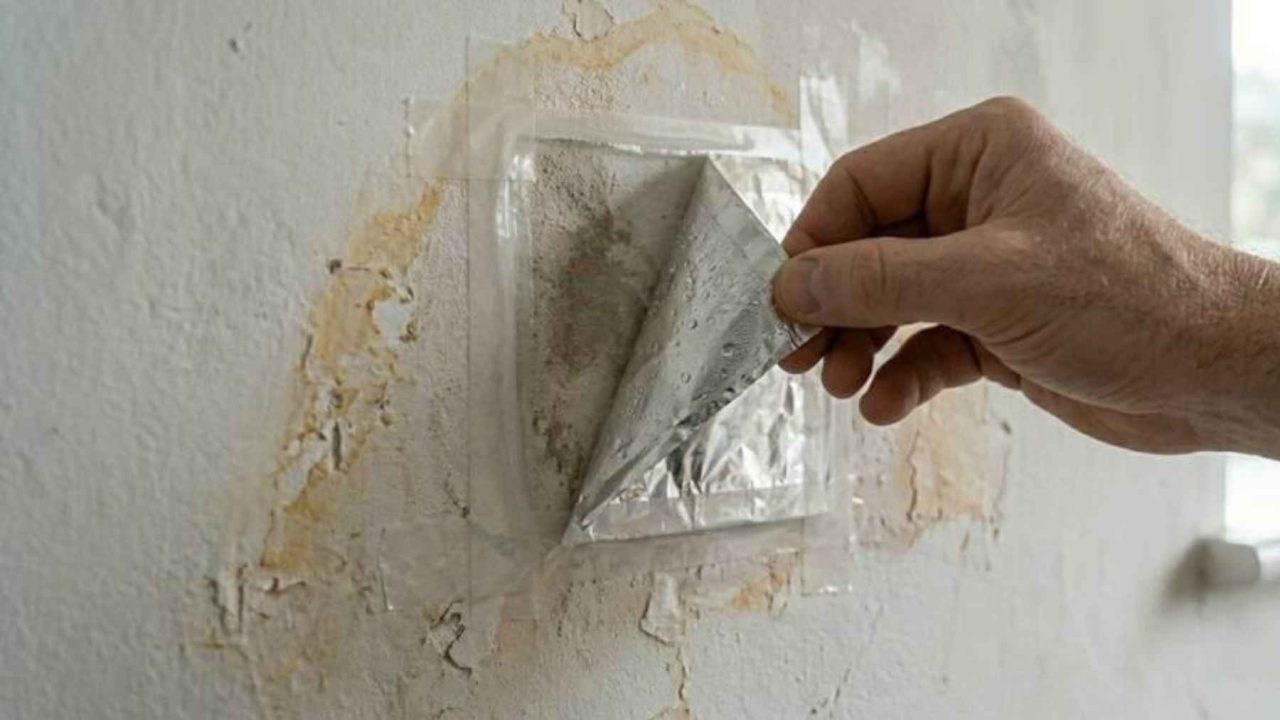
Roughly 60% of U.S. homes with basements deal with moisture problems — and most homeowners have no idea whether the dampness they’re seeing is coming from inside the house or pushing through from outside. That single distinction determines everything: what fix you need, how much it will cost, and whether the solution you’re about to pay for will actually work.
The tool contractors and building specialists use to figure it out? A piece of ordinary aluminum foil from your kitchen drawer.
It sounds absurd. But the method is practical, costs almost nothing, and can save you from throwing money at the wrong problem entirely.
Why Moisture Source Is the Question That Changes Everything
When you spot a damp patch on a basement wall or feel that persistent clammy air in a laundry room, the instinct is usually to reach for a dehumidifier or call someone to seal the walls. But those two solutions address completely different problems — and applying the wrong one doesn’t just waste money, it can leave the real issue quietly getting worse behind your walls.
Moisture in a home generally comes from one of two places: the air inside your home (condensation caused by humidity) or water physically migrating through your walls and foundation from the outside. High indoor humidity causes condensation to form on cool surfaces. Water intrusion means liquid is actually penetrating your building materials.
A dehumidifier handles the first problem. Waterproofing, drainage improvements, or exterior grading fixes handle the second. If you mix them up, you’re treating a symptom while the underlying cause keeps doing damage — often to structural materials and hidden spaces where mold can grow long before you ever see a stain.
According to This Old House, about 40% of U.S. homes have basements, and roughly 60% of those deal with moisture issues. That’s a significant share of American homeowners facing a problem that’s easy to misdiagnose.
How the Aluminum Foil Test Actually Works
The test is straightforward. You cut a piece of aluminum foil — standard kitchen foil works fine — and tape it tightly against a wall where you suspect moisture. All four edges need to be sealed so no air can get in or out from the sides. Then you leave it alone for 24 to 48 hours.
When you come back and peel it off, you look at where the moisture has appeared:
- Moisture on the side facing the wall — the side that was pressed against the surface — points to water intrusion. Liquid is moving through the wall structure itself and accumulating behind the foil.
- Moisture on the side facing the room — the outward-facing side — points to condensation. Humid air inside the home is hitting the cooler foil surface and turning to water, the same way a cold glass sweats on a warm day.
The foil acts as a sealed checkpoint. Because air can’t circulate behind it, any moisture that appears on the wall-facing side had to come through the wall. Any moisture on the room-facing side came from the air in the room. It’s a simple isolation test that doesn’t require any special equipment or expertise to run.
What the Results Tell You — and What to Do Next
Contractors and building specialists value this test precisely because it rules out guesswork before anyone starts pulling apart walls or ordering equipment. Knowing the source of moisture shapes every decision that follows.
| Moisture Location on Foil | What It Suggests | Likely Next Step |
|---|---|---|
| Wall-facing side (behind foil) | Water intrusion through the structure | Investigate exterior drainage, waterproofing, or foundation issues |
| Room-facing side (front of foil) | Indoor condensation from humidity | Improve ventilation or consider a dehumidifier |
| Both sides | Possibly both problems present | Professional inspection recommended |
| Neither side | Moisture may be intermittent or already resolved | Repeat test during wetter conditions or after rain |
The test doesn’t replace a professional inspection, especially if the moisture problem is severe or has been ongoing for a long time. But it gives you real, actionable information to bring to a contractor — and it protects you from being sold a solution that won’t address what’s actually happening.
Where This Test Shows Up Most Often
The foil test is increasingly common in basements, kitchens, and laundry rooms — spaces that are either below grade, frequently exposed to water, or subject to high humidity from appliances. These are also the areas most likely to develop mold quietly, since dampness in enclosed or poorly ventilated spaces can persist for months without being noticed.
Mold growth is one of the more serious downstream consequences of unaddressed moisture. It can damage drywall, wood framing, and insulation, and it often develops in hidden cavities before it becomes visible on surfaces. Catching the source of moisture early — before a stain appears or a smell develops — is the whole point.
The fact that a $0 test using kitchen foil can help homeowners do that is what’s made it spread among contractors and DIY-minded homeowners alike.
Running the Test Yourself
If you want to try it, the process requires only a few items you almost certainly already have:
- A sheet of aluminum foil, roughly 12 inches square
- Strong tape — duct tape or waterproof tape works best for sealing all four edges firmly
- A wall surface in the area where you’ve noticed dampness, discoloration, or musty odors
Seal the foil flat against the wall with no gaps around the edges. Leave it for at least 24 hours, and ideally 48. Check the results carefully — run your finger along both the wall-facing and room-facing surfaces to feel for moisture before drawing any conclusions.
If you’re testing after a rainy period or during a season when humidity is high, the results will be more meaningful than during dry conditions. Timing matters if you want a clear reading.
Frequently Asked Questions
What does the aluminum foil test tell you about moisture in your home?
It helps identify whether moisture is coming from water pushing through your walls from outside, or from condensation caused by indoor humidity — a distinction that determines what kind of fix is actually needed.
How long do you leave the foil on the wall?
The test is typically run for 24 to 48 hours with all four edges of the foil sealed tightly against the wall surface.
How common are basement moisture problems in the U.S.?
According to This Old House, about 40% of U.S. homes have basements, and roughly 60% of those experience moisture issues.
Can this test replace a professional inspection?
No — it’s a diagnostic starting point, not a substitute for a full professional assessment, particularly if moisture damage is already visible or has been ongoing for some time.
Why does it matter whether moisture comes from inside or outside?
The two sources require completely different solutions. Indoor humidity is addressed with ventilation or a dehumidifier, while water intrusion requires waterproofing or drainage work — applying the wrong fix leaves the real problem unresolved.
Where is this test most commonly used?
Contractors and homeowners most often run the foil test in basements, kitchens, and laundry rooms — areas prone to moisture buildup and mold growth.




Leave a Reply