
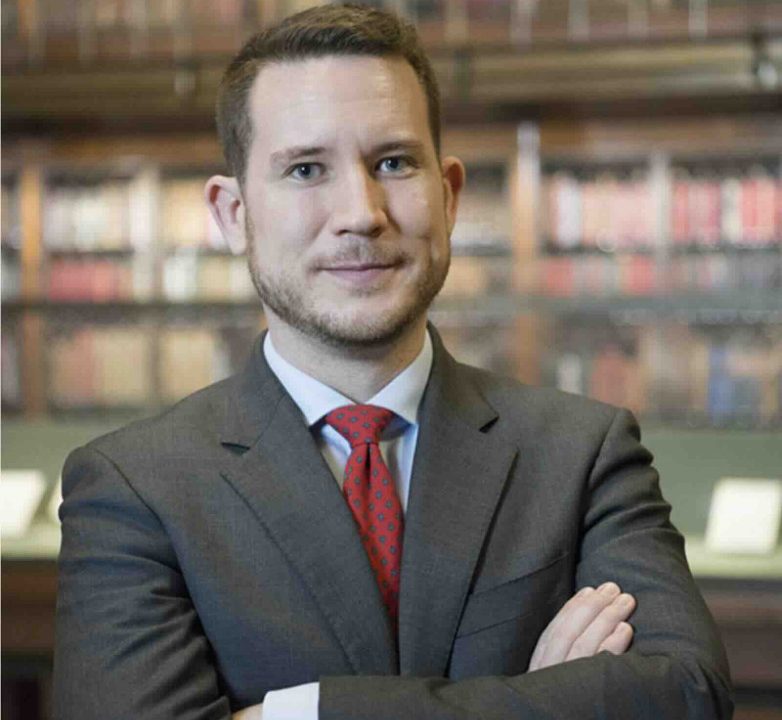
One of the world’s most significant collections of illuminated manuscripts — spanning more than a thousand years of human creativity, from the fifth century through the sixteenth — now has a new leader at the helm. The Morgan Library & Museum in New York has appointed Dr. Joshua O’Driscoll as its Melvin R. Seiden Curator and Department Head of Medieval and Renaissance Manuscripts, placing one of the field’s rising scholars in charge of a collection that draws researchers, historians, and art lovers from around the globe.
The appointment is not a surprise to those who follow the institution. O’Driscoll has been building toward this role for more than a decade, joining the Morgan in 2015 as Assistant Curator and earning a promotion to Associate Curator in 2022. His elevation to department head signals both a recognition of his work so far and a clear institutional commitment to expanding how these centuries-old manuscripts are experienced by modern audiences.
What makes this more than a routine personnel announcement is what O’Driscoll says he plans to do with the position — and the ambition behind it.
What the Morgan’s Medieval and Renaissance Manuscripts Collection Actually Is
The Morgan Library & Museum, founded on the private collection of financier J.P. Morgan, holds one of the most important repositories of illuminated manuscripts anywhere in the world. These are not simply old books. Illuminated manuscripts are handcrafted objects — written, painted, and decorated by skilled artisans before the age of print — and they serve as primary documents of medieval culture, religion, science, and art.
The Morgan’s holdings in this area span roughly eleven centuries, from late antiquity through the Renaissance. That breadth makes the collection extraordinary even by the standards of major research libraries. For scholars of medieval history, art history, and religious studies, access to these materials is genuinely irreplaceable.
O’Driscoll’s new role places him in charge of the care, study, exhibition, and interpretation of this entire holdings. That means everything from conservation decisions and acquisition strategy to designing public exhibitions and shaping how the collection is understood by non-specialist audiences.
O’Driscoll’s Vision Goes Well Beyond the Gallery Wall
In his own words, O’Driscoll is thinking bigger than exhibitions and acquisitions alone.
“Since joining the Morgan in 2015, I have formed deep connections both to the collection itself and to the community of colleagues and benefactors who sustain it. Looking ahead, the next decade promises to be an exciting and transformative period. My vision for the department extends beyond exhibitions and acquisitions to encompass expanded outreach and public engagement, strengthening strategic partnerships, and enhancing digital access to our holdings to ensure this extraordinary collection reaches broader and more diverse audiences.”
That emphasis on digital access is particularly significant. Major manuscript collections have historically been accessible only to credentialed researchers who could travel to the institution in person. Expanding digital access — high-resolution scans, online finding aids, virtual exhibitions — can open these materials to students, independent scholars, and curious members of the public who would otherwise never encounter them.
His mention of “broader and more diverse audiences” also reflects a wider conversation happening across museums and cultural institutions about who these collections are actually for, and what barriers — geographic, economic, or cultural — prevent people from engaging with them.
The Exhibitions and Academic Background Behind the Appointment
O’Driscoll’s track record at the Morgan gives a clear picture of the range he brings to the role. He has been involved in several major exhibitions at the institution, covering subjects that stretch from biblical poetry to Renaissance symbolism.
| Exhibition | Year | Subject |
|---|---|---|
| Imperial Splendor | 2021 | Medieval imperial art and manuscripts |
| The Book of Marvels | 2025 | Medieval travel and wonder literature |
| Sing a New Song: The Psalms in Medieval Art and Life | 2025 | The Psalms as depicted in medieval manuscripts |
| Tarot! Renaissance Symbols, Modern Visions | Opening June 26, 2026 | Tarot imagery from the Renaissance to the present |
The upcoming Tarot! Renaissance Symbols, Modern Visions, which O’Driscoll is co-curating and which opens at the Morgan on June 26, 2026, is the kind of exhibition that bridges specialist scholarship and broad public interest — tarot’s visual history is rooted in Renaissance manuscript and card culture, but its contemporary resonance is wide.
Academically, O’Driscoll holds degrees from Florida State University, Williams College, and Harvard University — a combination that reflects both rigorous humanities training and deep subject-matter expertise.
Why This Appointment Matters for the Field
Leadership transitions at major manuscript collections carry real consequences for the broader scholarly community. Curators at institutions like the Morgan shape research agendas, influence which objects get exhibited and how they’re interpreted, and make decisions about acquisitions that affect what future generations of scholars have access to.
O’Driscoll’s stated focus on digital access and public engagement suggests the Morgan’s medieval and Renaissance holdings may become more visible — and more usable — than they have been before. For a collection of this caliber, that’s a meaningful shift.
It also reflects a generational change in how major cultural institutions think about their responsibilities. The idea that a world-class manuscript collection should reach “broader and more diverse audiences” — not just those already inside the walls of academia — represents a genuine evolution in curatorial philosophy.
What Comes Next for the Department
The most immediate public milestone is the opening of Tarot! Renaissance Symbols, Modern Visions on June 26, 2026, which will be one of O’Driscoll’s first major exhibitions in his new capacity as department head.
Beyond that, he has signaled that the next decade will be a period of transformation — with expanded outreach, new strategic partnerships, and a push to strengthen digital access to the collection. The specifics of those initiatives have not yet been announced publicly, but the direction is clear.
For anyone who studies, teaches, or simply loves medieval and Renaissance manuscripts, the Morgan’s leadership decision is worth watching closely. The stewardship of collections like this one shapes how the Middle Ages and the Renaissance are understood — not just in academic journals, but in classrooms, online, and in the minds of anyone who has ever wondered what the world looked like before print.
Frequently Asked Questions
Who is Joshua O’Driscoll?
Dr. Joshua O’Driscoll is a manuscript scholar who has worked at the Morgan Library & Museum since 2015, rising from Assistant Curator to his newly appointed role as Melvin R. Seiden Curator and Department Head of Medieval and Renaissance Manuscripts.
What does the new role involve?
O’Driscoll will oversee the care, study, exhibition, and interpretation of the Morgan’s collection of illuminated manuscripts, which spans the fifth through the sixteenth centuries.
What exhibition is O’Driscoll currently working on?
He is co-curating Tarot! Renaissance Symbols, Modern Visions, which opens at the Morgan Library & Museum on June 26, 2026.
What are his plans for the department?
O’Driscoll has stated his vision includes expanded public outreach, stronger strategic partnerships, and enhanced digital access to the Morgan’s manuscript holdings to reach broader and more diverse audiences.
Where did O’Driscoll study?
He holds degrees from Florida State University, Williams College, and Harvard University.
When was O’Driscoll first promoted at the Morgan?
He joined as Assistant Curator in 2015 and was promoted to Associate Curator in 2022, before his current appointment as department head.



Leave a Reply