
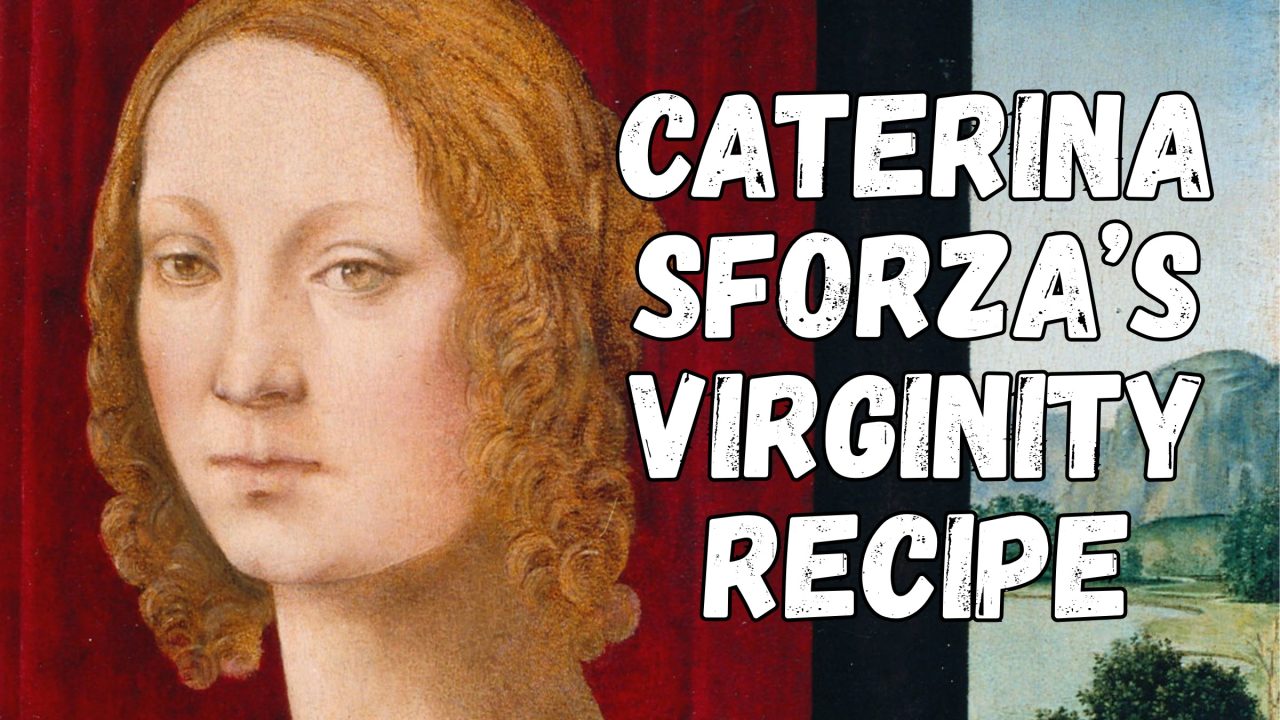
Five centuries before the internet was flooded with dubious wellness claims, a Renaissance noblewoman was compiling her own collection of body-transforming recipes — including one that promised results so dramatic, she said even the reader would be left in admiration.
That noblewoman was Caterina Sforza, and the promise appeared in her manuscript known as the Experimenta: follow her advice, she wrote, and “you will see that thing become so narrow that you yourself will be in admiration.” The recipe in question claimed to restore virginity — and it was filed right alongside cures for lice, beauty treatments, and tips for making coins look more golden.
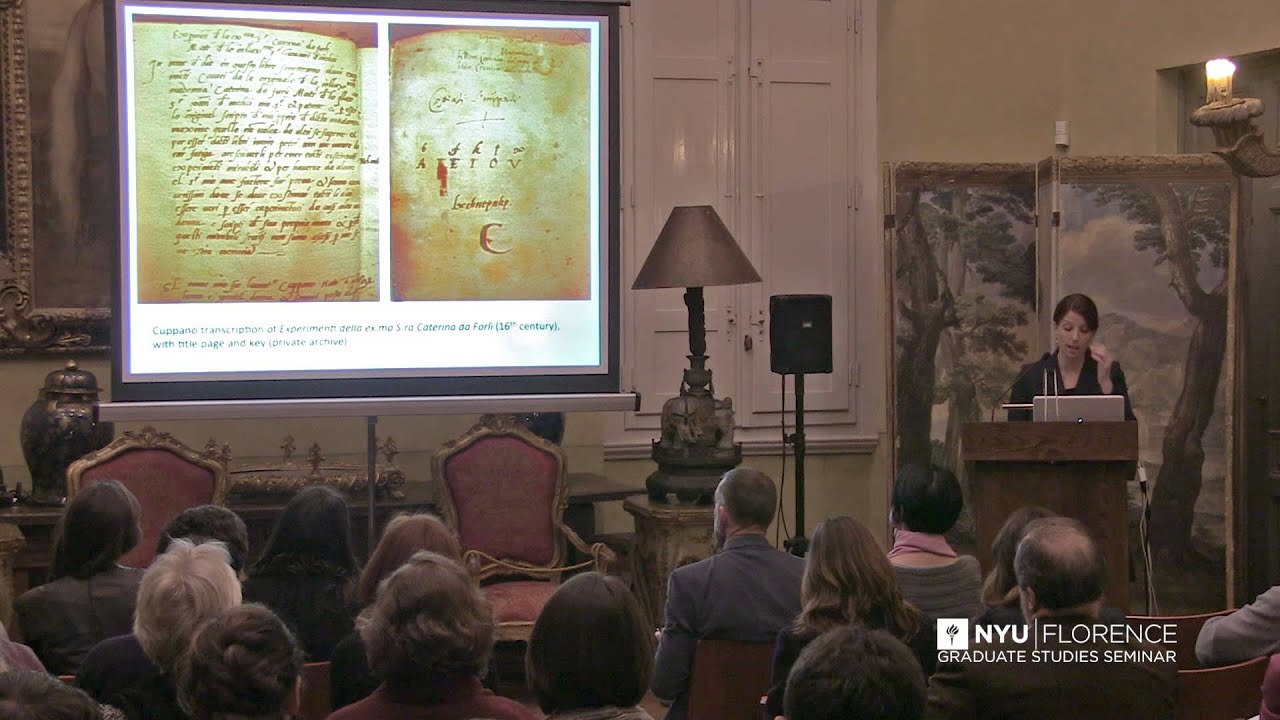
It sounds shocking by modern standards. But within the intellectual world of sixteenth-century Italy, it made a strange kind of sense.
Who Was Caterina Sforza — and Why Was She Writing Recipes?
Caterina Sforza is best remembered as a formidable political figure. She ruled the Italian territories of Imola and Forli and became famous as a fierce opponent of the powerful Borgia family. She was, by any measure, one of the most forceful women of the Renaissance.
But alongside her political life, Sforza cultivated a serious interest in medicine, alchemy, and cosmetics. Her Experimenta preserves hundreds of formulas aimed at transforming both the human body and the material world. The manuscript is not a curiosity or a joke — it reflects the genuine intellectual interests of a woman who took practical knowledge seriously.
The virginity-restoration recipe was one entry among many. In the world Sforza inhabited, the body was seen as something that could be managed, adjusted, and corrected through the right application of ingredients and technique.
The Renaissance Genre Behind the Recipes: Books of Secrets
To understand why Sforza’s recipes exist at all, you need to understand a popular literary genre that swept through sixteenth-century Italy: the libri di segreti, or books of secrets.
Scholar Meredith K. Ray examines these texts — including Sforza’s Experimenta — in her article “Impotence and Corruption: Sexual Function and Dysfunction in Early Modern Italian Books of Secrets.” Her research reveals just how mainstream these compilations were, and how broadly they defined the category of “useful knowledge.”
Books of secrets circulated widely and combined recipes drawn from multiple fields. They were not academic texts written for university scholars. They were practical manuals written in the everyday vernacular language, aimed at a broad readership and focused on results that could actually be tested.
Within these compilations, sexual health was treated much like any other bodily concern. Conditions such as impotence, infertility, or the loss of virginity were framed as physiological problems — not moral failures, not spiritual crises, but physical states that could potentially be addressed with the right formula.
What These Books of Secrets Actually Contained
The range of topics covered in the libri di segreti was genuinely vast. To get a sense of how sexual recipes fit into the broader picture, here is a breakdown of the subject areas these manuscripts addressed:
| Category | Examples from the Manuscripts |
|---|---|
| Medicine | Cures for lice, treatments for bodily ailments |
| Cosmetics | Beauty treatments and skin preparations |
| Sexual health | Recipes addressing impotence, infertility, virginity |
| Alchemy | Techniques for altering the appearance of metals |
| Perfumery | Fragrance preparations |
| Household management | Practical domestic formulas |
What united all of these categories was an emphasis on practical experimentation and useful results. These were not texts meant to be admired — they were meant to be used.
- Books of secrets were written in the vernacular, not Latin, making them accessible to non-scholars
- They circulated widely across sixteenth-century Italy
- They treated the body as something that could be actively managed and transformed
- Sexual dysfunction and bodily “correction” were placed alongside entirely ordinary household concerns
Why This Matters Beyond the Shocking Headline
It would be easy to read Sforza’s virginity recipe as nothing more than a historical oddity — proof that people in the past believed strange things. But Ray’s scholarship points toward something more significant.
The libri di segreti reveal how Renaissance Italians understood the body: as malleable, manageable, and subject to intervention. Sexual function was not treated as a fixed or sacred condition. It was treated the same way a skin blemish or a dull coin was treated — as a problem with a potential solution.
That framing had real social consequences. In a world where a woman’s virginity carried enormous legal, financial, and social weight — affecting marriage contracts, inheritance, and family honor — the idea that it could be “restored” was not merely a medical claim. It was a social one. These recipes existed within a culture that placed intense pressure on women’s bodies, and the promise of restoration was a direct response to that pressure.
Sforza herself occupies an unusual position in this story. As a ruler, a military strategist, and an opponent of the Borgias, she was hardly a passive figure shaped entirely by the expectations of her era. Yet her Experimenta also reflects the world she lived in — one where a woman’s body was subject to scrutiny, and where practical knowledge was one tool available to navigate that scrutiny.
What Scholars Are Still Working to Understand
Ray’s research represents part of a growing scholarly interest in how early modern texts handled sexuality — not just as a moral or theological subject, but as a practical, bodily one. The libri di segreti genre remains a rich area for historians precisely because it captures everyday attitudes that more formal texts often obscured.
Sforza’s Experimenta, with its hundreds of formulas spanning everything from lice cures to alchemical transformations, offers one of the most personal windows into how a Renaissance woman of power engaged with the medical and cosmetic knowledge of her time. Whether the recipes worked is almost beside the point. What they reveal about how bodies, gender, and knowledge intersected in sixteenth-century Italy is the real discovery.
Frequently Asked Questions
Who was Caterina Sforza?
Caterina Sforza was a Renaissance noblewoman who ruled the Italian territories of Imola and Forli. She was also known as a fierce opponent of the Borgia family and had a keen interest in medicine, alchemy, and cosmetics.
What is the Experimenta?
The Experimenta is a manuscript attributed to Caterina Sforza that preserves hundreds of recipes and formulas, ranging from medical cures and beauty treatments to alchemical techniques and recipes addressing sexual health.
What were the libri di segreti?
The libri di segreti, or books of secrets, were popular Italian manuscripts that circulated widely in the sixteenth century. They combined recipes for alchemy, medicine, cosmetics, perfumery, and household management, written in the vernacular for a broad audience.
Who is studying these texts?
Scholar Meredith K. Ray examines the Experimenta and similar texts in her article “Impotence and Corruption: Sexual Function and Dysfunction in Early Modern Italian Books of Secrets,” which explores how Renaissance books of secrets addressed sexual health.
Why did Renaissance books of secrets include sexual health recipes?
Within the libri di segreti tradition, sexual conditions like impotence, infertility, and the loss of virginity were treated as physiological problems — no different from other bodily concerns — that could potentially be addressed through practical recipes and experimentation.
Were these manuscripts only read by scholars?
No. Unlike older Latin scholarly texts, books of secrets were written in the everyday vernacular and aimed at a broad, general audience, with an emphasis on practical, testable results rather than academic theory.

Leave a Reply