
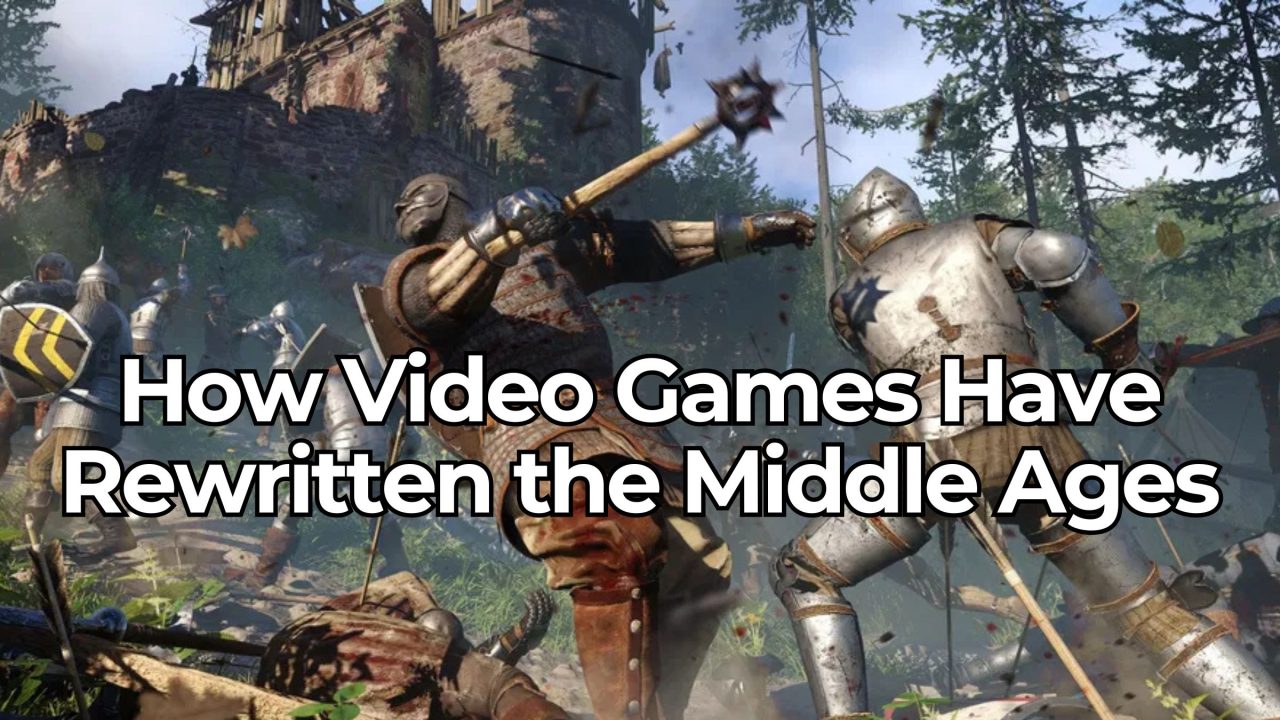
For millions of people around the world, the first encounter with the Middle Ages doesn’t happen in a classroom or through a history book — it happens on a screen, controller in hand, storming a castle or managing a kingdom in a video game. Titles like Assassin’s Creed, Crusader Kings, and Age of Empires have quietly become one of the most powerful forces shaping how modern audiences picture medieval history.
That’s not a trivial observation. Historians are increasingly paying attention to what these games get right, what they distort, and how those distortions stick in the public imagination long after the console is switched off.
One scholar leading that conversation is Robert Houghton, whose book The Middle Ages in Computer Games: Ludic Approaches to the Medieval and Medievalism examines exactly how digital games represent — and misrepresent — the medieval world. His findings raise questions that matter well beyond academic circles.
Why Video Games Have More Influence Than Textbooks
There’s a reason historians are taking this seriously. Video games aren’t a niche hobby anymore. They reach audiences that books, documentaries, and university lectures simply don’t. When someone spends forty hours ruling a dynasty in Crusader Kings or navigating the streets of a medieval city in Assassin’s Creed, those experiences leave an impression — one that can be surprisingly hard to separate from actual history.
Houghton argues that video games create a distinctive form of medievalism — a term used to describe how modern culture reimagines and reinterprets the medieval period — that is fundamentally different from what you’d find in films, novels, or television. The reason comes down to how games work.
To describe this, he uses the term “ludic medievalism.” The word “ludic” simply means relating to play or games. The idea is that when history gets translated into gameplay mechanics — combat systems, diplomacy screens, technology trees, rulership decisions — the past gets reshaped to fit those systems. The result is a playable Middle Ages that often looks very different from the historical reality.
How Gameplay Mechanics Rewrite Medieval History
This is where things get genuinely interesting. The distortions in medieval video games aren’t random — they follow predictable patterns driven by what makes a game fun, functional, or commercially successful. Consider a few of the most consistent ways games reshape the period:
- Warfare is everywhere. Medieval life was overwhelmingly agricultural, religious, and communal. But games need conflict, so combat dominates nearly every title set in the period. Players lead armies, siege castles, and fight battles far more than medieval people actually did.
- Technology follows a tidy ladder. Real medieval innovation was messy, uneven, and geographically inconsistent. Games compress it into clean upgrade trees because that’s what works as a mechanic.
- Rulership is personal. Strategy games like Crusader Kings place enormous power in the hands of individual rulers. In reality, medieval governance was diffuse, contested, and dependent on networks of obligation and loyalty that don’t translate neatly into a single character’s stat sheet.
- Diplomacy is transactional. Alliances in games tend to be clear-cut deals with visible outcomes. Medieval diplomacy was far messier — built on marriage, religion, personal loyalty, and power dynamics that shifted constantly.
- The world looks uniformly dark and gritty. The visual aesthetic of most medieval games emphasizes mud, iron, and stone. The actual Middle Ages included vibrant textiles, illuminated manuscripts, and urban life that looked nothing like the grey palette most games prefer.
These aren’t just cosmetic choices. They shape what players believe about the period, often without them realizing it.
What “Ludic Medievalism” Actually Means for How We See the Past
Houghton’s concept of ludic medievalism is worth sitting with. The argument isn’t that games are bad history — it’s that they are a different kind of history-telling, one with its own logic and its own blind spots.
Films and novels distort the Middle Ages too, of course. But games do something those media can’t: they make players active participants in the distortion. When you decide how to build your kingdom, who to go to war with, or which technologies to develop, you’re not just watching a version of the Middle Ages — you’re enacting one. That active participation may make the impressions even harder to shake.
| Game Title | Type of Medieval Representation | Primary Gameplay Focus |
|---|---|---|
| Assassin’s Creed | Narrative / Exploration | Combat, stealth, historical environments |
| Crusader Kings | Dynasty / Strategy | Rulership, diplomacy, succession |
| Age of Empires | Real-Time Strategy | Military expansion, technology, resource management |
Why This Matters Beyond the Screen
The stakes here are real. Public understanding of the Middle Ages influences how people think about everything from religion and governance to cultural identity and national history. When a simplified, combat-heavy, gritty version of the medieval world becomes the default mental image for millions of people, it can crowd out more complicated — and more accurate — pictures of the past.
Historians have long fought the idea that the Middle Ages were simply a dark, violent pause between ancient civilization and the Renaissance. That stereotype is exactly what many popular games reinforce, not out of malice, but because conflict and conquest make for better mechanics than crop rotation or monastic scholarship.
Houghton’s work suggests that understanding ludic medievalism — recognizing how game design shapes historical perception — is increasingly necessary for anyone thinking seriously about how the public engages with the past. Games aren’t going away. Their influence on how people imagine history is only growing.
What Comes Next for Games and Medieval History
The conversation Houghton is contributing to is still developing. As games become more sophisticated and as more historians engage directly with game developers and designers, there’s genuine potential for titles that handle medieval history with more nuance — without sacrificing the fun that makes them reach such wide audiences in the first place.
Whether that happens at scale remains to be seen. For now, the gap between the playable Middle Ages and the historical one remains wide — and worth understanding.
Frequently Asked Questions
What is “ludic medievalism”?
It is a term used by scholar Robert Houghton to describe how the Middle Ages are represented in video games, and how those representations are shaped by the mechanics of gameplay rather than historical accuracy.
Which games does the source specifically mention as examples of medieval video games?
The source specifically names Assassin’s Creed, Crusader Kings, and Age of Empires as prominent examples.
Who wrote the book about the Middle Ages in video games?
Robert Houghton authored The Middle Ages in Computer Games: Ludic Approaches to the Medieval and Medievalism, which examines how digital games portray medieval history.
How is ludic medievalism different from medievalism in films or novels?
According to Houghton, video games create a distinctive form of medievalism because players actively participate in and interact with the historical world, rather than passively watching or reading it.
Are video games considered a serious subject of historical study?
Yes — historians have increasingly begun examining how games portray the medieval period and how those portrayals shape public understanding of history, as reflected in Houghton’s academic work.
Does the source list all ten ways video games have rewritten the Middle Ages?

Leave a Reply