
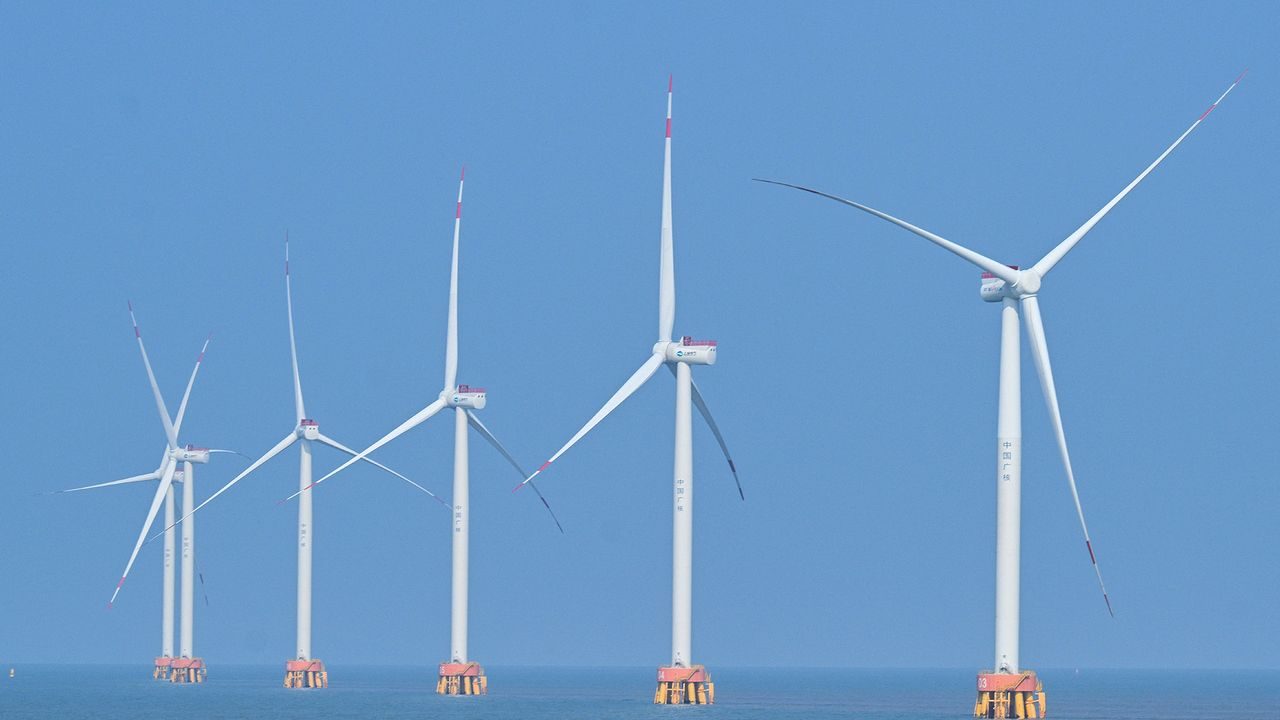
A wind turbine so large its blade tip rises more than 886 feet above the water — taller than most skyscrapers — has just been successfully installed off the coast of southern China, setting a new record for the world’s largest single-unit floating offshore wind turbine.
The 16-megawatt system, called Three Gorges Pilot, was completed in deep waters near Yangjiang in Guangdong province. China Three Gorges Corp. announced the installation on May 3, marking a significant step forward in the global race to harness wind energy far out at sea, where the water is simply too deep for conventional turbines to stand.
The numbers are striking on their own. But what makes this installation genuinely significant isn’t just the size — it’s what this technology could mean for how the world generates clean energy going forward.
Why Floating Wind Turbines Are Different From What You’ve Seen Before
Most offshore wind turbines you’ve likely seen in photos or on the horizon are fixed-bottom structures — essentially giant poles driven into the seabed. They work well in relatively shallow coastal waters, but they hit a hard limit when depths increase. Go too deep, and anchoring a turbine directly to the ocean floor becomes technically impractical and prohibitively expensive.
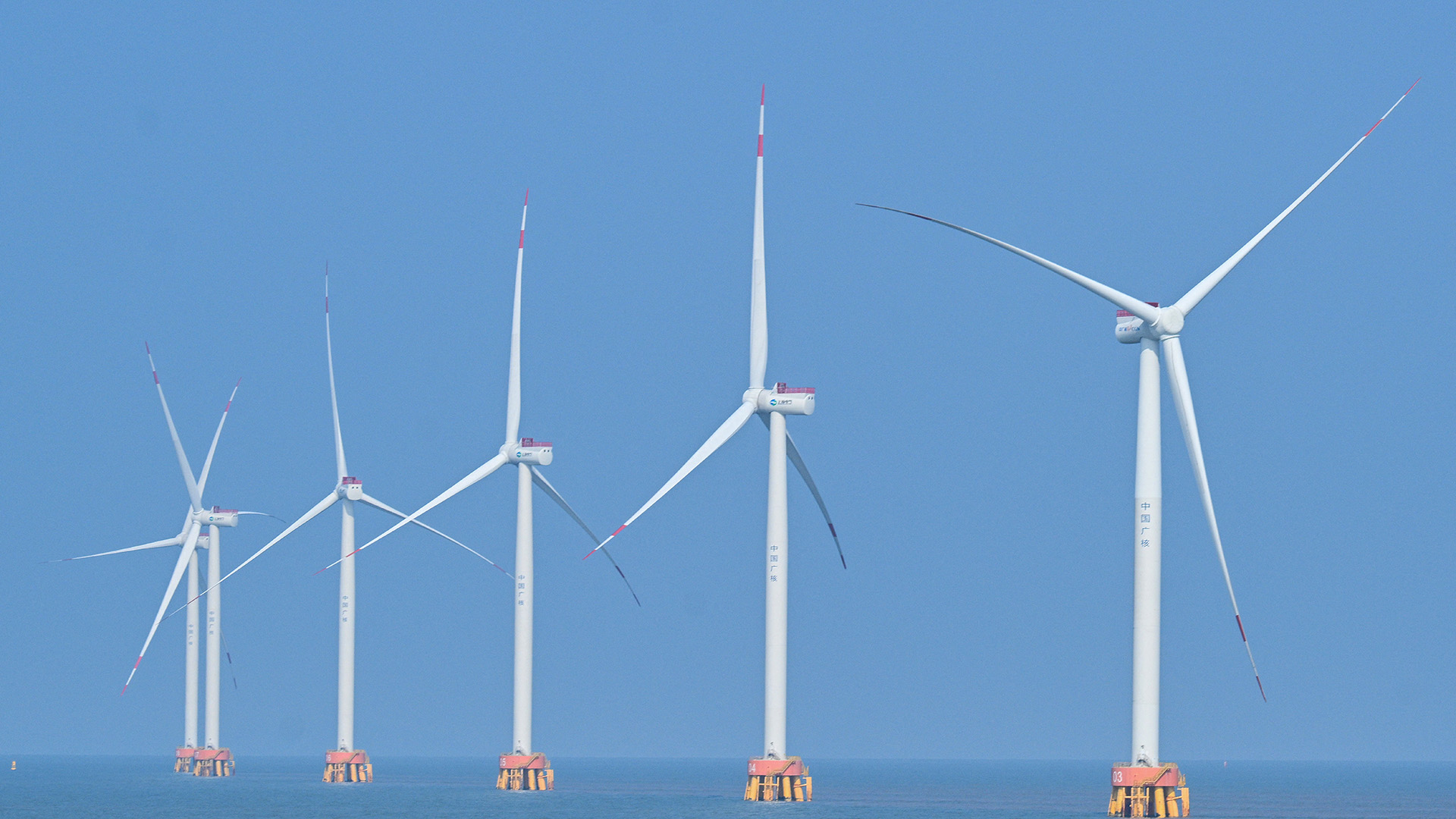
Floating wind turbines solve that problem in an elegant way. Instead of a fixed foundation, the turbine sits atop a large floating platform — in this case, a semisubmersible design — that is then anchored in place with cables or chains. The platform keeps the turbine stable on the surface while the anchor lines hold it in position, even in deep water.
This approach dramatically expands the ocean area available for wind energy development. Vast stretches of ocean that were previously off-limits to wind farms suddenly become viable. For countries like China, Japan, and the United States, where some of the strongest offshore winds blow over deep water far from shore, that’s a significant unlock.
The Engineering Behind the World’s Largest Floating Wind Turbine
The Three Gorges Pilot turbine, built by China Three Gorges Corp., pushes the boundaries of what floating offshore wind hardware can look like at scale. Here’s what the confirmed specifications tell us:
| Specification | Detail |
|---|---|
| Turbine capacity | 16 megawatts |
| Platform type | Semisubmersible floating platform |
| Rotor diameter | 827 feet (252 meters) |
| Blade tip height above water | More than 886 feet (270 meters) |
| Installation location | Near Yangjiang, Guangdong province, China |
| Homes powered (estimated) | Approximately 4,200 |
| Announcement date | May 3 |
To put the rotor size in perspective: at 827 feet across, the spinning diameter of this turbine is wider than two American football fields placed end to end. The blade tip height exceeds that of many of the world’s tallest buildings.
The Three Gorges Pilot builds on previous work in this space. According to the company’s announcement, the design follows a turbine deployed the previous year by China Huaneng Group and Dongfang Electric Corp., with the newer installation offering improvements at the structural and system level — though the full technical details of those upgrades were not released.
What This Means for Energy and the People Who Use It
At 16 megawatts, the Three Gorges Pilot is capable of generating enough electricity to power approximately 4,200 homes. That’s a single turbine. One structure, floating in the ocean, supplying power to thousands of households.
Floating offshore wind is still a relatively young technology compared to fixed-bottom offshore wind or land-based wind farms, and installations of this scale remain rare. But the fact that China has now deployed the world’s largest unit in deep water — and that it’s already generating power — signals that the technology is moving from experimental to operational.
For the broader energy picture, the implications are meaningful. Floating wind opens access to ocean regions with consistently strong winds that fixed turbines simply can’t reach. As turbine sizes grow and platform engineering matures, the cost per unit of electricity from floating offshore wind is expected to fall, making it more competitive with other energy sources.
- Deep-water floating wind removes geographic constraints that limit fixed-bottom offshore development
- Larger turbines generate more power per installation, reducing the number of units needed for a given output
- Semisubmersible platforms like the one used here can be assembled and towed to location, simplifying logistics
- China’s continued investment in this sector places it at the forefront of floating offshore wind globally
Where This Technology Goes From Here
The Three Gorges Pilot installation is described as a pilot project — meaning its purpose includes testing and validation, not just power generation. Results from real-world deep-water operation will inform the next generation of floating wind designs.
China has been aggressively expanding its offshore wind capacity in recent years, and projects like this one reflect a broader strategic push to develop clean energy infrastructure at scale. With the world’s largest floating turbine now operational, the benchmark has been reset — and the industry will be watching closely to see how the structure performs under real ocean conditions over time.
Whether other nations or companies move quickly to match or exceed this record remains to be seen. But the installation near Yangjiang is a clear signal that floating offshore wind, once considered a niche or futuristic concept, is becoming a serious part of the global energy conversation.
Frequently Asked Questions
What is the Three Gorges Pilot floating wind turbine?
It is a 16-megawatt floating offshore wind turbine installed near Yangjiang in Guangdong province, China, and is currently the world’s largest single-unit floating offshore wind turbine.
Who built the Three Gorges Pilot turbine?
It was built by China Three Gorges Corp., which announced the completed installation on May 3.
How many homes can this turbine power?
The turbine is estimated to generate enough electricity to power approximately 4,200 homes.
Why is a floating turbine different from a regular offshore turbine?
A floating turbine sits atop a floating platform anchored by cables, allowing it to operate in deep water where fixed-bottom turbines — which are anchored directly to the seabed — cannot be installed.
How big is the turbine’s rotor?
The rotor spans 827 feet (252 meters), with the blade tip rising more than 886 feet (270 meters) above the water surface.
Is this the first floating offshore wind turbine China has deployed?
No. According to the announcement, a previous floating turbine was deployed by China Huaneng Group and Dongfang Electric Corp. the year before, making the Three Gorges Pilot an advancement on that earlier project.


Leave a Reply