
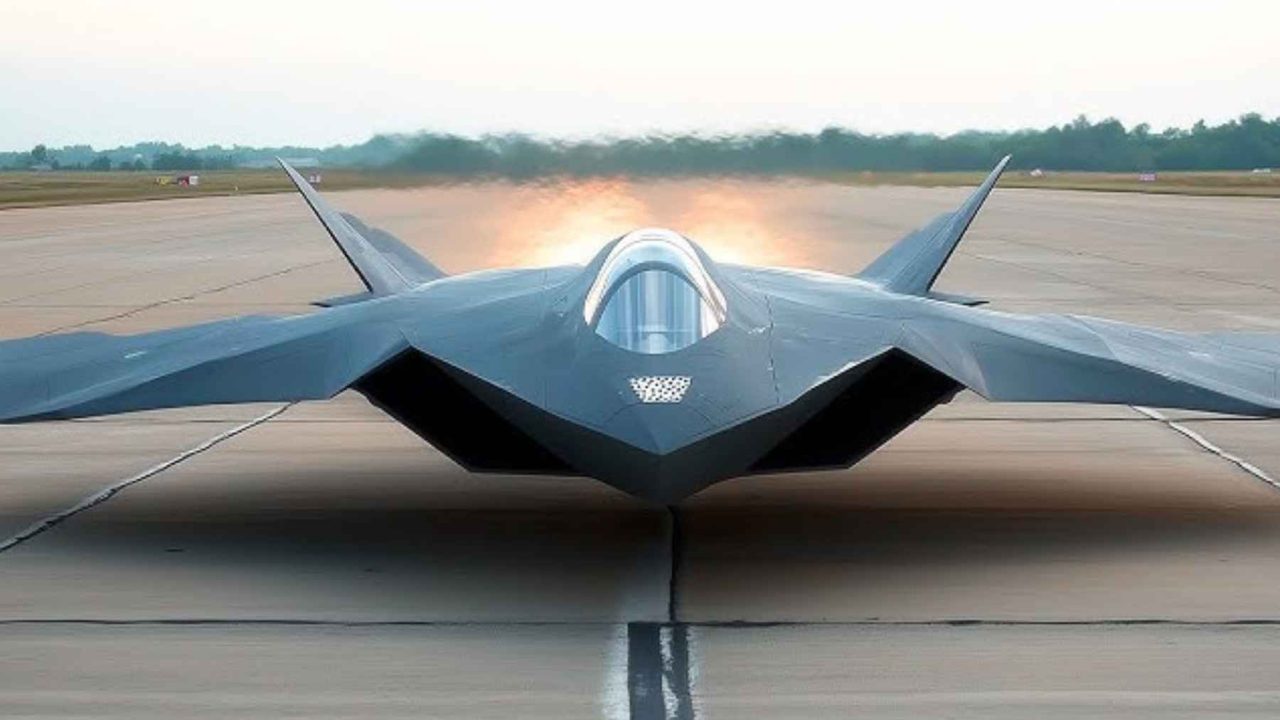
The United States Air Force says its next-generation fighter jet is moving faster than almost anyone expected — and the rest of the world is paying close attention. The F-47, America’s first sixth-generation combat aircraft, is confirmed to be on schedule for its first flight in 2028, with the initial airframe already in production.
That timeline is striking. New military aircraft programs are notorious for delays measured in years, sometimes decades. The fact that officials are publicly describing this one as “on time and on target” — while a physical airframe is already being built — signals something different is happening here.
For the U.S. Air Force, the F-47 represents the future of air superiority. For rival nations watching from a distance, it represents a capability gap that may be arriving sooner than anyone planned for.
What the F-47 Is Actually Built to Do
The F-47 is designed to take over the air-superiority mission currently handled by the F-22 Raptor. Air superiority, in practical terms, means controlling the skies so that other aircraft — bombers, surveillance planes, transport jets — can operate without being shot down. It’s the foundational mission that makes everything else in modern air warfare possible.
When the F-47 eventually replaces the F-22 in that role, it will change how the Air Force plans long-range missions and how it manages the transition away from older fighter platforms. The F-22, while still formidable, was designed in a different era against a different threat landscape.
A sixth-generation aircraft like the F-47 is expected to incorporate capabilities that go well beyond what fifth-generation jets like the F-22 or F-35 can offer — though the specific technologies involved remain classified. What officials have confirmed is that the program is progressing rapidly and that production infrastructure is already being built out.
What Officials Said — and Why It Matters
The clearest public update on the F-47 came on February 25, 2026, when acquisition official Dale White spoke to reporters at the Air & Space Forces Association Warfare Symposium in Aurora, Colorado.
White described the program in direct terms:
“Doing exceptionally well”
He confirmed the program remains “on time and on target” and added that the first airframe is already in production — a significant milestone for a program that only became publicly known after the contract award. White also noted that Boeing, the prime contractor, has been scaling up its workforce to meet the program’s demands, saying the company has “done a really good job of ramping up the personnel piece.”
That staffing comment carries weight. Boeing is simultaneously managing other major defense contracts, including work on the KC-46 Pegasus aerial refueling tanker. The fact that officials are publicly praising Boeing’s personnel ramp-up suggests the program’s leadership is actively managing the risk of workforce strain across competing priorities.
The F-47 at a Glance
| Detail | What We Know |
|---|---|
| Aircraft designation | F-47 |
| Generation | Sixth-generation fighter |
| Primary mission | Air superiority (replacing the F-22) |
| Prime contractor | Boeing |
| Planned first flight | 2028 |
| Current production status | First airframe already in production (as of Feb. 2026) |
| Program status (as of Feb. 2026) | “On time and on target” — Dale White, acquisition official |
| Key update location | Air & Space Forces Association Warfare Symposium, Aurora, Colorado |
Why the 2028 Timeline Is Raising Alarms Globally
Military aircraft programs at this scale rarely move this cleanly. The F-35 program, for comparison, stretched across decades and billions of dollars in cost overruns before jets were delivered in meaningful numbers. The B-21 Raider bomber program moved relatively quickly by Pentagon standards and was still celebrated as unusually disciplined.
The F-47 appearing to stay on schedule — with an airframe already being assembled — is the kind of development that defense analysts and foreign military planners take very seriously. A 2028 first flight would put the aircraft into early operational testing within a timeframe that rivals may not have anticipated when they were planning their own next-generation programs.
Nations developing their own advanced fighter programs will now need to factor in the possibility that a sixth-generation American aircraft could be operationally relevant earlier than previously assumed. That changes strategic calculations around air power, particularly in contested regions where air superiority is a decisive factor.
- The F-47 would give the U.S. Air Force a capability leap over current fifth-generation platforms
- Its air-superiority role means it would directly shape the outcomes of future high-end conflicts
- An on-schedule 2028 debut compresses the timeline that rivals have to respond with comparable technology
- Boeing’s workforce expansion signals that production capacity, not just design, is being built in parallel
The Secrecy Factor — and What It Tells Us
Much of what makes the F-47 program unusual is how little has officially been confirmed. The program is deeply classified, and the public disclosures that have emerged — like White’s comments in February 2026 — are carefully measured. Officials are not releasing performance specifications, range data, or details about the aircraft’s sensor and weapons architecture.
What they are confirming, deliberately, is that the program is moving. That kind of selective transparency is itself a signal — it tells potential adversaries that the capability is coming, without giving them anything useful to work with technically.
The fact that a program this secretive is moving fast enough to have a physical airframe in production ahead of a 2028 first flight suggests the design work reached maturity earlier than the public timeline might imply. These things don’t happen by accident.
What Comes After the First Flight
A first flight in 2028 would mark the beginning of a flight test program, not the arrival of a combat-ready aircraft. After first flight, military jets typically go through years of developmental and operational testing before they reach frontline squadrons.
What the 2028 milestone does confirm is that the program is real, physical, and moving — not a paper concept or a distant aspiration. The transition from the F-22 to the F-47 in the air-superiority role will be a major shift in how the U.S. Air Force operates, and the pace of that transition will depend heavily on how flight testing proceeds after 2028.
For now, the Air Force’s message is clear: the schedule is holding, the hardware is being built, and the F-47 is coming.
Frequently Asked Questions
What is the F-47?
The F-47 is a sixth-generation fighter jet being developed by Boeing for the U.S. Air Force, intended to replace the F-22 Raptor in the air-superiority role.
When is the F-47 expected to make its first flight?
The U.S. Air Force has confirmed a target of 2028 for the aircraft’s first flight, and officials stated in February 2026 that the program remains on schedule.
Who is building the F-47?
Boeing is the prime contractor. Acquisition official Dale White noted in February 2026 that Boeing has been successfully ramping up personnel to support the program.
Is the first F-47 airframe already being built?
Yes. As of February 2026, Dale White confirmed that the first airframe is already in production.
Will the F-47 replace the F-22?
According to the U.S. Air Force, the F-47 is intended to take over the air-superiority mission currently handled by the F-22 Raptor.
How much detail has the Air Force released about the F-47’s capabilities?
Very little. The program remains highly classified, and public disclosures have been limited to schedule and production status — no performance specifications or technical details have been officially confirmed.




Leave a Reply