
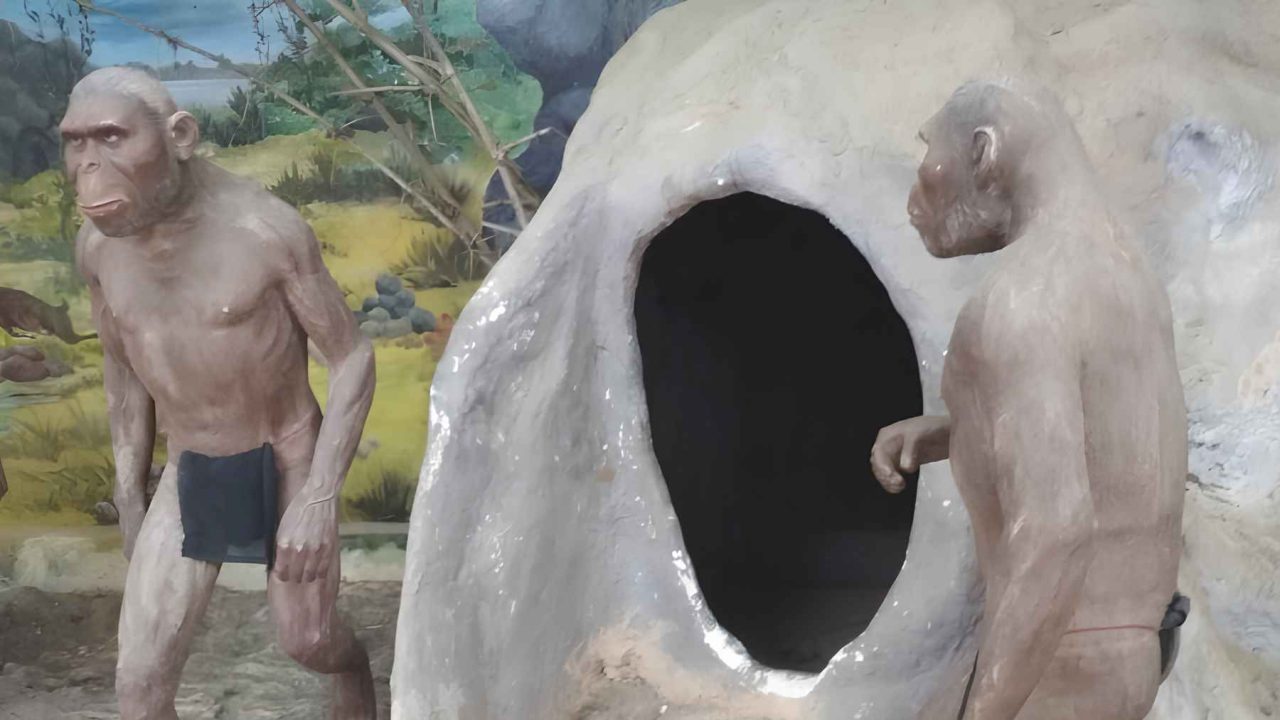
Where exactly did modern humans first appear on Earth? It sounds like a simple question, but scientists have spent decades wrestling with it — and a new wave of research is finally offering something closer to a real answer, even if that answer comes with important caveats.
The broad consensus has long been that Homo sapiens emerged somewhere in Africa. But Africa is a vast continent, and “somewhere in Africa” has never satisfied researchers who want to understand the specific pressures, environments, and populations that gave rise to our species. A major new analysis is now pointing toward southern Africa, around 300,000 years ago, as a key region in the story of human origins.
The catch? Scientists are careful not to declare a single, tidy birthplace. The picture emerging from this research is more complex — and more honest — than a simple dot on a map.
Why Finding the Birthplace of Homo Sapiens Is So Difficult
The challenge starts with the fossil record itself. Bones survive only under very specific conditions. The right soil chemistry, the right geology, the right absence of erosion — all of these have to align for ancient remains to last hundreds of thousands of years. That means some regions of Africa look fossil-rich simply because conditions there happened to preserve evidence well, while other areas may have been equally important to human origins but left almost no trace.
Stone tools add another layer of evidence, but they too are subject to gaps and misinterpretation. Researchers are essentially trying to reconstruct an enormous puzzle when most of the pieces are missing.
Ancient climate data is now being woven into this work as well. Understanding what the environment looked like — where grasslands, forests, and water sources existed at different points in time — helps scientists figure out where early human populations could realistically have lived and thrived, even when fossils are absent.
What the New Research Actually Argues
The new analysis pulls together three separate lines of evidence: fossil remains, stone tool records, and ancient climate reconstructions. By combining all three, researchers have tried to build a more complete picture of where early Homo sapiens populations were concentrated and how they moved across the continent.
Southern Africa emerges as a particularly significant region in this framework, with the timeline centering on roughly 300,000 years ago. That date places the emergence of our species earlier than many previous estimates and in a more geographically specific zone than earlier broad claims about “sub-Saharan Africa.”
Importantly, the researchers are not arguing that every person alive today descends from a single population in one specific valley or lake basin. The model is more nuanced: early Homo sapiens populations likely existed across multiple locations, with movement, mixing, and environmental pressure all playing roles in shaping who we eventually became.
The Evidence Behind the Claim — and Its Limits
| Type of Evidence | What It Contributes | Key Limitation |
|---|---|---|
| Fossil remains | Direct physical evidence of early Homo sapiens anatomy | Preservation is uneven; many regions lack fossils entirely |
| Stone tools | Evidence of behavior, movement, and population spread | Tools can persist without the people who made them nearby |
| Ancient climate data | Shows where habitable environments existed over time | Climate models carry their own uncertainties at long timescales |
Researchers describe this combined approach as a kind of scientific treasure map — useful, testable, and open to revision as new discoveries are made. That framing matters. It signals that this is not a final declaration but a working hypothesis that future fossil finds or genetic studies could refine or challenge.
The fossil record’s unevenness is one of the biggest sources of uncertainty. A region that looks sparse in the record may simply be a region where bones did not survive — not a region where people were absent. Scientists are increasingly aware of this bias and are working to account for it in their models.
Why This Research Matters Beyond Academia
It might be tempting to treat this as an abstract scientific debate, but the question of human origins carries real cultural and scientific weight. Understanding where and how Homo sapiens emerged shapes how we think about human diversity, migration, and the deep history of populations that are still present on Earth today.
Southern Africa, in particular, is home to some of the world’s oldest living human lineages. Research pointing to that region as a crucible of early human development adds scientific context to communities whose deep historical roots have sometimes been underappreciated in mainstream accounts of human prehistory.
Beyond that, the methods being refined here — combining fossil, archaeological, and climate data into a single integrated model — represent a significant step forward for paleoanthropology as a field. Each new fossil discovery or climate dataset can now be fed into this kind of framework to sharpen the picture further.
What Scientists Are Still Working to Confirm
The research community broadly agrees on the large-scale framework: modern humans evolved in Africa, likely over a long period of time and across multiple interacting populations. What remains actively debated is the specific geography, the precise timing, and the degree to which different regional populations contributed to the humans who eventually spread across the globe.
Future work will likely focus on filling in the fossil gaps — particularly in regions of Africa where preservation conditions have historically been poor. Advances in ancient DNA analysis are also expected to play a growing role, allowing researchers to trace population movement and mixing even when physical fossils are absent.
The story of where we came from is still being written. But with each new study that combines multiple lines of evidence, the opening chapter gets a little clearer.
Frequently Asked Questions
Where do scientists now believe Homo sapiens first appeared?
New research points to southern Africa as a particularly significant region, with the timeline centering on approximately 300,000 years ago, though researchers caution against identifying a single precise birthplace.
What evidence is being used to narrow down the birthplace of Homo sapiens?
Researchers are combining three types of evidence: fossil remains, stone tool records, and ancient climate data, to build a more complete picture of early human origins.
Why is it so hard to pinpoint exactly where modern humans originated?
Fossils survive only under specific geological conditions, meaning the record is uneven and some regions may appear sparse simply because preservation was poor, not because humans were absent.
Does this research mean all modern humans descend from one population in southern Africa?
No. The analysis suggests early Homo sapiens existed across multiple locations, with movement, mixing, and environmental pressure all contributing to our species’ development.
Could future discoveries change this picture?
Yes. Researchers describe the current findings as a working hypothesis — a testable model that new fossil discoveries, genetic studies, or climate data could refine or revise.
What role does ancient climate play in this research?
Ancient climate reconstructions help scientists identify where habitable environments existed at different points in time, offering clues about where early human populations could realistically have lived even when direct fossil evidence is missing.


Leave a Reply