
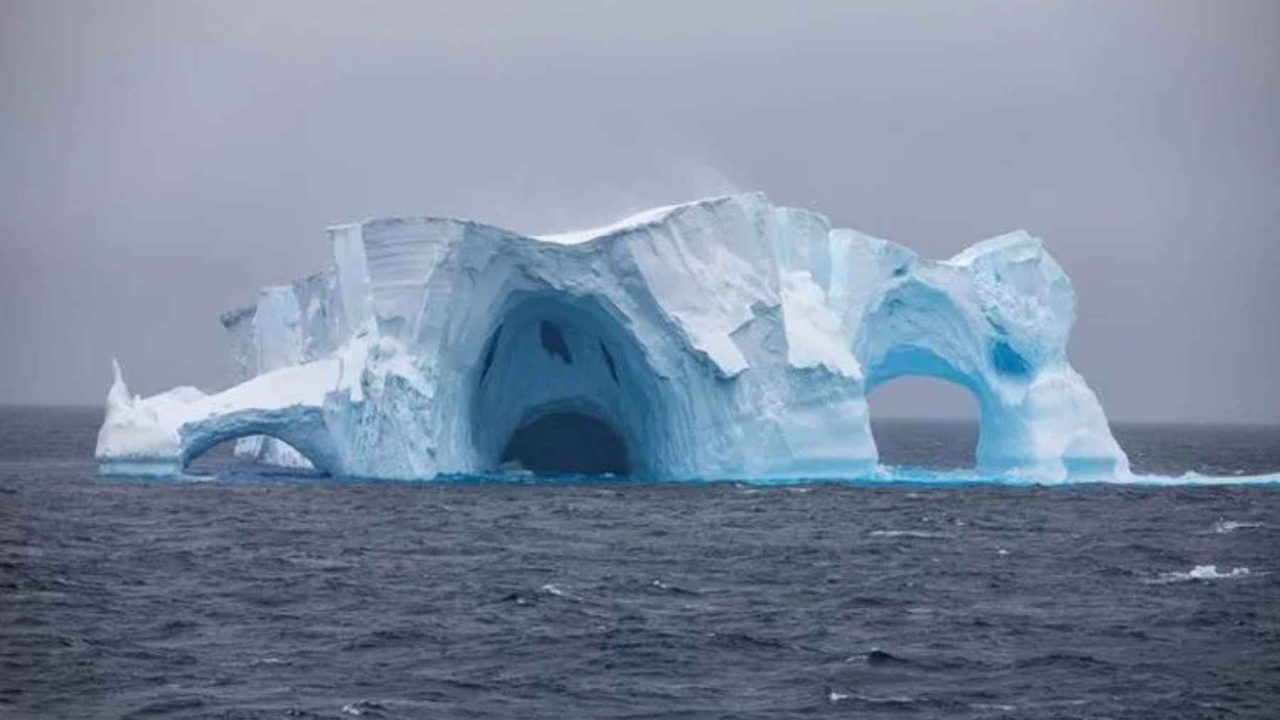
A glacier the size of Florida is melting faster than scientists expected — and a group of engineers and climate researchers has proposed what might be the most audacious engineering project ever seriously considered: building an underwater wall more than 80 kilometers long in one of the most remote and hostile places on Earth.
The target is Thwaites Glacier in West Antarctica, a massive ice sheet already responsible for about 4 percent of global sea level rise. If it fully collapses, NASA estimates it could raise ocean levels by just over 2 feet — roughly 65 centimeters — on its own. And it’s holding back even more ice behind it.
The proposal sounds like science fiction. But researchers working on it argue the alternative — doing nothing — may ultimately be far worse.
Why Thwaites Is Called the Doomsday Glacier
The nickname isn’t dramatic for the sake of it. Thwaites is one of the largest and most unstable glaciers on the planet, and its fate could directly shape the future of coastlines around the world.
Scientists often compare its scale to the entire state of Florida or the landmass of Great Britain. That gives you a sense of how much ice we’re talking about. But the real concern isn’t just Thwaites itself — it’s what sits behind it.
Thwaites acts as a natural buttress, holding back neighboring glaciers farther inland. According to NASA, if Thwaites were lost entirely and those inland glaciers followed, the combined sea level rise could reach approximately 8 additional feet — about 2.4 meters — on top of what Thwaites alone would contribute.
That kind of rise, even spread over decades, would permanently inundate low-lying coastal cities, displace hundreds of millions of people, and redraw maps that have been stable for centuries.
What the Seabed Curtain Proposal Actually Involves
The concept being explored is described as a flexible “seabed curtain” — essentially an underwater barrier installed on the ocean floor in front of the glacier. Unlike a traditional seawall built to protect a shoreline, this structure would be positioned beneath the water’s surface, designed to block warm ocean water from reaching the base of the glacier.
That matters because one of the primary drivers of Thwaites’ rapid melt isn’t air temperature — it’s the intrusion of relatively warm seawater underneath the glacier’s floating ice shelf. By creating a physical barrier, the curtain concept aims to reduce that warm water contact and slow the pace of melting.
The proposed wall would stretch more than 80 kilometers in length, making it one of the largest engineering structures ever attempted anywhere — let alone in the extreme conditions of Antarctic waters.
Supporters of the idea are careful to frame it not as a solution to climate change, but as a way to buy time — allowing emissions reduction efforts and coastal adaptation planning to catch up with the pace of ice loss that is already underway.
The Numbers Behind the Stakes
| Factor | Detail |
|---|---|
| Thwaites’ current contribution to sea level rise | Approximately 4% of total global rise |
| Sea level rise if Thwaites fully collapses | Just over 2 feet (65 centimeters) |
| Additional rise from inland glaciers Thwaites supports | Approximately 8 feet (2.4 meters) |
| Combined potential sea level rise | More than 10 feet (over 3 meters) |
| Proposed barrier length | More than 80 kilometers |
| Barrier type | Flexible underwater seabed curtain |
Why Coastal Communities Should Be Paying Attention
This isn’t a story about a distant glacier in a place most people will never visit. The consequences of Thwaites’ collapse would be felt in Miami, Jakarta, Mumbai, Amsterdam, New York, and dozens of other coastal cities where millions of people live and work.
Even a rise of 2 feet changes storm surge calculations dramatically, pushing what used to be hundred-year floods into far more frequent events. A rise of several feet renders entire neighborhoods uninhabitable without massive and expensive sea defenses.
The seabed curtain idea, whatever its practical challenges, reflects a growing recognition among scientists and engineers that passive observation may no longer be enough. The scale of the risk is pushing researchers toward proposals that would have seemed unrealistic just a decade ago.
Critics of large-scale geoengineering interventions raise legitimate concerns — about unintended ecological consequences, about the enormous logistical challenges of building anything in Antarctic waters, and about whether resources devoted to such projects might be better spent on emissions reduction. Those debates are ongoing and unresolved.
But advocates argue that with timelines tightening and the glacier already contributing measurably to rising seas, the question is no longer whether to consider bold interventions — it’s whether humanity has the will and capacity to attempt them.
What Would Have to Happen for This to Move Forward
The proposal remains in the research and concept phase. No construction timeline has been confirmed, and the engineering challenges involved — from materials capable of surviving Antarctic conditions to the logistics of installation at that scale and depth — are formidable by any measure.
What researchers are doing now is stress-testing the concept: modeling whether a flexible curtain structure could meaningfully reduce warm water intrusion, what materials might withstand the environment, and whether the potential benefit justifies the extraordinary cost and complexity.
The broader context matters here too. The seabed curtain is one of several geoengineering concepts being explored in response to accelerating ice loss. None have moved to implementation. But the fact that serious scientists and engineers are developing detailed proposals reflects how urgently the scientific community views the Thwaites situation.
For now, the glacier continues its retreat. Every year without a meaningful intervention is another year of data confirming what researchers have feared — that Thwaites is not stabilizing on its own.
Frequently Asked Questions
What is the Doomsday Glacier?
The Doomsday Glacier is a nickname for Thwaites Glacier in West Antarctica, a massive ice sheet already responsible for about 4 percent of global sea level rise and capable of raising oceans by over 2 feet if it fully collapses.
How long would the proposed underwater wall be?
The proposed seabed curtain would stretch more than 80 kilometers in length, making it an extraordinarily large engineering undertaking.
Would the wall stop climate change?
No. Supporters of the concept describe it as a way to buy time — slowing glacier melt while emissions cuts and coastal planning efforts continue, not as a substitute for addressing climate change itself.
How much would seas rise if Thwaites and its neighboring glaciers collapsed?
According to NASA, Thwaites alone could add just over 2 feet (65 centimeters) to sea levels. The inland glaciers it currently supports could add approximately 8 more feet (2.4 meters) if all that ice were lost.
Is this project already being built?
No. The seabed curtain remains a research and concept-stage proposal. No construction timeline has been confirmed, and significant engineering and logistical challenges would need to be resolved before any implementation could be considered.
Why is warm ocean water a problem for the glacier?
Warm seawater intruding beneath Thwaites’ floating ice shelf is one of the key drivers of its accelerating melt. The curtain concept is specifically designed to block that warm water from reaching the glacier’s base.



Leave a Reply