
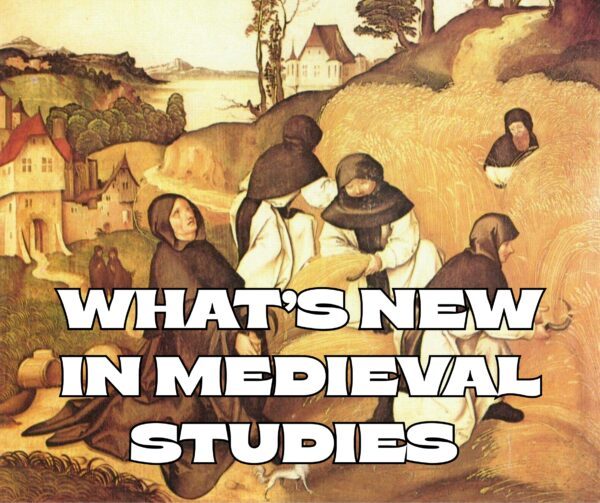
What did medieval people do when the weather turned catastrophic, the harvest failed, and the social order started to crack? Historians are still working out the answers — and some of the most compelling new research is now free to read, no subscription required.
Medievalists.net has highlighted ten open-access articles published in February and March 2026, drawn from peer-reviewed journals covering everything from climate-driven economic collapse in fifteenth-century England to forced marriages brought before a papal court. These aren’t locked behind expensive academic paywalls. They’re available right now, for anyone curious about the Middle Ages.
Here’s what the research covers — and why it matters beyond the history books.
Why Free Access to Medieval Research Is a Bigger Deal Than It Sounds
Academic publishing has long kept serious scholarship out of reach for most readers. Journal subscriptions can cost institutions thousands of dollars a year, and individual articles often carry steep per-download fees. Open-access publishing changes that — it means researchers, students, teachers, and the genuinely curious can read the actual studies, not just summaries filtered through someone else’s interpretation.
Medievalists.net tracks newly published open-access research in medieval studies every month. Their full list goes to Patreon supporters, but the ten articles highlighted here represent a broad sweep of the field — economics, law, religion, literature, and the kind of social history that feels surprisingly relevant today.
The Medieval Studies Articles You Can Read Right Now
Two of the highlighted articles stand out for their immediate resonance with modern concerns. The first looks at what happens when extreme weather meets a fragile economy. The second examines how power, age, and gender shaped whether a medieval woman’s claim of forced marriage was believed.
These aren’t abstract academic puzzles. They’re about real people navigating systems that were often stacked against them — and the research reveals how much those systems shaped the world we inherited.
| Article Title | Author | Journal | Topic |
|---|---|---|---|
| Extreme weather and economic crisis in the 1430s in England, and the implications for tenurial change | Mark Bailey | The Economic History Review | Climate crisis, food shortages, and shifting landholding practices |
| Consent and Coercion: Forced Marriages in Supplications to the Apostolic Penitentiary, 1484–92 | Charlotte Christensen-Nugues | Journal of Medieval History | Forced marriage cases before a papal court in the late fifteenth century |
| Mental Distress and Pseudo-Hagiography in Hrafns saga Sveinbjarnarsonar | Natalie M. Van [surname cut off in source] | Not confirmed in source | Mental distress and religious narrative in an Icelandic saga |
Note: The complete list of ten articles is available via Medievalists.net.
What the Research Actually Tells Us
Mark Bailey’s article in The Economic History Review focuses on the 1430s — a decade when extreme weather triggered what he describes as a major economic crisis in England. The consequences were severe: food shortages, widespread livestock deaths, and deep disruption to rural life. Bailey’s research also shows how this pressure reshaped landholding practices, marking what he identifies as the beginning of a longer downturn known as the ‘Great Slump.’
That phrase — the Great Slump — should catch the attention of anyone who has lived through economic downturns in the twenty-first century. The mechanisms are different, but the pattern of compounding crises, where one shock weakens systems that then collapse under the next, feels familiar.
Charlotte Christensen-Nugues takes a different angle entirely. Her article in the Journal of Medieval History examines petitions brought before the Apostolic Penitentiary — a papal court — between 1484 and 1492. These were cases where people, often women, claimed they had been forced into marriage against their will. The research reveals how the Church evaluated these claims, and how factors like age, gender, and social status shaped whether a petitioner was believed and what remedy, if any, they received.
The third article in This kind of literary analysis opens a window into how medieval cultures understood and represented psychological pain.
Who This Research Is Actually For
The instinct is to assume academic articles are only for academics. That’s increasingly not true, especially with open-access publishing. These articles are written by specialists, but the questions they ask are universal.
- How do societies respond when climate disrupts food supplies?
- Who gets to define whether consent was real or coerced?
- How do cultures give language to mental suffering?
- What does it mean to “find” a battlefield — and who decides?
The Medievalists.net roundup points to research covering topics as varied as Beowulf and battlefield identification — suggesting the full list spans literary scholarship, archaeology, and social history. For teachers, writers, students, or anyone who finds the Middle Ages genuinely interesting, these articles are a direct line to the sharpest current thinking in the field.
How to Find the Full List
Medievalists.net publishes these open-access roundups monthly. The complete list of ten articles from February and March 2026 is available to their Patreon supporters. The articles highlighted here are freely available to read — the source page includes direct links to each one.
For anyone who wants to stay current with medieval studies without paying journal subscription fees, this kind of curated open-access list is genuinely useful. The research is peer-reviewed, the journals are established, and the topics range widely enough that there’s likely something worth reading regardless of where your interest in the period lies.
Frequently Asked Questions
What is the ‘Great Slump’ mentioned in Mark Bailey’s research?
Bailey’s article identifies the Great Slump as a longer economic downturn that began following the extreme weather and economic crisis of the 1430s in England, which caused food shortages, livestock deaths, and changes to landholding practices.
What was the Apostolic Penitentiary?
Based on
Are all ten articles genuinely free to read?
According to Medievalists.net, the articles highlighted in their roundup are open-access, meaning they are available without a paywall. Direct links are provided on their site.
Where can I find the full list of ten articles?
The complete list from the February and March 2026 roundup is available to Medievalists.net’s Patreon supporters, while a selection of highlighted articles is publicly accessible on their website.
What other topics does the full list of ten articles cover?
How often does Medievalists.net publish these open-access roundups?
According to the source, Medievalists.net tracks and publishes newly available open-access medieval studies research on a monthly basis.

Leave a Reply