
On April 18, 1861, a doctor in Paris performed an autopsy on a man who had spent the last years of his life unable to speak more than a single syllable — and what he found inside that brain quietly changed the course of neuroscience forever.
The patient had been known by the nickname “Tan,” because it was the only sound he could reliably produce. The doctor who examined his brain was Dr. Paul Broca, working at Bicêtre Hospital just outside Paris. What Broca observed that day would lead directly to the identification of a specific region of the brain responsible for speech — a discovery that still carries his name more than 160 years later.
It is one of those moments in medical history that sounds almost too neat: a single autopsy, a single patient, a single insight that reshapes how humanity understands itself. But the story behind it is genuinely remarkable, and its implications reach far beyond any one lab or hospital.
The Patient Called “Tan” and the Mystery of Lost Speech
Before the autopsy, there was the patient. The man nicknamed “Tan” had suffered from a condition we now call aphasia — a loss of the ability to produce or understand spoken language. His case was striking because his intelligence appeared otherwise intact. He could understand what people said to him. He simply could not respond in kind. The only recognizable sound he could produce was “tan,” repeated over and over.
Dr. Broca had interacted with this patient before his death and was already developing a theory. He suspected that the ability to produce spoken language was not some diffuse, whole-brain function — it was localized. Specific. Housed in a particular patch of neural tissue. The autopsy on April 18, 1861, the day after the patient died, gave him the physical evidence to test that idea.
What Broca found was damage to a specific region in the left hemisphere of the brain. That damage, he argued, was directly responsible for the patient’s inability to speak. It was a bold claim at the time, and it opened a scientific debate that would fuel decades of research into how the brain actually works.
What Broca’s Area Actually Does
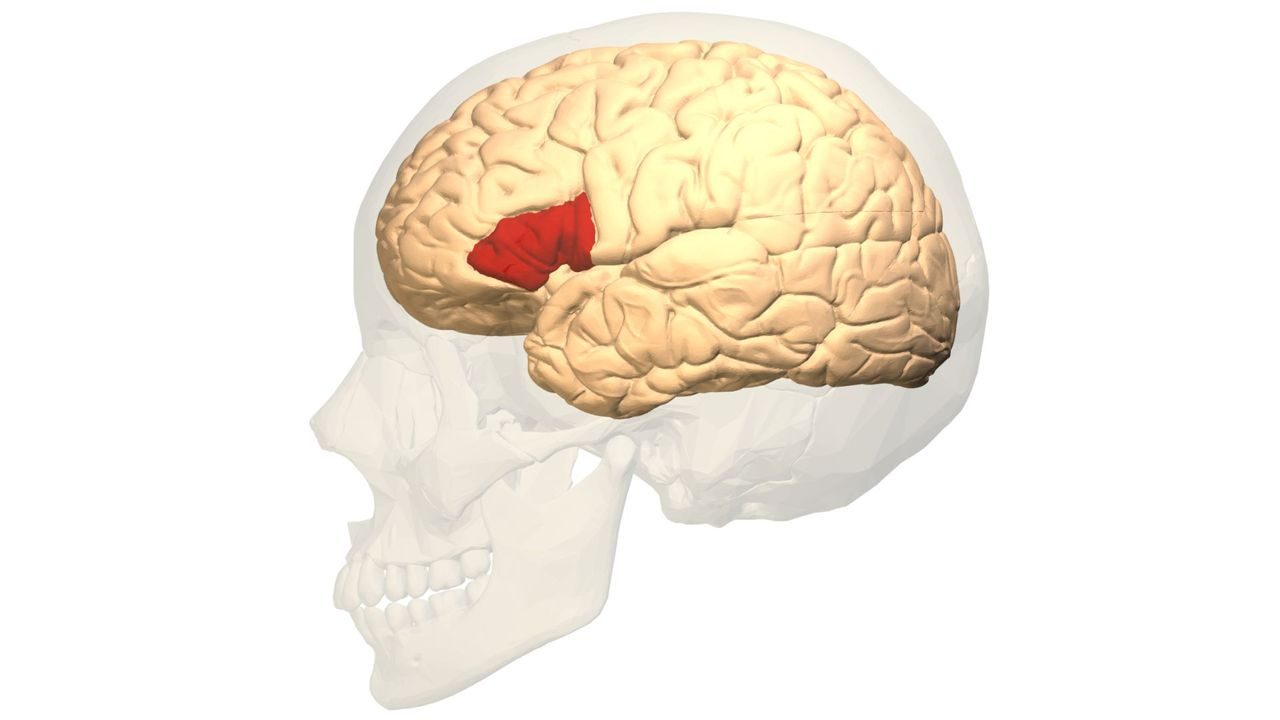
The region Broca identified — now formally known as Broca’s area — sits in the frontal lobe of the brain, in the left hemisphere for most people. It is understood to play a central role in speech production and language processing. When this area is damaged, patients often experience what is now called Broca’s aphasia: they can understand language reasonably well, but producing fluent speech becomes labored or nearly impossible.
This was essentially what “Tan” experienced. His condition was a living demonstration of what Broca’s area does — or more precisely, what its absence means.
The significance of the discovery extended well beyond speech. It helped establish the broader concept of cerebral localization — the idea that different parts of the brain are responsible for different functions. That principle underpins virtually all modern neuroscience and brain imaging research.
Key Facts About the Discovery
| Detail | Information |
|---|---|
| Date of autopsy | April 18, 1861 |
| Location | Bicêtre Hospital, outside Paris |
| Physician | Dr. Paul Broca |
| Patient nickname | “Tan” |
| Patient’s condition | Aphasia — unable to produce speech |
| Brain region identified | Broca’s area (left frontal lobe) |
| Associated condition when damaged | Broca’s aphasia |
- Broca’s area is located in the left hemisphere of the brain for the majority of people
- Damage to this region is associated with aphasia, specifically difficulty producing speech
- The patient “Tan” could understand language but could not produce it fluently
- The discovery helped establish the principle of cerebral localization in neuroscience
- The finding came from a direct autopsy performed on April 18, 1861 — the day after the patient’s death
Why This Still Matters to Anyone With a Brain
The discovery of Broca’s area was not just a 19th-century curiosity. It laid the groundwork for how modern medicine approaches brain injuries, strokes, and neurological disorders affecting language.
Today, when someone suffers a stroke and wakes up unable to speak clearly, one of the first things clinicians consider is whether Broca’s area has been affected. Speech-language therapists, neurologists, and rehabilitation specialists all work within a framework that traces directly back to that April autopsy in 1861.
Brain imaging technologies like MRI and fMRI have since confirmed and refined Broca’s original observations, showing in real time how this region activates during speech. What began as a hypothesis drawn from a single damaged brain is now visible, measurable, and mapped with extraordinary precision.
For the millions of people worldwide who live with aphasia — whether from stroke, traumatic brain injury, or neurological disease — the science that guides their treatment began with a doctor, a patient who could only say “tan,” and one decisive autopsy.
How One Autopsy Changed the Map of the Human Mind
It is worth pausing on what made this moment so consequential. Before Broca, there was genuine scientific disagreement about whether the brain worked as a unified whole or as a collection of specialized parts. The autopsy on April 18, 1861 did not settle every argument overnight — but it shifted the weight of evidence decisively.
Broca’s work gave researchers something they could point to: a physical location, a visible lesion, a patient whose symptoms matched the damage in a way that was hard to dismiss. It turned an abstract philosophical debate into an empirical one.
That shift — from speculation to evidence — is exactly the kind of turning point that defines scientific progress. And it all started with a man named “Tan” and a doctor willing to look closely at what a damaged brain could reveal.
Frequently Asked Questions
Who was the patient known as “Tan”?
“Tan” was the nickname given to a patient treated by Dr. Paul Broca who suffered from aphasia and could only reliably produce the single syllable “tan.” His full identity is known to historians but he became famous in neuroscience under this nickname.
What is Broca’s area and where is it located?
Broca’s area is a region in the left frontal lobe of the brain associated with speech production and language processing. Damage to this area is linked to a condition known as Broca’s aphasia.
What is aphasia?
Aphasia is a condition that affects a person’s ability to produce or understand spoken language, often resulting from brain damage. “Tan” experienced a form of aphasia that left him unable to produce speech despite apparently intact comprehension.
When and where did Dr. Broca perform the famous autopsy?
The autopsy took place on April 18, 1861, at Bicêtre Hospital outside Paris, the day after the patient known as “Tan” died.
Why is this discovery still relevant today?
The identification of Broca’s area helped establish the principle of cerebral localization, which underpins modern neuroscience, stroke treatment, and speech-language therapy used by clinicians worldwide today.
Did Broca’s discovery immediately change how scientists viewed the brain?
It significantly shifted the debate toward the idea that specific brain regions serve specific functions, though the full scientific implications were developed and refined by researchers over the decades that followed.




Leave a Reply