
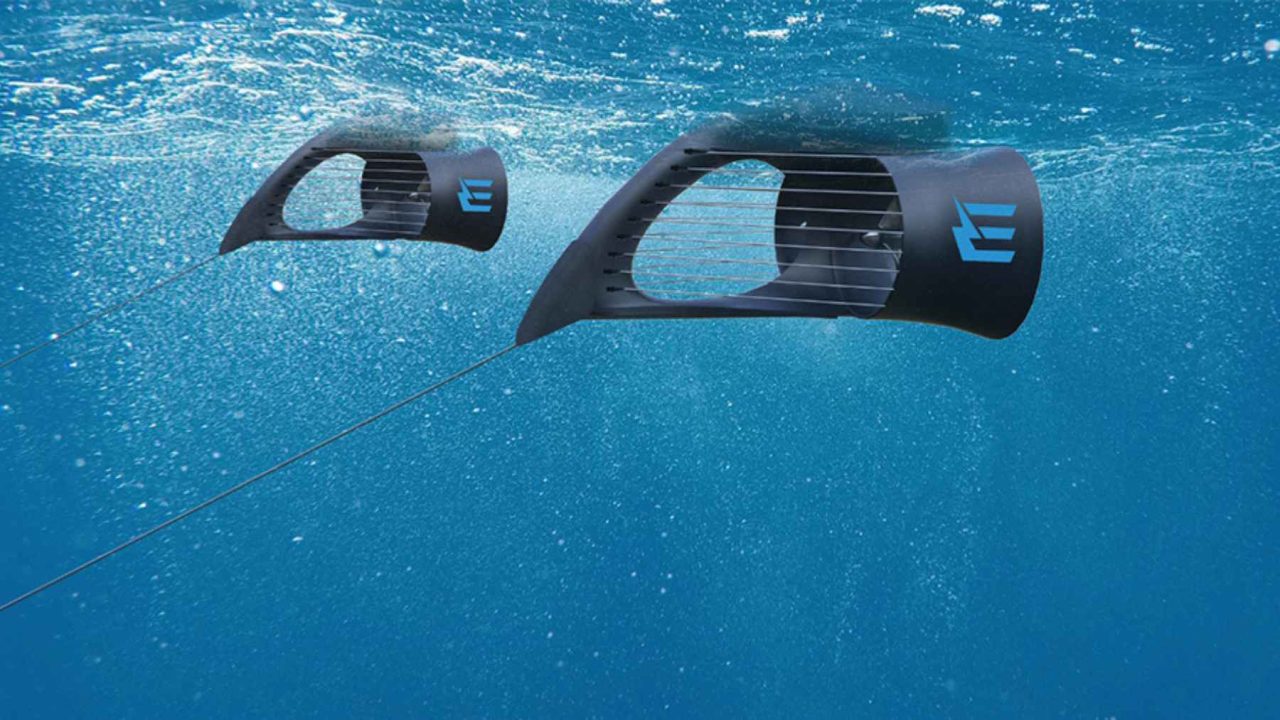
What if the answer to renewable energy’s biggest weakness — the fact that the sun sets and the wind stops — was quietly flowing past you in a river the whole time? That is the question a new project on Germany’s Middle Rhine is putting to the test, and the early results are drawing attention from engineers and energy planners across Europe.
Near the town of Sankt Goar, a cluster of underwater turbines is already spinning in the current of the Rhine. State officials describe the installation as the world’s first fully approved “swarm power plant” of its kind — a 124-unit system designed to pull electricity from moving water around the clock, without a dam, without a reservoir, and without waiting for the weather to cooperate.
It is a modest-looking project by power plant standards. But the idea behind it could matter far beyond this one stretch of river.
The Problem This Project Is Trying to Solve
Solar panels stop generating power the moment the sun goes down. Wind turbines go quiet when the air is still. These are not flaws exactly — they are simply the nature of those energy sources. But they create a real and recurring problem: electricity demand does not pause for sunset or a calm evening, and the gaps between supply and need have to be filled somehow.
Batteries can help, but large-scale storage remains expensive and limited. Hydropower from traditional dams is reliable, but building new dams is politically difficult, environmentally disruptive, and simply not possible in many places.
The Rhine project takes a different approach entirely. Instead of storing energy or waiting for better conditions, it taps a source that never really stops: the flow of a major river.
How a “Swarm Power Plant” on the Rhine Actually Works
The term “swarm power plant” is not just marketing language. It describes a genuinely different engineering philosophy. Rather than one large turbine generating significant power on its own, the system uses 124 smaller turbines working together — the way a school of fish moves as a coordinated unit rather than as isolated individuals.
Each turbine contributes a modest output. Collectively, they add up to something meaningful for the local grid. Spreading the generation across many small units also means the system keeps running even if some turbines need maintenance or experience a fault.
This falls under a category called hydrokinetic power — technology that captures the kinetic energy of moving water without requiring a dam or a controlled reservoir. The turbines sit beneath the surface of the river, which is why officials and engineers describe them as effectively invisible from the riverbank. Boat traffic, the riverscape, and the communities along the Rhine are not visually disrupted by the installation.
No dam means no flooded valley. No reservoir means no large-scale change to the surrounding landscape. From an environmental permitting standpoint, that distinction matters enormously.
Key Facts About the Sankt Goar Installation
| Detail | What the Source Confirms |
|---|---|
| Location | Middle Rhine, near Sankt Goar, Germany |
| Number of turbines | 124 units planned in full build-out |
| Technology type | Hydrokinetic swarm power plant |
| Dam or reservoir required | No |
| Visibility | Turbines are submerged and described as invisible |
| Approval status | Described as world’s first fully approved installation of its kind |
| Operating hours | Continuous — functions after sunset and when wind is absent |
| Current phase | Testing phase, growing step by step from first turbines already in water |
- The project is being built out gradually, with the first turbines already operational in the Rhine
- Officials characterize this as a phased expansion rather than a single construction event
- The “swarm” design means the plant functions as a distributed system, not a single point of generation
- Hydrokinetic technology captures energy from water’s natural movement, not from falling or stored water
Why This Matters Beyond One German River
Germany has set ambitious renewable energy targets, and the country has invested heavily in both solar and wind capacity over the past two decades. But the intermittency challenge — the technical term for the fact that these sources do not generate power on demand — has become harder to ignore as their share of the grid grows larger.
A technology that generates steadily, day and night, in any weather, fills a specific and valuable role. Rivers do not take days off. The Rhine, one of Europe’s busiest and most significant waterways, flows continuously regardless of what the sky is doing.
Supporters of hydrokinetic approaches argue that rivers represent an underused energy resource precisely because traditional hydropower requires such significant infrastructure. A system that requires no dam removes the biggest barriers — environmental, political, and financial — that have historically blocked new hydro development in Europe.
The absence of visible structures also matters for public acceptance. Communities along scenic river valleys have often resisted energy infrastructure on visual and cultural grounds. Turbines that sit beneath the waterline and leave the surface undisturbed present a fundamentally different proposition.
What Comes Next for the Rhine Project
According to state officials, the plan is to expand the installation progressively from the turbines already running in the water. The full 124-unit build represents the complete approved design, but the project is reaching that number incrementally rather than all at once.
This step-by-step approach allows engineers to monitor performance, assess any effects on the river environment, and refine the system before committing to the full scale. It is a cautious but deliberate path toward what officials believe could become a replicable model for other rivers and other countries.
Whether the Rhine project proves out the concept at meaningful scale remains to be seen. But with the first turbines already in the water and regulatory approval secured — something no comparable project had achieved before — it has cleared hurdles that stopped previous attempts at this kind of technology entirely.
Frequently Asked Questions
What is a swarm power plant?
A swarm power plant is a system made up of many small turbines that work together to generate electricity collectively, rather than relying on a single large structure.
Where exactly is the Rhine hydrokinetic project located?
The installation is situated on Germany’s Middle Rhine, near the town of Sankt Goar.
Does this project require building a dam?
No. The technology is hydrokinetic, meaning it draws energy from the natural flow of the river without a dam or reservoir of any kind.
Can you see the turbines from the riverbank?
No. The turbines are submerged beneath the surface and described by officials and engineers as effectively invisible from above the water.
How many turbines does the full project include?
The fully approved installation plans for 124 turbines, with the first units already in the water and the rest being added in phases.
Has anything like this been approved before?
State officials describe this as the world’s first fully approved swarm power plant of its kind, suggesting no comparable project had previously received full regulatory clearance.


Leave a Reply