
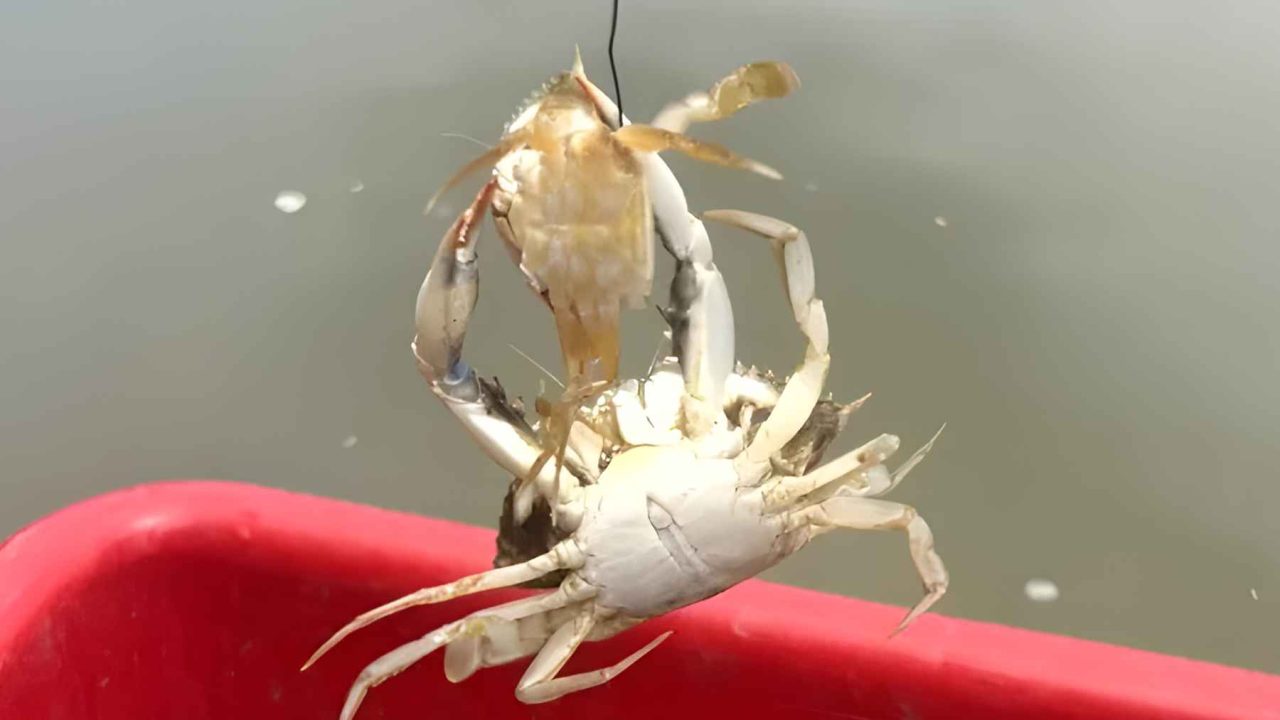
More than 97 percent of all predation on juvenile blue crabs in mid-salinity Chesapeake Bay waters comes from a single source: other blue crabs. Not fish. Not birds. Their own kind. That number, drawn from one of the longest-running studies of its type ever conducted, reframes everything we thought we understood about what threatens the Bay’s most iconic species.
The research, carried out by scientists at the Smithsonian Environmental Research Center, tracked juvenile blue crabs across 37 years — from 1989 to 2025 — in a Chesapeake Bay tributary. What they found was striking, and a little unsettling. The biggest danger facing the next generation of blue crabs isn’t pollution, overfishing, or climate stress. It’s the adults of their own species.
But buried inside those grim numbers is a small piece of genuine hope — and it comes from one of the most overlooked strips of habitat in the entire Bay.
Blue Crab Cannibalism Is Far More Widespread Than Scientists Expected
Blue crabs have a reputation for being aggressive, but the scale of cannibalism revealed in this study is still surprising. Lead author Anson “Tuck” Hines stated plainly that “blue crabs are notoriously cannibalistic,” while also noting that long-term efforts to actually measure cannibalism in the wild are exceedingly rare. Most research on predation in aquatic systems lasts a few years at most. A 37-year continuous record is almost unheard of.
Across the full study period, adult blue crabs accounted for more than 97 percent of all predation deaths among juveniles in mid-salinity zones of the Bay. Fish predation, by contrast, was not observed at all during the experiments. Deaths from physiological stress — things like temperature or salinity shock — came in at under 1 percent.
That leaves almost no room for any other explanation. When young blue crabs die in these waters, it is overwhelmingly because an older, larger crab ate them.
What the Numbers Actually Show
The data from the study tells a clear and consistent story over nearly four decades. Here’s how the causes of juvenile blue crab mortality break down based on the research findings:
| Cause of Juvenile Mortality | Percentage of Total Predation Deaths |
|---|---|
| Cannibalism by adult blue crabs | More than 97% |
| Predation by fish | 0% (not observed in experiments) |
| Physiological stress deaths | Under 1% |
The study period ran continuously from 1989 to 2025, making it one of the most comprehensive field records of blue crab population dynamics ever assembled. The consistency of the findings across nearly four decades makes the signal extremely difficult to dismiss as a fluke or an artifact of short-term conditions.
- The research was conducted in a Chesapeake Bay tributary in mid-salinity waters
- The study was led by researchers at the Smithsonian Environmental Research Center
- Long-term cannibalism studies of this kind are described as rare in the scientific literature
- The dominant threat to juvenile crabs was consistently adult members of the same species
The Shallow Water Refuge — And Why It’s Disappearing
Here’s where the story takes a turn that matters far beyond academic research. The same study found that very shallow water acts as a built-in safety zone for juvenile blue crabs. In that thin strip of habitat at the Bay’s edge, young crabs appear to find refuge from the adults that would otherwise consume them.
Adult blue crabs are larger and less able to access extremely shallow zones. Juveniles, smaller and more maneuverable in tight spaces, can exploit those margins in ways adults cannot. That strip of shoreline — often just inches deep — functions as a natural nursery, giving young crabs a fighting chance to grow large enough to survive in deeper, more dangerous waters.
The problem is that this habitat is shrinking. Shoreline development — the installation of seawalls, riprap, bulkheads, and other hard structures — eliminates the gradual, shallow transition zones that juvenile crabs depend on. Where natural, gently sloping shorelines once provided that critical thin-water refuge, rock and concrete now drop sharply into deeper water, leaving juveniles with nowhere to hide.
The research frames this as a direct threat to blue crab recruitment. If the shallow-water refuge disappears, juvenile survival rates could fall even further — not because of any new predator entering the system, but because the one natural defense young crabs have is being physically removed from the landscape.
Why This Matters to Anyone Who Cares About the Chesapeake Bay
Blue crabs are more than a regional delicacy. They are a cornerstone of the Chesapeake Bay ecosystem and a critical part of the regional economy. Watermen, seafood processors, restaurants, and tourism all depend on healthy crab populations. A long-term decline in juvenile survival doesn’t just affect the crabs — it ripples outward through every industry and community connected to the Bay.
The findings also carry a practical message for coastal management. Protecting and restoring natural shorelines isn’t just an environmental nicety — according to this research, it may be one of the most direct ways to support blue crab population recovery. Hardened shorelines don’t just alter the look of the Bay; they eliminate the specific microhabitat that gives the next generation of crabs their best shot at survival.
For policymakers, waterfront property owners, and Bay advocates, the implications are concrete: every natural shoreline preserved is a potential nursery kept open. Every seawall built is a refuge closed.
What Comes Next for Blue Crab Research and Conservation
The 37-year dataset from the Smithsonian Environmental Research Center represents a rare scientific asset. Studies of this duration and specificity are difficult to fund, maintain, and sustain across institutional and personnel changes. The fact that this one survived intact to 2025 makes its conclusions particularly credible.
Researchers and conservationists are likely to use these findings to make the case for shoreline protection policies across the Bay watershed. Whether that translates into regulatory changes, restoration funding, or new guidelines for waterfront development remains to be seen — but the scientific foundation for those arguments is now considerably stronger.
The blue crab’s greatest enemy, it turns out, has always been lurking in its own family. The question now is whether the habitat that protects the youngest and most vulnerable members of that family will still be there when they need it most.
Frequently Asked Questions
What percentage of juvenile blue crab deaths are caused by cannibalism?
According to the Smithsonian Environmental Research Center study, adult blue crabs accounted for more than 97 percent of all predation deaths among juvenile blue crabs in mid-salinity Chesapeake Bay waters.
How long did this blue crab study run?
The study tracked juvenile blue crabs in a Chesapeake Bay tributary for 37 years, from 1989 to 2025, making it one of the longest continuous records of its kind.
Do fish pose a significant threat to juvenile blue crabs?
Based on this study, fish predation was not observed during the experiments, making it a negligible factor compared to cannibalism by adult crabs.
Why does shallow water help juvenile blue crabs survive?
The research indicates that very shallow water acts as a natural refuge, where smaller juveniles can access thin-water zones that larger adult crabs cannot easily reach.
How is shoreline development affecting juvenile blue crabs?
Hard shoreline structures like seawalls and bulkheads eliminate the gradual shallow-water zones that serve as refuges for juvenile crabs, effectively removing one of their primary defenses against cannibalism.
Who conducted this research?
The study was led by Anson “Tuck” Hines and conducted by researchers at the Smithsonian Environmental Research Center, focusing on a tributary of the Chesapeake Bay.


Leave a Reply