
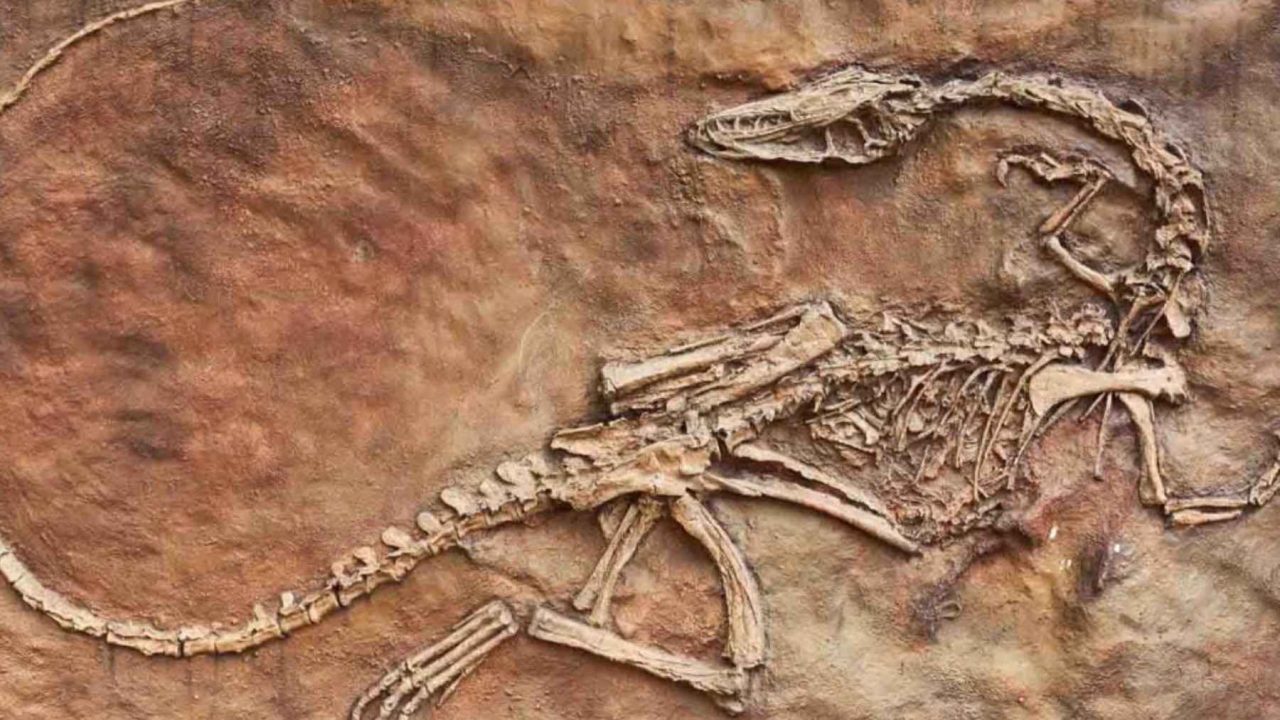
A tooth barely larger than a grain of sand is rewriting what scientists thought they knew about the earliest relatives of mammals — and it was hiding in the frozen rock of Greenland for 200 million years.
Researchers have identified a tiny fossilized jaw fragment belonging to a creature now named Nujalikodon cassiopeiae. The animal lived roughly 200 million years ago, at a time when dinosaurs already dominated the planet. Yet this small, burrowing creature was quietly carving out its own place in the world — and its discovery is filling a significant gap in the story of how mammals came to be.
The fossil is now considered the oldest definitive member of an extinct group called docodontans, according to researchers involved in the study. That single designation carries enormous weight in paleontology.
What Was Found — and Where
The specimen consists of a partial dentary — part of a lower jawbone — with one intact molar and the roots of a second tooth. The molar itself measures roughly 0.06 inches long, which gives you a sense of just how small this animal was. Despite its size, the tooth’s structure carries enough detail to place it clearly within the early mammal family tree.
The fossil was recovered from the Rhætelv Formation in the Kap Stewart Group, a sequence of exposed rock formations in central East Greenland’s Jameson Land region. Lead author Dr. Sofia Patrocínio of the University of Évora in Portugal headed the research team responsible for identifying and describing the specimen.
Greenland may not be the first place most people picture when they think of ancient mammals, but its rock formations preserve an extraordinary window into the Triassic-Jurassic boundary — one of the most consequential periods in the history of life on Earth.
Why Nujalikodon cassiopeiae Changes the Timeline
The significance of this find goes beyond the creature itself. Scientists use the term “ghost lineage” to describe stretches of evolutionary time where a group of animals is expected to have existed — based on what comes before and after in the fossil record — but where no physical evidence has yet been found.
Nujalikodon cassiopeiae directly trims one of those ghost lineages for docodontans. By pushing the confirmed existence of this group back to approximately 200 million years ago, the fossil tightens the evolutionary timeline and gives researchers a firmer anchor point in the record.
Docodontans are an extinct lineage of early mammal relatives. They are not direct ancestors of modern mammals, but they are close cousins on the family tree — and understanding when they appeared helps researchers map the broader radiation of mammal-like creatures during the age of dinosaurs.
Key Facts About the Discovery
| Detail | Information |
|---|---|
| Fossil name | Nujalikodon cassiopeiae |
| Age of fossil | Approximately 200 million years old |
| Molar length | Roughly 0.06 inches (about 1.5 mm) |
| Fossil type | Partial dentary (lower jawbone) with one intact molar |
| Discovery location | Rhætelv Formation, Kap Stewart Group, central East Greenland |
| Classification | Oldest definitive docodontan |
| Lead researcher | Dr. Sofia Patrocínio, University of Évora, Portugal |
- The creature lived during a period when dinosaurs already ruled the Earth
- Its discovery fills a previously empty stretch of the docodontan fossil record
- The fossil was found in a burrow context within ancient rock formations
- The specimen represents one of the earliest confirmed mammal relatives ever identified
A World Ruled by Dinosaurs — and Yet
It’s worth pausing on the context here. Two hundred million years ago, dinosaurs weren’t just around — they were the dominant force on land. The Triassic period was giving way to the Jurassic, and the creatures that would eventually lead to every mammal alive today were small, secretive, and largely nocturnal.
Nujalikodon cassiopeiae almost certainly lived that way too. Tiny, tucked into burrows, surviving in the margins of a world that belonged to much larger animals. The fact that it left behind any fossil evidence at all — let alone a tooth detailed enough to identify its place in evolutionary history — speaks to both the richness of the Greenland rock record and the patience of the researchers who study it.
The burrowing lifestyle that likely kept this creature alive also helped preserve it. Protected from the elements inside sediment, small bones and teeth had a better chance of surviving the immense span of geological time between then and now.
What This Means for Paleontology Going Forward
Every ghost lineage that gets trimmed by a new fossil discovery is a step toward a more complete picture of life’s history. For researchers studying early mammals, the Triassic-Jurassic boundary is particularly important — it’s a period of mass extinction and rapid evolutionary change that set the stage for the eventual rise of mammals as a dominant group.
Finds like Nujalikodon cassiopeiae remind scientists that the fossil record still holds major surprises, often in places that are difficult to access and in specimens that are easy to overlook. A jaw fragment smaller than a fingernail, pulled from Greenland’s ancient rock, is now one of the most important mammal fossils ever recovered.
Further excavation in the Rhætelv Formation and surrounding deposits could yield additional specimens — and potentially push the known range of docodontans or other early mammal relatives even further back in time.
Frequently Asked Questions
What is Nujalikodon cassiopeiae?
It is the name given to a newly identified fossil creature — a small early mammal relative whose jaw fragment was discovered in Greenland and dates to approximately 200 million years ago.
Why is this fossil considered significant?
It is now recognized as the oldest definitive member of an extinct group called docodontans, and its discovery trims a “ghost lineage” — a gap in the fossil record where evidence was expected but previously missing.
How big was this creature?
Based on the fossil evidence, the animal was extremely small — its molar tooth measured roughly 0.06 inches long, suggesting a very tiny body overall.
Where exactly was the fossil found?
The specimen came from the Rhætelv Formation in the Kap Stewart Group, located in central East Greenland’s Jameson Land region.
Who led the research?
Dr. Sofia Patrocínio of the University of Évora in Portugal is listed as the lead author of the study describing the fossil.
Are docodontans ancestors of modern mammals?
No — docodontans are an extinct group of early mammal relatives, not direct ancestors of modern mammals, but they are closely related on the broader evolutionary family tree.



Leave a Reply