
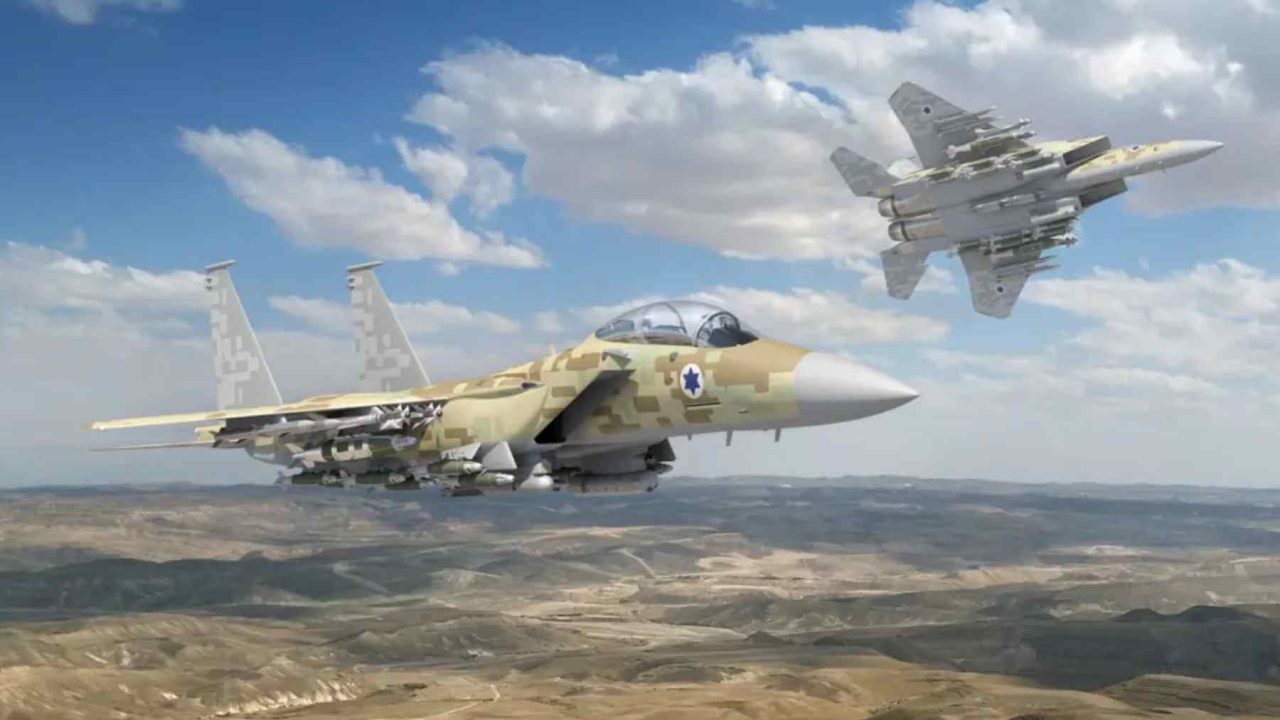
Two full fighter jet squadrons. Tens of billions of dollars. And a question that rarely makes the official press release: what does a bigger, faster, more powerful air force actually cost the planet?
Israel’s Ministry of Defense announced on May 3 that it has approved the purchase of two new U.S.-made fighter jet squadrons — one F-35I from Lockheed Martin and one F-15IA from Boeing. The deal, described in official terms as worth “tens of billions of dollars,” is framed as a straightforward national security investment. But there is a second story buried beneath the military headlines, one that governments rarely volunteer and the public rarely gets to see.
Fighter jets burn enormous quantities of aviation fuel. And while emissions from cars, power plants, and even office buildings are increasingly tracked and reported, military aviation emissions tend to operate in a very different kind of transparency — which is to say, almost none at all.
What Israel Actually Approved
The announcement covers two complete squadrons, not just a handful of individual aircraft. According to Reuters, Israel plans to acquire a fourth F-35 squadron and a second F-15IA squadron, with final agreements still to be completed with the U.S. government.
Prime Minister Benjamin Netanyahu framed the decision as part of a broader, decade-long strategy to strengthen the Israeli Air Force. This is not an emergency procurement — it is a long-range modernization plan, the kind that shapes a country’s military posture for a generation.
The F-35I is the Israeli-configured variant of Lockheed Martin’s stealth multirole fighter, modified to Israeli specifications and capable of integrating Israeli-developed weapons and electronics systems. The F-15IA is Boeing’s advanced Eagle variant, built for Israel with upgraded avionics, engines, and extended range capabilities. Both aircraft represent the cutting edge of Western air power.
The Numbers Behind the Deal
What is confirmed is the scale: two full squadrons represent a significant expansion of Israel’s existing fleet, which already includes F-35I aircraft from earlier procurement rounds.
| Aircraft | Manufacturer | Type | Role |
|---|---|---|---|
| F-35I | Lockheed Martin | Stealth multirole fighter | 4th squadron for Israel |
| F-15IA | Boeing | Advanced multirole fighter | 2nd squadron for Israel |
Final agreements with the U.S. government are still being completed, meaning the deal is approved in principle but not yet fully contracted. That distinction matters — the final price tag, delivery timelines, and specific configurations could still shift before ink is dry.
The Part of This Story Most Reports Are Missing
Here is where the “hidden figure in the fine print” becomes relevant — and it has nothing to do with classified specifications or diplomatic footnotes.
Fighter jets are among the most fuel-intensive machines ever built. A single F-35 burns roughly 5,600 pounds of jet fuel per hour at full power. Scale that across two full squadrons flying training sorties, operational missions, and combat deployments over a decade, and the fuel consumption — and the emissions that come with it — runs into figures that dwarf most civilian carbon footprints.
The core issue, as Governments have built increasingly detailed systems for tracking and reporting emissions from civilian sectors. Utilities report. Automakers report. Airlines report. Military aviation, however, operates largely outside the standard reporting frameworks that apply to the rest of the economy.
When a country announces a multi-billion dollar fighter jet acquisition, the environmental cost of actually flying those jets for the next 30 years rarely appears in any official document. There is no line item for lifecycle fuel burn. There is no projected emissions figure. The planes are announced, the price is stated, and the atmospheric consequences remain invisible.
Why This Matters Beyond Israel
Israel is not alone in this pattern. Major military powers around the world are expanding or modernizing their air forces, and the same transparency gap applies across the board. The U.S., the UK, France, and dozens of other nations have made significant climate commitments — while simultaneously exempting or under-reporting their military sectors from those same commitments.
Advocates for greater military emissions transparency argue that this creates a structural blind spot in global climate accounting. Critics of current reporting frameworks contend that if governments are serious about emissions targets, the exemptions carved out for defense spending represent one of the largest unexamined loopholes in climate policy.
None of that makes Israel’s purchase unusual or uniquely problematic. It makes it a clear and current example of a much wider dynamic — one that plays out every time a defense ministry signs a major aviation contract anywhere in the world.
What Happens Next
On the military side, the path forward involves completing final agreements with the U.S. government before deliveries can begin. Given the scale of the deal and the complexity of Israeli-specific modifications on both aircraft types, the procurement process is expected to unfold over several years as part of the broader decade-long air force modernization plan.
On the transparency side, there is no confirmed timeline for any change. Military emissions reporting remains largely voluntary and inconsistent at the international level. Whether this particular deal prompts any broader accounting — financial or environmental — has not been confirmed.
What is confirmed is the scale of the commitment: two squadrons, two of the most advanced Western fighter platforms available, and a price described only as running into the tens of billions. The full cost, in every sense of that word, is still being calculated.
Frequently Asked Questions
What did Israel approve purchasing?
Israel’s Ministry of Defense approved the purchase of two fighter jet squadrons — one F-35I squadron from Lockheed Martin and one F-15IA squadron from Boeing — as part of a decade-long air force modernization plan.
How much will the deal cost?
The deal has been described as worth “tens of billions of dollars,” though a precise final figure has not been confirmed as agreements with the U.S. government are still being completed.
Is this Israel’s first F-35 purchase?
No. According to
Who makes the F-35I and the F-15IA?
The F-35I is manufactured by Lockheed Martin, and the F-15IA is manufactured by Boeing. Both are U.S.-made aircraft configured to Israeli specifications.
Why is the environmental angle considered a “hidden figure”?
Military aviation emissions are rarely included in official procurement announcements or climate reporting frameworks, meaning the long-term fuel burn and atmospheric cost of operating these squadrons is not reflected in the publicly stated price of the deal.
When will the deal be finalized?
Final agreements with the U.S. government are still to be completed, so a confirmed delivery timeline has not yet been announced.




Leave a Reply