
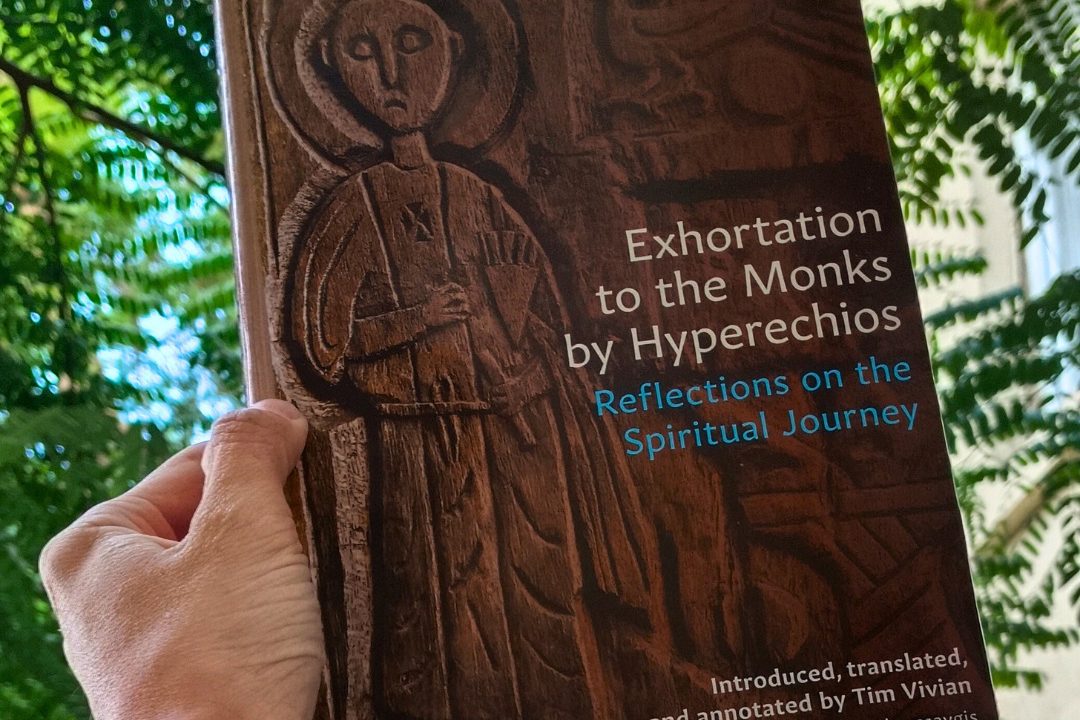
What does it mean to live a truly disciplined life? A collection of 160 sayings written by an early Christian monk named Hyperechios has been quietly answering that question for over 1,500 years — and a new English translation is finally bringing those words to a wider audience.
Published by the American University in Cairo Press and translated by Tim Vivian, Exhortation to the Monks by Hyperechios: Reflections on the Spiritual Journey offers the first major modern edition and translation of these writings. For scholars of early Christianity, medieval monasticism, and ascetic literature, it fills a genuinely long-standing gap.
Very little is known about Hyperechios himself. Scholars believe he likely lived during the fourth or fifth century, probably in Palestine. Despite the historical distance, the sayings he left behind carry a directness that feels surprisingly immediate.
Who Was Hyperechios — and Why Does This Book Matter Now?
Hyperechios occupies an unusual corner of early Christian writing. He composed 160 short sayings — many only a single sentence long — intended to guide Christians pursuing an ascetic life. That means monks, hermits, and those committed to spiritual discipline through simplicity and self-denial.
The themes running through the Exhortation include spiritual discipline, humility, moderation, self-control, and the practice of hospitality. These weren’t abstract theological arguments. They were practical instructions for how to live.
Despite their age, very little academic scholarship has been devoted to Hyperechios’s writings. This new translation, prepared by Tim Vivian, represents a serious effort to correct that — presenting both a new critical edition of the text alongside an accessible English rendering.
For anyone interested in how early Christian communities actually functioned day to day, or how the monastic tradition shaped Western and Eastern spirituality alike, this book offers rare primary source material in a readable form.
The Sayings Themselves: Small Acts, Large Meaning
One of the most striking things about the Exhortation is how grounded the sayings are in everyday life. These aren’t grand theological proclamations. They’re observations about water, food, and the simple act of offering something to another person.
Translator Tim Vivian describes the sayings as “dramatic and daring in a more intimate way.” In one example, a senior monk practicing moderation and self-control offers water to a younger monk — perhaps serving the junior before himself. In the ancient world, that kind of hospitality wasn’t a small thing. It was a central virtue.
Saying 92 goes further. A monk shows hospitality by giving someone vegetables — likely cooked — “given in love.” The saying concludes that this act is “better than the fat of a whole burnt offering.” In Vivian’s translation, the contemporary parallel is vivid: giving a homeless person a McDonald’s coupon, he suggests, means more than a priestly blessing given from the altar at the end of a church service.
That comparison might surprise readers. But it captures exactly what Hyperechios seems to have been after: the argument that small, concrete acts of generosity outweigh elaborate religious ritual.
Key Details at a Glance
| Detail | Information |
|---|---|
| Title | Exhortation to the Monks by Hyperechios: Reflections on the Spiritual Journey |
| Translator | Tim Vivian |
| Publisher | American University in Cairo Press |
| ISBN | 978 1 649 03367 3 |
| Number of Sayings | 160 |
| Likely Period of Composition | Fourth or fifth century |
| Likely Location | Palestine |
| Core Themes | Spiritual discipline, humility, hospitality, moderation, self-control |
Who This Book Is Really For
The Exhortation isn’t a casual beach read, but it’s more accessible than its subject might suggest. The sayings are short — sometimes just one sentence — which makes the text approachable even for readers without a background in early Christian literature.
Scholars working in medieval studies, patristics, or the history of monasticism will find the new critical edition particularly valuable, given how little scholarly attention Hyperechios has historically received. But the themes the sayings explore — how to treat strangers, how to practice humility, what genuine generosity looks like — translate well beyond any academic context.
- Readers interested in early Christian or monastic history
- Scholars of ascetic literature and the Desert Fathers tradition
- Those exploring the roots of contemplative spirituality
- Anyone drawn to short-form wisdom literature from antiquity
- Students of medieval and late antique religious practice
The book sits in a tradition alongside better-known collections like the Sayings of the Desert Fathers, but Hyperechios brings his own distinct voice — one that consistently returns to the moral weight of ordinary, humble actions over grand religious gestures.
Why Ancient Wisdom Literature Still Resonates
There’s a reason texts like these survive for over a millennium and still find new readers. The questions Hyperechios was asking — how do we treat the people around us? what does self-discipline actually require? — haven’t changed in any fundamental way.
The saying about vegetables given in love being worth more than a burnt offering isn’t just a historical curiosity. It’s a pointed challenge to the gap between religious performance and lived ethics. That challenge is as relevant now as it was in fourth-century Palestine.
Tim Vivian’s translation makes this material available in a form that doesn’t require readers to already be specialists. That matters. Texts like the Exhortation have often remained locked inside academic editions, accessible only to those who could read the original Greek or navigate dense scholarly apparatus. A readable modern translation opens the conversation considerably.
Frequently Asked Questions
Who was Hyperechios?
Hyperechios was an early Christian monk who likely lived during the fourth or fifth century, probably in Palestine. Very little else is known about his life.
What is the Exhortation to the Monks?
It is a collection of 160 short sayings composed by Hyperechios to guide Christians, particularly those living an ascetic or monastic life, on themes including humility, hospitality, and spiritual discipline.
Who translated this new edition?
The translation was prepared by Tim Vivian and published by the American University in Cairo Press.
Is this the first English translation of Hyperechios’s sayings?
What are the main themes in the sayings?
The sayings explore spiritual discipline, humility, moderation, self-control, and hospitality — often through very brief, concrete observations about everyday monastic life.</p

Leave a Reply