
Ninety-three million miles traveled. Three thousand five hundred and twenty orbits completed. And somewhere in between, a NASA astronaut turned a knitting needle and a few water droplets into something that looks less like a physics experiment and more like a painting you’d find hanging in a gallery.
NASA astronaut Don Pettit spent 220 days aboard the International Space Station as part of Expedition 72, returning to Earth on April 19, 2025. During that time, he did what career scientists do when they find themselves floating in one of the most unusual laboratories ever built — he looked for every chance to learn something. And he brought a camera along for the ride.
What he captured has drawn attention not just for its scientific value, but for how genuinely strange and beautiful the images are. Some of them barely look like photographs at all.
What Don Pettit Was Actually Doing Up There
NASA highlighted Pettit’s approach to what he calls “science of opportunity” — a term that describes quick experiments and observations carried out using whatever tools and time are available in microgravity. It’s not the kind of research that requires months of preparation and specialized equipment. It’s curiosity meeting circumstance.
One of his most striking images isn’t a view of Earth. It’s a series of overlapping frames showing charged water droplets looping around a Teflon knitting needle. On the ground, that experiment would be nearly impossible to observe clearly. Gravity would dominate every movement, drowning out the subtle electrostatic forces at play.
In microgravity, those small forces become visible in ways they simply cannot on Earth. The water droplets follow paths dictated by electrical charge rather than weight, tracing arcs and loops that look almost choreographed. Pettit photographed the motion in sequence, and the result looks less like a lab result and more like abstract art.
That’s the unexpected bonus of science conducted in orbit. When gravity stops pulling everything toward the floor, the universe starts showing you things it normally keeps hidden.
Why Microgravity Changes Everything About an Experiment
The physics here matters, and it’s worth pausing on it. Here on the surface of the Earth, gravity is so dominant that it masks a whole range of smaller forces. Electrostatic effects, surface tension behaviors, fluid dynamics at tiny scales — all of these get overwhelmed by the simple fact that everything is constantly being pulled downward.
Remove gravity from the equation, and those subtle forces suddenly have room to express themselves. Pettit’s water droplet experiment is a clear example. The charged droplets weren’t falling. They weren’t pooling. They were orbiting the needle, following invisible lines of electrical force, and doing it in a way that could actually be seen and photographed.
NASA has described this quality of microgravity as making tiny forces “easier to understand” — almost like chalk lines on a blackboard, where what was previously invisible becomes suddenly legible.
That’s not just poetic. It has real implications for materials science, fluid physics, and our understanding of how small-scale forces behave in environments beyond Earth.
The Numbers Behind Expedition 72
Pettit’s time aboard the station was substantial by any measure. Here’s a breakdown of what NASA confirmed about the mission:
| Mission Detail | Confirmed Figure |
|---|---|
| Total days in orbit | 220 days |
| Total orbits completed | 3,520 orbits |
| Total distance traveled | Approximately 93.3 million miles |
| Return to Earth | April 19, 2025 |
| Mission designation | Expedition 72 |
Those numbers are staggering when you sit with them. Ninety-three million miles is roughly the distance from Earth to the Sun. Pettit and his crewmates covered that ground while also conducting research, maintaining the station, and — in his case — photographing experiments that blur the line between science and art.
When Space Photography Stops Being a Screensaver
There’s a version of space photography that everyone has seen. Swirling clouds over an ocean. The thin blue arc of the atmosphere at the edge of Earth. Sunlight catching the surface of the sea. Beautiful, certainly. But Pettit’s work pushes into different territory.
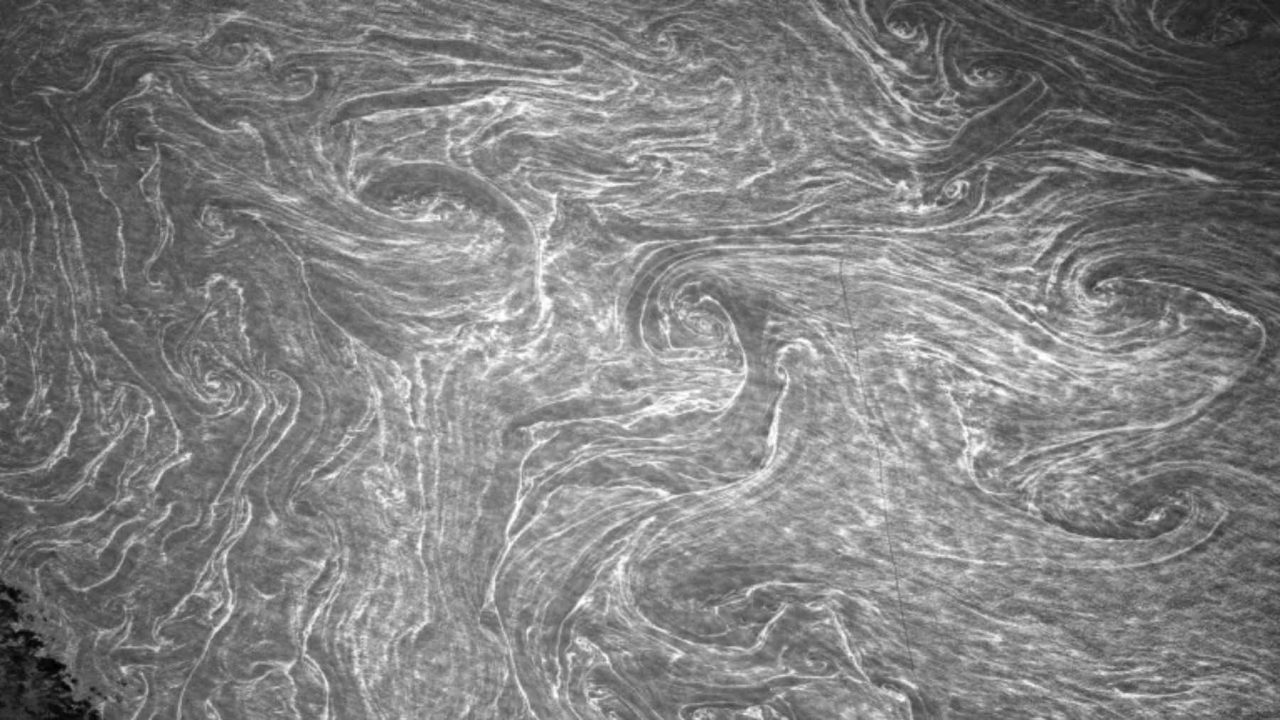
NASA highlighted an image of swirling patterns across the Mediterranean Sea as one example of how his observations can look like abstract art. But it’s the in-orbit experiment images — the water droplets, the overlapping frames, the strange geometries that microgravity makes possible — that really stand apart.
These aren’t accidental images. Pettit is a trained scientist and an experienced photographer, and he’s clearly thinking about both dimensions when he frames a shot. The science of opportunity approach means he’s watching for moments when the environment itself creates something worth capturing — and then capturing it in a way that communicates both what happened and what it looked like.
That combination is rarer than it sounds. Science images are usually functional. These are functional and genuinely striking.
What This Kind of Research Means Beyond the Station
The broader value of Pettit’s photography and experimentation goes beyond any single image. Microgravity research has historically fed into advances in materials science, medicine, and engineering — fields where understanding small-scale physical forces can have significant practical consequences.
When you can observe electrostatic behavior in water droplets without gravity interfering, you learn things about how fluids and charged particles interact that are simply not accessible from a ground-based lab. That knowledge doesn’t stay in orbit. It comes back with the astronaut, in data sets, in photographs, and in observations that researchers on the ground can then build on.
Pettit’s “science of opportunity” framing is also a reminder that not all research requires massive infrastructure. Sometimes it requires a Teflon knitting needle, a camera, and 220 days of floating in a place where the rules work a little differently.
Frequently Asked Questions
Who is Don Pettit?
Don Pettit is a NASA astronaut who served aboard the International Space Station as part of Expedition 72, spending 220 days in orbit before returning to Earth on April 19, 2025.
What is “science of opportunity”?
According to NASA, it refers to quick experiments and observations that Pettit conducted using the tools and time available during his mission, rather than pre-planned formal research programs.
What did the water droplet experiment show?
The experiment demonstrated how charged water droplets loop around a Teflon knitting needle in microgravity, revealing electrostatic forces that gravity would normally overwhelm and make invisible on Earth.
How far did Expedition 72 travel?
NASA confirmed the crew traveled approximately 93.3 million miles and completed 3,520 orbits during the 220-day mission.
Why do the experiment images look like art?
Because microgravity removes the dominant pull of gravity, small physical forces produce unusual, visually striking patterns — overlapping droplet paths, looping arcs — that have no real equivalent in ground-based settings.
Will Pettit’s photographs be made publicly available?
This has not been confirmed in the available source material, though NASA has already highlighted several of his images in connection with the Expedition 72 mission coverage.


Leave a Reply