
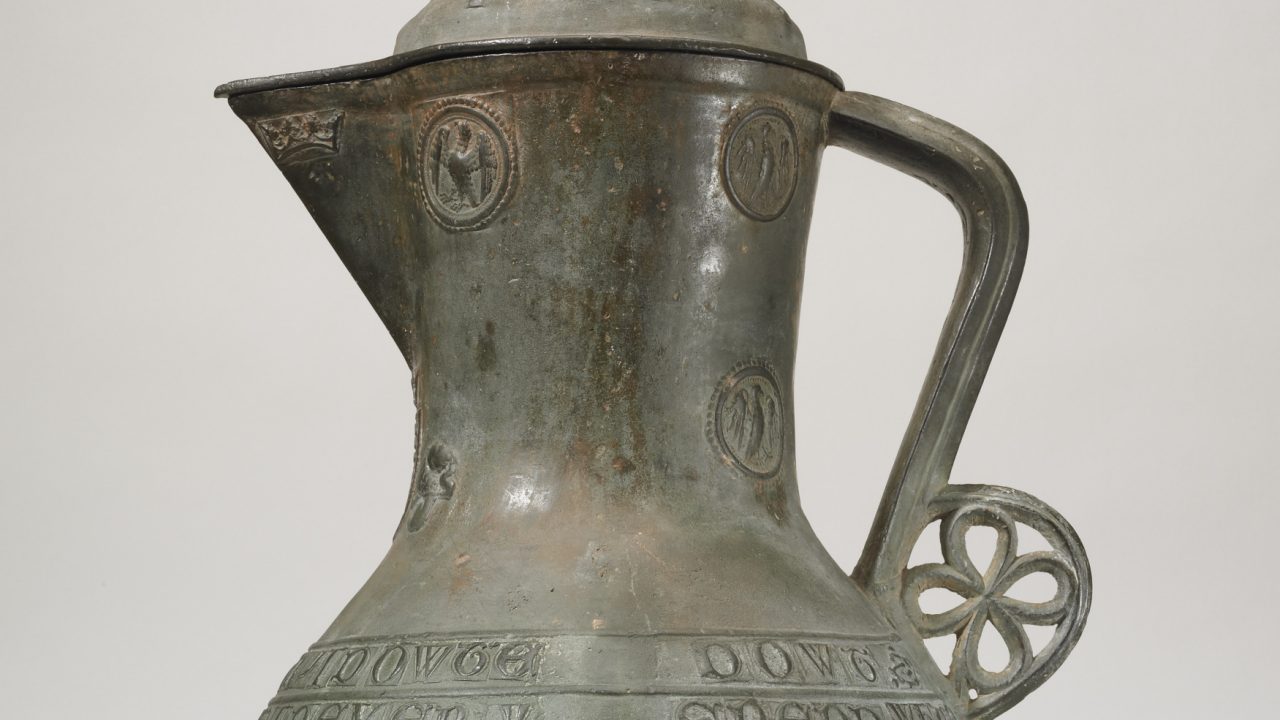
A bronze jug made in medieval England, sometime between 1340 and 1405, somehow ended up in the royal palace of the Asante kingdom in what is now Ghana — and then was taken back to Britain during colonial warfare in 1896. That single sentence contains more than six centuries of history, trade, conflict, and cultural transformation. Now, a new exhibition at the British Museum is telling the full story of how it happened.
The object at the centre of it all is known as the Asante Ewer. Scholars consider it one of the finest surviving examples of medieval English bronze casting. It is also, remarkably, one of only three known medieval European ewers ever to have reached Ghana. Its journey across continents — and back — makes it one of the most travelled and culturally layered artefacts from the medieval world.
https://www.instagram.com/p/DUbBEwviMNc/
The exhibition presents new research on the ewer and examines how it moved through radically different cultural settings over the course of several centuries, changing roles along the way from luxury vessel to sacred object to war trophy.
From an English Workshop to a West African Palace
When the Asante Ewer was first cast, probably in the latter half of the fourteenth century, it would have been a high-status object in an English context — a luxury vessel, likely used for pouring water or wine at a wealthy household or religious setting. Fine bronze casting of this kind was expensive, skilled work, and pieces like this were markers of social prestige.
How it eventually made its way to West Africa is part of what makes this object so historically significant. The British Museum exhibition places the ewer within the wider trade networks that had been connecting West Africa with North Africa, the Mediterranean, and the Middle East since around AD 800. These long-distance routes moved goods in both directions: copper travelled toward West Africa, while gold and ivory moved toward Europe and beyond.
From the late fifteenth century onward, Atlantic maritime routes opened up more direct trade between Europe and West Africa, creating new channels through which objects — and ideas — could travel. It is through these kinds of connections that a bronze jug made in an English workshop could eventually find its way into a royal palace on the other side of the world.
Once in the Asante kingdom, the ewer was no longer simply a vessel. It had become something else entirely: a sacred object, held within the royal palace at Kumasi. The Asante kingdom was one of the most powerful states in West Africa, and its royal court accumulated objects of significance and spiritual meaning. A finely crafted bronze ewer from distant Europe would have carried its own kind of prestige and symbolic weight.
What the Exhibition Actually Shows
The British Museum display is built around several key themes, using the ewer as a lens through which to examine much broader historical forces. Here is what the exhibition covers, based on confirmed details from the research:
- The ewer’s origins as a luxury object in medieval England, dating to between 1340 and 1405
- Its transformation into a sacred object within the Asante royal palace at Kumasi
- The long-distance trade networks linking West Africa with North Africa, the Mediterranean, the Middle East, and Europe from around AD 800 onward
- The expansion of direct Atlantic trade routes from the late fifteenth century
- The ewer’s removal from the Asante kingdom during the Anglo-Asante War of 1896
- New research into how the object moved through these different cultural worlds
| Period | Location | Role of the Ewer |
|---|---|---|
| 1340–1405 (estimated) | England | Luxury bronze vessel |
| Centuries of transit | Trade routes (Atlantic/West Africa) | Trade commodity |
| Pre-1896 | Asante royal palace, Kumasi, Ghana | Sacred royal object |
| 1896 | Removed during Anglo-Asante War | War spoil |
| Present day | British Museum, London | Exhibition artefact |
Why This Object Matters Beyond the Display Case
The Asante Ewer is not just an impressive piece of metalwork. It sits at the intersection of debates that are very much alive today: questions about colonial-era removal of cultural property, the complexity of object histories, and how museums tell stories about artefacts taken during warfare.
As Dr Lloyd de Beer, Curator of European Medieval collections at the British Museum, has noted in connection with the exhibition:
“The story of the Asante Ewer demonstrates the many lives that one object can have.”
That framing matters. The ewer was not simply taken from one place to another. It accumulated meaning at every stop. It was a craft object, then a trade good, then a sacred possession, then a trophy of war. Each of those transitions reflects something real about the world at that moment — the ambitions of medieval English craftsmen, the reach of pre-colonial African trade networks, the violence of nineteenth-century colonial expansion.
A photograph of a royal courtyard in Kumasi, taken in 1884 by Frederick Grant and held by The National Archives, is among the contextual materials associated with the exhibition. It offers a rare visual window into the world the ewer inhabited before 1896.
The Broader Network This Ewer Reveals
One of the most striking aspects of the research presented at the British Museum is what the ewer’s journey reveals about medieval and early modern connectivity. The standard picture of medieval Europe often treats it as relatively self-contained. The Asante Ewer complicates that picture significantly.
West Africa was not isolated from global trade in the medieval period. From around AD 800, it was part of an extensive network reaching North Africa, the Mediterranean, and the Middle East. Copper — the primary material in bronze — was among the goods flowing into West Africa along these routes. The fact that a finely cast English bronze object could eventually reach the Asante royal palace is not an anomaly. It is evidence of how connected these worlds already were, long before the Atlantic trade routes of the late fifteenth century made direct European-West African exchange more common.
The ewer is, in that sense, a physical record of globalisation centuries before the word existed.
What Comes Next for the Asante Ewer
The British Museum exhibition is presenting new research on the object, which means scholarly understanding of its full journey is still developing. The display is described as exploring how the ewer moved through different cultural settings — suggesting the research draws on multiple disciplines, including art history, archaeology, and the history of trade networks.
Broader questions about the repatriation of objects taken during colonial-era conflicts, including the Anglo-Asante War of 1896, remain a live issue in discussions between the British Museum and Ghana. The exhibition does not resolve those questions, but by presenting the ewer’s full history — including how it was removed — it contributes to a more honest public record of how many objects in major Western museum collections came to be there.
Frequently Asked Questions
What is the Asante Ewer?
The Asante Ewer is a medieval English bronze jug, dated to between 1340 and 1405, considered one of the finest examples of medieval English bronze casting. It is one of only three known medieval European ewers to have reached Ghana.
How did the ewer get to West Africa?
The exact route is part of what the British Museum exhibition explores. Long-distance trade networks connecting West Africa with North Africa, the Mediterranean, and Europe from around AD 800, and later Atlantic maritime routes from the late fifteenth century, are understood to have facilitated the movement of objects like this one.
How did the ewer return to Britain?
It was taken during the Anglo-Asante War of 1896, when it was removed from the Asante royal palace at Kumasi.
Where is the ewer now?
It is held at the British Museum in London, where the new exhibition examining its history is currently on display.
Who is behind the new research on the ewer?
Dr Lloyd de Beer, Curator of European Medieval collections at the British Museum, is among those connected to the exhibition and new research on the object.
Are there calls to return the ewer to Ghana?

Leave a Reply