
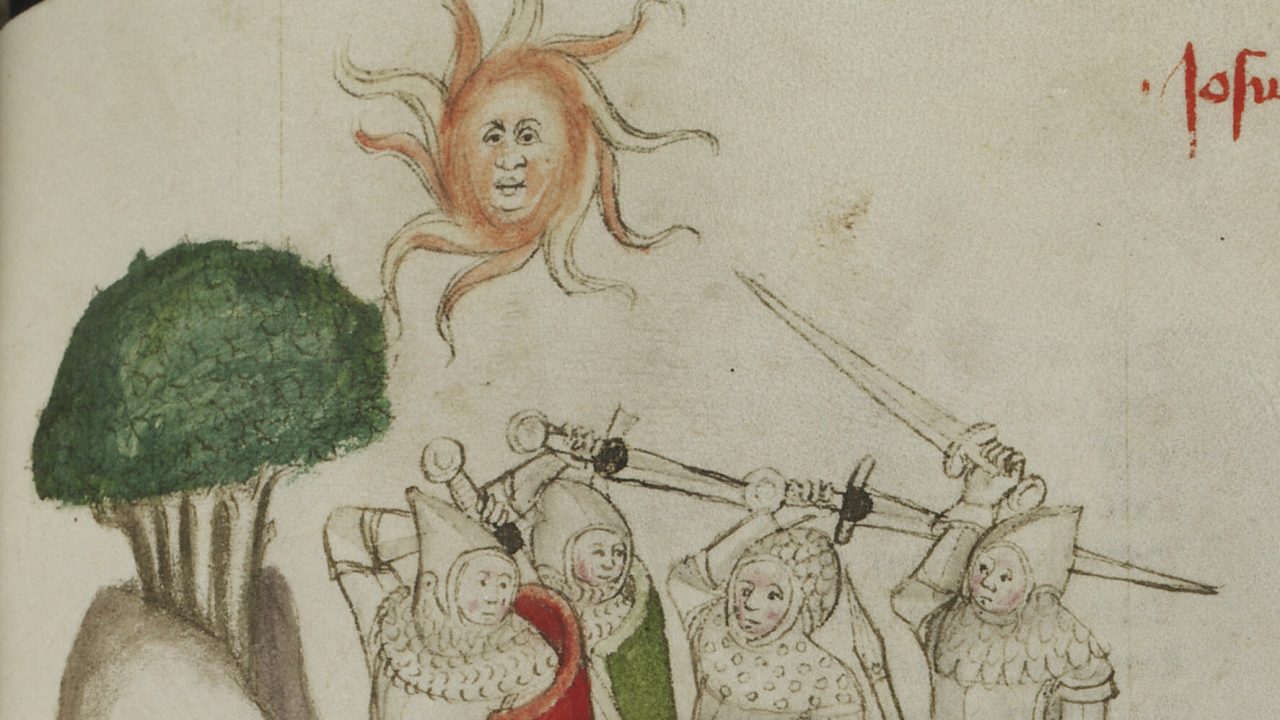
Around the year 1200, a powerful burst of solar radiation struck Earth — and almost nobody noticed. No satellite alerts, no power grid failures, no news cycle. Medieval people went about their lives largely unaware that the Sun had just unleashed a significant storm in their direction. Now, more than eight centuries later, scientists have found the evidence it left behind, hidden inside ancient trees.
A new study published in Proceedings of the Japan Academy Series B has identified a previously unknown solar proton event dating to around 1200–1201 AD. The discovery comes from an unusual combination of sources: medieval chronicles describing strange lights in the sky, and microscopic traces of radiation preserved in tree rings. Together, they’re telling us something important about how volatile our Sun can be — and how little we may have witnessed in the modern era.
What Scientists Actually Found in the Tree Rings
Solar proton events — known as SPEs — happen when the Sun releases bursts of high-energy particles that travel toward Earth at extraordinary speeds. Earth’s magnetic field blocks most of this radiation, but the particles that do interact with our atmosphere leave a chemical fingerprint. They trigger the production of carbon-14, a radioactive isotope that gets absorbed by plants and locked into wood as trees grow, one ring at a time.
By analysing these rings with exceptional precision, the research team identified a sudden spike in carbon-14 levels between 1200 and 1201. That spike is the signature of a solar proton event — one that had gone completely undetected until now.
The researchers didn’t stop at tree rings. They cross-referenced their findings with medieval historical records, including chronicles that described unusual lights appearing in the sky. Those accounts, which likely described auroral displays pushed far from the polar regions by the intensity of the solar activity, helped corroborate the physical data from the trees.
It’s a remarkably elegant approach: using the written observations of medieval monks and chroniclers to validate what the chemistry of ancient wood was already suggesting.
How This Medieval Solar Storm Compares to Known Events
Not all solar proton events are created equal. The most extreme examples — sometimes called Miyake events, after the researcher who first identified them in tree ring data — represent the upper end of what the Sun is capable of. The newly identified 1200–1201 event appears to be smaller than those most extreme known occurrences, but it is still significant enough to have left a clear and measurable trace across centuries.
| Feature | Detail |
|---|---|
| Event date | Around 1200–1201 AD |
| Detection method | Carbon-14 spike in tree rings |
| Supporting evidence | Medieval chronicles describing unusual lights |
| Published in | Proceedings of the Japan Academy Series B |
| Event classification | Solar proton event (SPE) |
| Size relative to known extremes | Smaller than the most extreme known events |
What makes this discovery particularly valuable is what it adds to the broader catalogue of solar behaviour. Every confirmed event from the past gives scientists another data point for understanding how frequently the Sun produces dangerous bursts of radiation — and how intense those bursts can get.
Why a Medieval Solar Storm Should Matter to You Right Now
This might sound like a story purely for history enthusiasts, but the implications reach well into the present day. Modern civilisation is extraordinarily dependent on infrastructure that solar storms can damage or destroy. Satellites, GPS systems, power grids, communications networks — all of these are vulnerable to intense solar radiation in ways that medieval farmers simply weren’t.
The Sun’s behaviour over the past century of detailed observation represents a tiny slice of its actual history. Events like the one identified in this study suggest the Sun may have been considerably more volatile during the Middle Ages than it appears today. That means our current sense of “normal” solar activity could be dangerously misleading when it comes to planning for worst-case scenarios.
- Solar proton events can disrupt satellite communications and GPS accuracy
- Extreme events have the potential to damage or destroy power grid infrastructure
- Carbon-14 spikes in tree rings allow scientists to identify events going back thousands of years
- Medieval historical records, including chronicles of unusual sky phenomena, can help confirm and date these events
- A fuller catalogue of past solar events helps researchers model future risk more accurately
Researchers argue that building a longer and more complete record of solar proton events — stretching back through tree ring data across millennia — is essential for understanding the true range of what the Sun is capable of producing.
The Remarkable Science Behind Reading Ancient Radiation
The method used in this study is worth pausing on, because it represents a genuinely impressive piece of scientific detective work. Tree rings have long been used to reconstruct past climates, but their ability to record cosmic and solar events is a more recent and rapidly developing field.
When high-energy solar particles interact with Earth’s upper atmosphere, they set off a chain of chemical reactions that ultimately produce carbon-14. That carbon enters the global carbon cycle, gets taken up by plants, and is incorporated into wood tissue. Because trees grow one ring per year, researchers can pin the timing of a carbon-14 spike to a specific twelve-month window — in this case, 1200 to 1201.
The precision of this method is what makes it so powerful. It doesn’t require written records to confirm an event happened. But when medieval chronicles do describe strange lights in the sky during the same period, the combination becomes compelling evidence that is difficult to dismiss.
What Researchers Hope to Uncover Next
This discovery adds to a growing body of evidence suggesting the Sun’s behaviour during the Middle Ages was more active and more extreme than previously understood. Researchers working in this field are continuing to analyse tree ring records from different locations and time periods, hoping to identify additional undocumented solar events.
Each new event that gets added to the historical record helps refine the models scientists use to estimate how often major solar storms occur — and how severe they can get. For space weather forecasters and the agencies responsible for protecting critical infrastructure, that information is not academic. It is operationally vital.
The study also underlines how much useful scientific information is still locked inside medieval texts. Chronicles written by monks and scholars who had no concept of solar physics were, unknowingly, recording data that researchers are only now learning to read.
Frequently Asked Questions
What is a solar proton event?
A solar proton event occurs when the Sun releases bursts of high-energy particles that travel toward Earth at extraordinary speeds. Earth’s magnetic field shields us from most of the radiation, but some particles interact with the atmosphere and leave detectable chemical traces.
How did scientists detect the medieval solar storm?
Researchers identified a sudden spike in carbon-14 levels in ancient tree rings between 1200 and 1201 AD, which is consistent with the atmospheric effects of a solar proton event. They also cross-referenced this with medieval chronicles describing unusual lights in the sky.
Where was the study published?
The study was published in Proceedings of the Japan Academy Series B.
How does carbon-14 get into tree rings?
When solar particles interact with Earth’s upper atmosphere, they trigger the production of carbon-14, which enters the carbon cycle, is absorbed by plants, and becomes locked into wood tissue as trees grow — one ring per year.
Was this the most powerful solar storm ever recorded?
According to the research, the 1200–1201 event was smaller than the most extreme solar proton events known from the historical record, but still significant enough to leave a clear and measurable chemical trace in tree rings.
Why does a medieval solar event matter today?
Understanding the full range of the Sun’s historical behaviour helps scientists and infrastructure planners better assess the risk posed by future solar storms, which can damage satellites, GPS systems, and power grids in ways that medieval societies never had to contend with.


Leave a Reply