
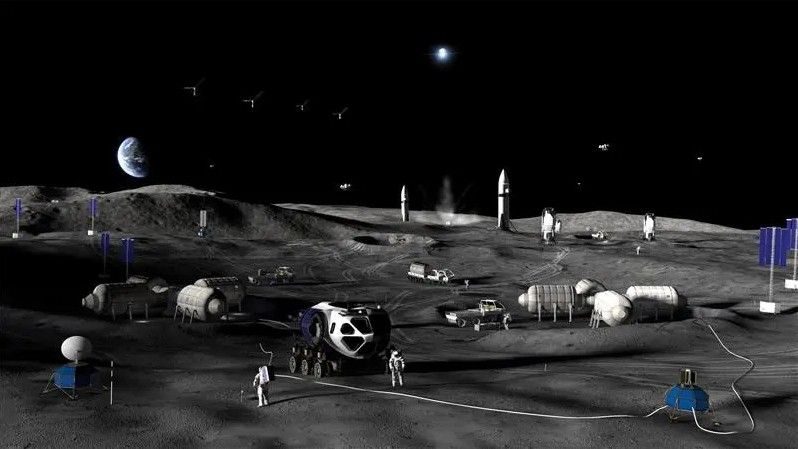
Seventy-three moon landings. That is the number NASA has set its sights on as part of what the agency itself has described as a “near-impossible” plan to build a permanent base on the moon. The sheer scale of that ambition is difficult to wrap your head around — the entire history of human lunar exploration includes just six crewed landings, all between 1969 and 1972.
Now NASA wants to do more than a dozen times that number, with a mix of robotic and uncrewed missions leading the way toward a sustained human presence on the lunar surface. And on April 6, the agency published a document laying out exactly what standing between them and that goal: a nine-page “Moon Base User’s Guide” that reads less like a victory lap and more like a frank accounting of just how hard this is going to be.
The guide was published in the wake of NASA’s “Ignition” event, held on March 24, where officials first unveiled the ambitious lunar plans. What followed was not a glossy promotional brochure — it was a bare-bones list of challenges the agency knows it must overcome to make any of this real.
What NASA’s Moon Base Plan Actually Involves
The core of NASA’s lunar strategy is a torrent of missions — robotic, uncrewed, and eventually crewed — designed to build toward a permanent base on the moon. The 73 planned landings represent a pace of lunar activity that would dwarf anything previously attempted by any space agency in history.
The “Moon Base User’s Guide,” published April 6, is the agency’s own honest assessment of what it will take to get there. At just nine pages, it is not a detailed engineering blueprint. It is something arguably more revealing: a frank list of the obstacles NASA is staring down as it tries to accelerate its lunar ambitions.
The document makes clear that this is not a problem of vision or political will alone. The challenges are technical, logistical, and operational — the kind that cannot be solved with a press release or a funding announcement.
The Challenges NASA Is Openly Admitting
What makes the “Moon Base User’s Guide” notable is its candor. NASA is not typically in the business of publishing documents that highlight its own vulnerabilities, but this guide does exactly that. It lays out what the agency needs to achieve its lunar goals, implicitly acknowledging that those things are not yet in place.
Based on what has been confirmed from NASA is proposing to do more than all of them — combined — under a single program.
That scale creates cascading challenges. Each landing requires a rocket, a spacecraft, a payload, a launch window, a landing system, and a recovery or surface operations plan. Multiply that across 73 missions and you are talking about an industrial and logistical operation unlike anything the civilian space program has ever attempted.
The fact that NASA is calling its own plan “near-impossible” is not false modesty. It is a signal to Congress, to industry partners, and to the public that the gap between ambition and reality is real — and that closing it will require resources, coordination, and sustained commitment at a level rarely seen outside of wartime mobilization.
What This Means for the Future of Lunar Exploration
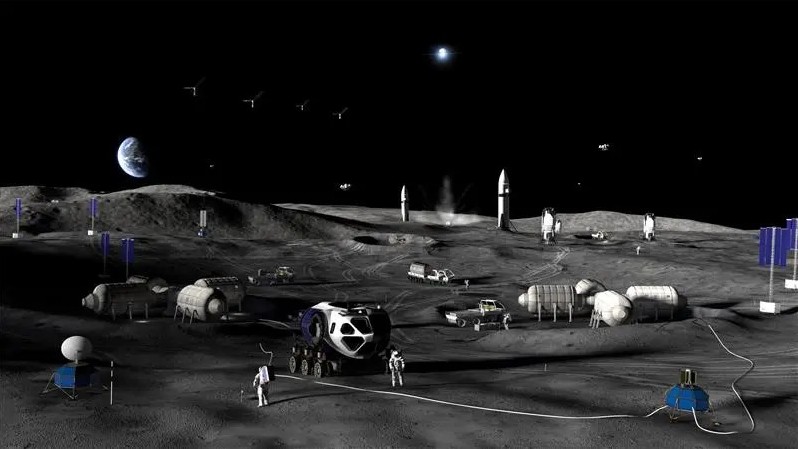
A permanent moon base, if achieved, would fundamentally change humanity’s relationship with space. It would serve as a staging point for deeper exploration, a platform for scientific research in a low-gravity environment, and potentially a proving ground for technologies needed to reach Mars.
But the User’s Guide makes clear that the road from here to there is not a straight line. NASA is trying to compress what might otherwise be decades of incremental progress into a much shorter window — and the document is, in effect, a public acknowledgment that speed and ambition alone will not be enough.
Observers have noted that publishing such a document openly is itself significant. It suggests NASA is trying to build broad awareness of the challenge ahead, perhaps to generate the kind of political and public support that a project of this scale will require to survive budget cycles, administration changes, and the inevitable setbacks that come with any frontier program.
What Happens Next
The “Ignition” event on March 24 was the starting gun. The April 6 User’s Guide was the first honest look at the course. What comes next is the hard part: translating a nine-page list of requirements into funded programs, contracted hardware, and actual missions.
NASA has not yet published a detailed public timeline for all 73 landings, and the specific sequencing of robotic versus crewed missions remains to be fully confirmed. What is clear is that the agency intends to move fast — and that it is already aware of how much it still needs to solve before the first of those 73 landings can become reality.
Frequently Asked Questions
How many moon landings is NASA planning?
NASA has announced plans for 73 moon landings as part of its lunar base program, according to the agency’s Moon Base User’s Guide published April 6.
What is the NASA Moon Base User’s Guide?
It is a nine-page document published by NASA on April 6 that outlines the challenges the agency must overcome to build a permanent lunar base and complete its planned lunar missions.
When did NASA announce its lunar base plans?
NASA unveiled its lunar base ambitions at an event called “Ignition,” held on March 24.
Does NASA think its own moon base plan is achievable?
NASA itself has described the plan as “near-impossible,” though the agency is actively working to identify and address the challenges standing in the way.
Will the 73 moon landings all be crewed missions?
No. The plan includes a mix of robotic and uncrewed missions alongside crewed landings, though the full breakdown has not been confirmed in detail from the available source material.
Has any country ever attempted this many moon landings before?
No. Seventy-three landings would far exceed the total number of successful lunar landings conducted by all spacefaring nations combined throughout history.




Leave a Reply