
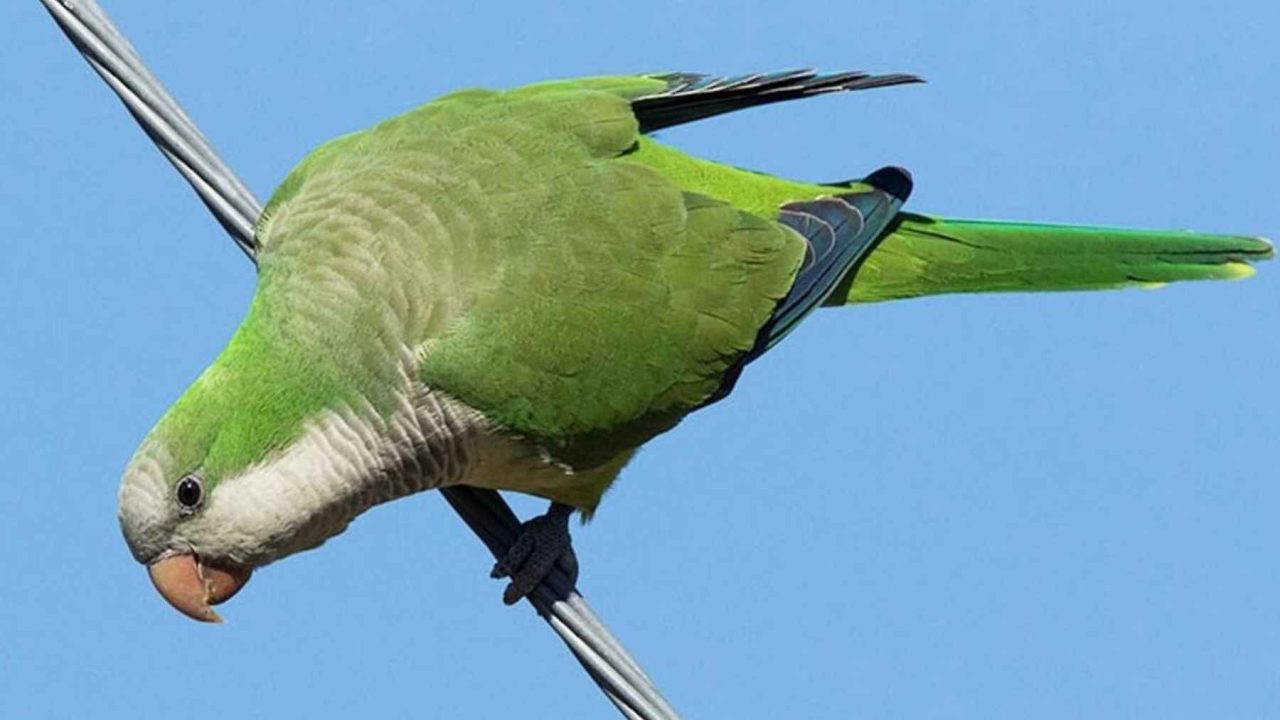
Those loud, bright-green birds wheeling over your street in a tight, chattering flock are not just passing through. If parakeets — known in Argentina as cotorras — keep showing up near your home, there is a specific reason for it, and it says more about your neighborhood than you might expect.
In many Argentine cities, cotorras have become a familiar part of urban life. Their calls are hard to ignore, and the massive stick nests they build on street trees and utility poles are even harder to miss. But their presence is not random. These birds are remarkably deliberate about where they spend their time, and a regular flyover above your yard is often a direct signal about what your local environment offers.
Understanding why they keep coming back — and what it means when they do — can change the way you think about the green spaces around you.
Why Parakeets Keep Returning to the Same Neighborhoods
Cotorras do not wander into a yard by chance. According to the source reporting, they actively scout for locations that offer a reliable combination of food, height, and safety. Once they identify a route that works, they repeat it — sometimes for years.
That means if you are regularly seeing parakeets near your home, your neighborhood is passing their checklist. Areas near parks, tree-lined streets, and gardens tend to attract the most activity. The birds are essentially voting with their flight paths, and a consistent presence is a sign that your immediate environment provides what urban wildlife needs to survive.
There is also a social dimension to their behavior. Cotorras are highly social birds that travel and forage in groups. The constant calling you hear is not just noise — it is how the flock stays coordinated and connected while in flight. This is also why sightings tend to cluster: where you see one, you will usually see many.
When Parakeets Are Most Active — and Why It Matters
If you have noticed the birds seem louder and more visible at certain times of day, you are not imagining it. Cotorras are most active at dawn and dusk, which aligns with their daily commuting patterns between roosting sites and feeding areas.
That predictable rhythm is part of what makes them useful as informal environmental indicators. A flock moving through the same corridor at the same time each morning suggests a stable, established habitat network nearby — green corridors, mature trees, and accessible food sources that have remained consistent enough for the birds to rely on.
| Behavior | What It Signals |
|---|---|
| Regular flyovers at dawn and dusk | Established daily route between food and roost |
| Large group presence | Social flock using neighborhood as part of wider territory |
| Nest building on street trees | Area offers suitable height, structure, and perceived safety |
| Foraging in gardens or parks | Accessible plant-based food sources nearby |
What Cotorras Actually Eat in Urban Areas
One of the reasons cotorras have adapted so successfully to city life is their flexible diet. They eat a wide mix of plant-based foods — seeds, fruits, and flowers — and they will readily take advantage of what people plant in gardens or leave accessible in yards.
A wildlife guide from the U.S. Department of Agriculture is referenced in the source reporting in relation to their dietary habits, underscoring that their feeding behavior is well-documented across urban environments beyond Argentina as well. Their ability to exploit ornamental plantings, fruit trees, and even bird feeders means a well-planted neighborhood is, from a cotorra’s perspective, a well-stocked pantry.
This adaptability is both what makes them successful urban colonizers and what brings them into occasional conflict with residents — particularly when abundant food sources draw large, noisy flocks to a single block.
The Practical Side: When Nests Become a Problem
There is a real tension at the heart of the cotorra story. On one hand, their presence can be read as a positive sign — an indicator that a neighborhood retains enough green infrastructure and biodiversity to support urban wildlife. On the other hand, their nests are enormous by bird standards, built from thick sticks and added to over time, and they have a well-known tendency to be constructed near or on electrical wiring.
When nests get close to wiring, the practical issues become serious. The source reporting acknowledges this directly, noting that proximity to electrical infrastructure is one of the genuine concerns that comes with cotorra colonization of urban areas.
The birds themselves are not doing anything wrong — they are following instincts that have served their species well. But the overlap between their preferred nesting spots (elevated, structurally solid, in open areas) and the places humans run power lines creates a recurring conflict in cities where cotorra populations are growing.
What Their Presence Actually Tells You About Your Environment
Stepping back from the noise and the nesting concerns, the broader message of a cotorra sighting is worth sitting with. These birds are selective. They do not thrive in degraded, barren, or heavily paved environments. Their sustained presence in a neighborhood points to:
- A meaningful number of mature trees, which provide both nesting height and food
- Green spaces — parks, gardens, or planted verges — that support plant diversity
- Enough environmental stability for the birds to establish reliable daily routes
- A local food supply consistent enough to sustain a social flock over time
In that sense, cotorras function as an informal, feathered report on urban green health. Their loud, chaotic flyovers are not just a nuisance — they are data. A neighborhood that keeps seeing them is, by the birds’ own reckoning, still worth living in.
That does not make the wiring concerns disappear, and it does not mean every resident has to welcome a stick nest in their front tree. But it does reframe the question from “how do I get rid of them” to something more interesting: what is it about this place that keeps drawing them back?
Frequently Asked Questions
Why do parakeets keep coming to my house specifically?
Cotorras scout for areas that offer reliable food, safe nesting height, and security. If they keep returning, your property or neighborhood is likely providing at least one of those things consistently.
What time of day are cotorras most active?
They are most visible and vocal at dawn and dusk, which corresponds to their daily movement between roosting and feeding locations.
Are cotorras considered a sign of a healthy environment?
Their sustained presence can indicate that a neighborhood retains enough green infrastructure — mature trees, gardens, and plant diversity — to support urban wildlife, which is generally a positive environmental signal.
Why do cotorra nests cause problems near homes?
Their nests are large, built from thick sticks, and are often constructed near electrical wiring, which can create practical hazards in urban settings.
What do cotorras eat in cities?
They eat a wide range of plant-based foods including seeds, fruits, and flowers, and will readily use what people grow in gardens or leave accessible in yards.
Why do cotorras always appear in groups?
They are highly social birds that travel in flocks and call constantly to stay coordinated — a lone cotorra sighting is far less common than seeing several at once.




Leave a Reply