
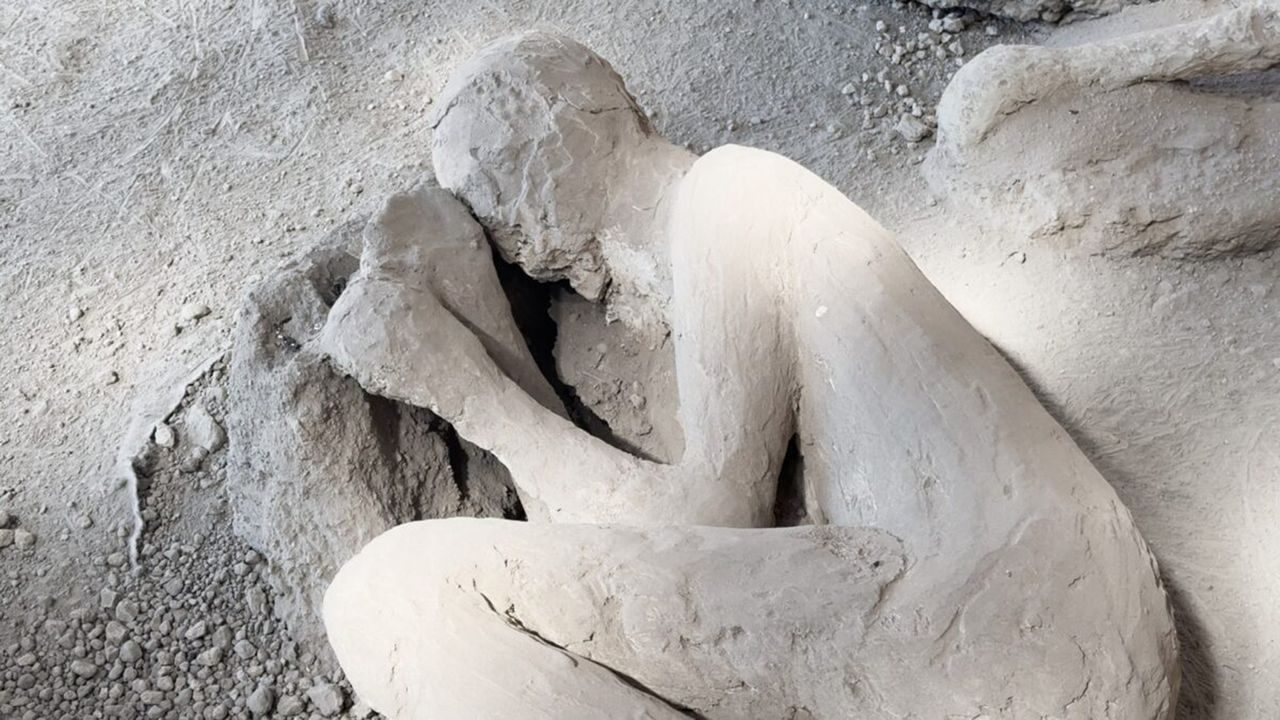
Nearly 2,000 years after Mount Vesuvius buried the city of Pompeii in ash and gas, the remains of one of its victims are still revealing secrets — including what appears to be evidence of a Roman physician caught in the disaster while carrying his medical tools.
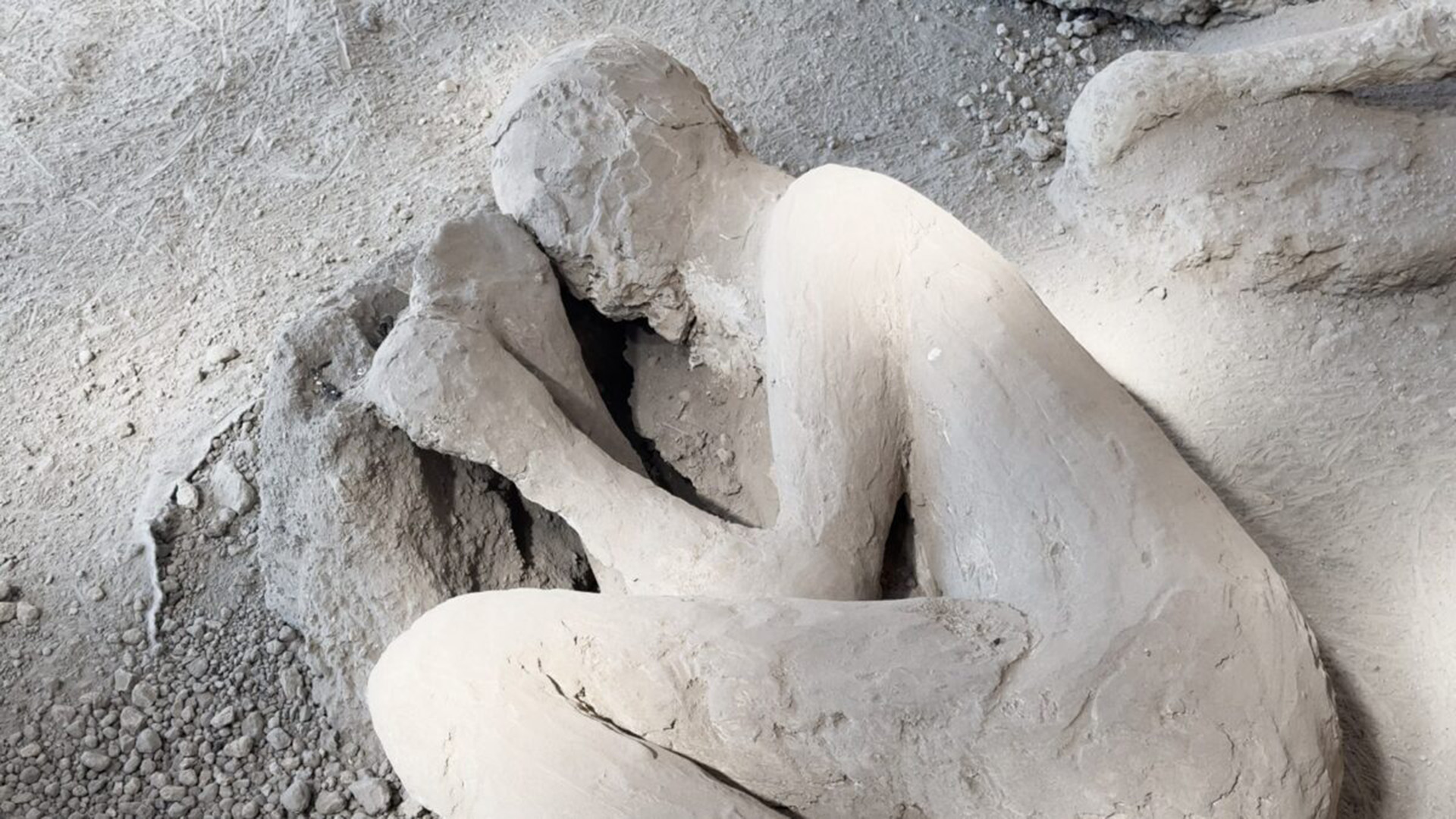
A new analysis of a plaster cast made from one of Pompeii’s most haunting archaeological sites has identified the remains of a small case and a small bag alongside a man’s body. Researchers believe the items formed a medical kit, suggesting the man was likely a medicus — the Latin term for a physician — when he died in A.D. 79.
It is a rare, deeply personal window into a single life cut short by one of history’s most catastrophic volcanic eruptions, and it adds a new layer of meaning to one of archaeology’s most studied disaster sites.
The Garden of the Fugitives: A Vineyard That Became a Tomb
The man was not alone when he died. He was one of 13 people who had taken shelter together in a Pompeii vineyard that would later be known as the Garden of the Fugitives. The name fits. These were people trying to survive, huddled together in what they hoped might be safety as the volcano tore apart everything around them.
They did not make it. The group was overcome by an explosive burst of deadly gas — likely carbon dioxide and sulfur dioxide — along with volcanic ash. The same eruption killed thousands of people across Pompeii and the nearby town of Herculaneum. There was no refuge to be found.
What makes the Garden of the Fugitives so significant is how vividly it preserves that final moment. The ash that killed these people also sealed them in place, creating voids in the hardened material that, centuries later, archaeologists could fill with plaster to recover the exact shapes of their bodies.
How Plaster Casts Brought Pompeii’s Victims Back Into View
Pompeii itself was first discovered in the 16th century, but most serious scientific investigation of the site came much later. The plaster casts that made the city’s victims so recognizable to the world were largely a product of more modern archaeological methods.
In 1961, archaeologists made plaster casts of the voids left in the ash by the bodies of the people who died in the Garden of the Fugitives. These are among roughly 104 plaster casts of victims made at Pompeii in total — each one a preserved outline of a person frozen at the moment of death.
The cast of the man now identified as a possible physician is one of those 1961 impressions. But the new analysis goes further than what earlier researchers were able to detect, identifying not just the shape of his body but the objects he had with him: a small case and a small bag consistent with the kind of kit a Roman doctor would have carried.
What the Doctor’s Kit Tells Us About Roman Medicine
The presence of a medical kit alongside the body is the key detail driving the identification. In ancient Rome, a medicus would have traveled with tools of the trade — instruments for examination, treatment, and minor procedures. Carrying such a kit was a professional marker, not just a practical one.
The fact that this man had his kit with him when he died raises its own quiet questions. Was he attempting to help others in the chaos? Was he simply unable to abandon his livelihood as he fled? The archaeological record cannot answer that. But his presence among a group of 13 people sheltering together, with his medical equipment in hand, is a detail that resonates across two millennia.
| Detail | What the Evidence Shows |
|---|---|
| Location of death | Garden of the Fugitives, a vineyard in Pompeii |
| Group size | 13 people sheltering together |
| Cause of death | Likely carbon dioxide, sulfur dioxide, and volcanic ash |
| Items found with the man | A small case and a small bag, consistent with a medical kit |
| Year of eruption | A.D. 79 |
| Year plaster casts were made | 1961 |
| Total plaster casts at Pompeii | Approximately 104 |
Why This Discovery Matters Beyond the History Books
Finds like this one matter because they transform Pompeii from an abstract historical event into something immediate. These were not nameless figures in a catastrophe — they were people with professions, routines, and identities. A physician carrying his kit is a man going about his life, suddenly swallowed by something no one could have survived.
For archaeologists and historians of ancient Rome, the identification of a medicus at this specific location also contributes to the broader understanding of who was present in Pompeii at the time of the eruption, and what roles different people played within the city’s social structure. Medical practitioners in the Roman world occupied a distinct professional class, and physical evidence of their work and tools is relatively rare.
The Garden of the Fugitives group, as a whole, represents one of the most intact clusters of eruption victims ever studied. Each new analysis of the casts — made possible by advances in imaging and forensic archaeology — has the potential to reveal details that were invisible to earlier researchers working with the same material.
What Comes Next for the Pompeii Archaeological Park
The Pompeii Archaeological Park, which oversees the site, continues to support ongoing research into the casts and the broader excavation. The analysis of the man identified as a possible physician is part of a longer effort to extract as much information as possible from the existing plaster casts without disturbing them further.
As technology improves, researchers are expected to learn even more from the roughly 104 casts already made — including details about the individuals’ health, age, and the final moments of the eruption itself. The Garden of the Fugitives, in particular, remains one of the most studied and emotionally powerful sections of the entire site.
For now, the image of a Roman doctor — a medicus — clutching his small case and bag as the volcano closed in is one of the most striking additions to Pompeii’s already extraordinary story.
Frequently Asked Questions
Where was the man with the medical kit found?
He was found in the Garden of the Fugitives, a vineyard in Pompeii where 13 people had taken shelter during the eruption.
How do researchers know he was a doctor?
A new analysis of his plaster cast revealed a small case and a small bag consistent with a Roman medical kit, suggesting he was a medicus — the Latin term for a physician.
What killed the people in the Garden of the Fugitives?
The group was likely killed by an explosive burst of deadly gas, including carbon dioxide and sulfur dioxide, combined with volcanic ash from the eruption.
When were the plaster casts of these victims made?
The plaster casts of the Garden of the Fugitives victims were made in 1961, as part of a broader effort that produced roughly 104 plaster casts of Pompeii victims in total.
When did Mount Vesuvius destroy Pompeii?
The eruption that destroyed Pompeii and the nearby town of Herculaneum occurred in A.D. 79.
When was Pompeii first discovered?
Pompeii was first discovered in the 16th century, though most of the detailed scientific work at the site was carried out much more recently.



Leave a Reply